Warehouses are an important part of today’s supply chain. They store valuable inventory, equipment, raw materials, and finished products before these items move to retailers, customers, or other facilities. Because warehouses often operate around the clock, they can face security challenges such as theft, unauthorized access, vandalism, accidents, and safety violations. This is where Warehouse Security Guards play an important role.
Modern warehouse security is no longer limited to standing at an entrance and checking visitors. Security guards are now expected to monitor premises, control access, respond to emergencies, protect employees and assets, and work with technology-based security systems. Their responsibilities may also extend to loading areas, parking zones, storage facilities, and transportation points.
Businesses that invest in professional Logistics Security Services can create a more controlled and secure environment throughout their supply chain. Here are five critical duties that modern warehouse security guards commonly perform.
5 Critical Duties of Modern Warehouse Security Guards
1. Controlling Access and Monitoring Visitors
One of the most important responsibilities of Warehouse Security Guards is controlling who enters and leaves the facility. Warehouses may receive employees, suppliers, delivery drivers, contractors, customers, and other visitors throughout the day. Without proper access control, unauthorized individuals can enter restricted areas and create security risks.
Security guards verify identification, maintain visitor records, check authorization, and direct visitors to the appropriate areas. They may also monitor employee entrances and exits according to company policies.
Access control is particularly important for warehouses that store expensive products or sensitive materials. Guards can help ensure that only authorized personnel enter storage rooms, loading zones, offices, and other restricted areas.
2. Protecting Inventory, Equipment, and Property
Warehouses can contain large quantities of valuable goods and equipment. Theft, tampering, and property damage can result in financial losses and operational disruptions. Warehouse Security Guards help protect these assets through regular monitoring and physical security measures.
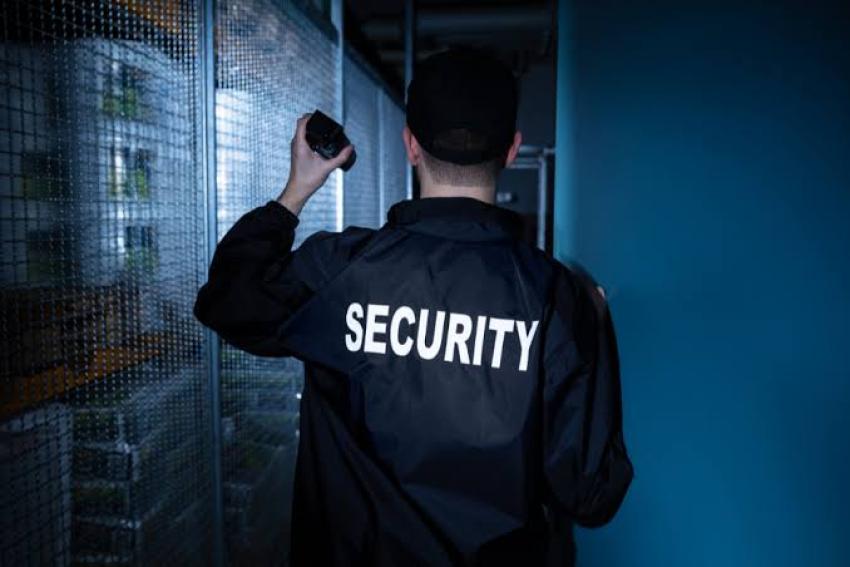
Guards can conduct scheduled patrols throughout the facility and inspect areas such as storage sections, loading docks, parking lots, fences, and entrances. They may also look for signs of unauthorized activity, damaged locks, open doors, or other unusual conditions.
Security personnel can work closely with warehouse managers to identify vulnerable areas and strengthen existing security procedures. Their visible presence can also help discourage unauthorized activity around the property.
3. Monitoring Surveillance Systems and Identifying Risks
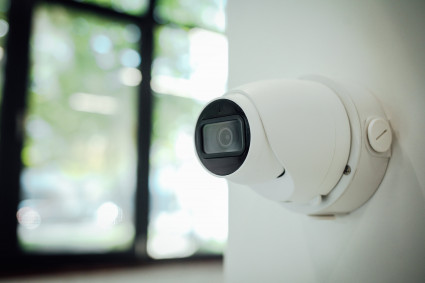
Modern warehouses increasingly use CCTV cameras, alarms, access-control systems, motion sensors, and other security technologies. However, technology works most effectively when trained personnel monitor and respond to the information it provides.
Modern Warehouse Security Guards may monitor surveillance feeds and report unusual activity. They can pay attention to restricted areas, loading docks, entrances, and other locations where security incidents could occur.
Guards may also identify potential safety hazards during their routine activities. For example, they might notice an unsecured gate, poor lighting, damaged fencing, or an unusual gathering near the facility. Reporting these issues early can help management take corrective action before they become larger problems.
Technology combined with trained security personnel can create a more comprehensive security approach for warehouse operations.
4. Responding to Emergencies and Security Incidents
Warehouses can experience different types of emergencies, including fires, accidents, medical incidents, security breaches, and equipment-related problems. A security guard is often among the first people expected to respond when an incident occurs.
Warehouse Security Guards can follow established emergency procedures, alert the appropriate personnel, restrict access to affected areas, and contact emergency services when required. They may also help guide employees and visitors toward designated emergency exits or assembly points.
Quick communication is especially important during emergencies. Security guards can maintain communication with warehouse management, supervisors, emergency responders, and other relevant personnel.
Businesses can strengthen emergency preparedness by ensuring that guards understand evacuation procedures, emergency contacts, reporting requirements, and site-specific safety protocols.
5. Securing Loading Docks and Transportation Areas
Loading docks are among the busiest areas of a warehouse. Trucks, delivery personnel, contractors, forklifts, and warehouse employees may move through these areas throughout the day. The constant movement can create opportunities for unauthorized access, theft, or confusion about shipments.
Security guards can monitor loading and unloading activities, verify authorized personnel, and observe vehicle movement. Depending on company procedures, they may check documentation and ensure that vehicles enter and exit through designated points.
This responsibility becomes particularly important when warehouses are part of larger transportation and distribution networks. Professional Logistics Security Services can help businesses maintain security across warehouses, transportation points, and related facilities.
Security personnel can also report suspicious behavior or discrepancies to management for further investigation. Their presence provides an additional layer of control in areas where valuable goods frequently move.
6. Maintaining Security Records and Supporting Compliance
Security work also involves accurate documentation. Guards may maintain visitor logs, vehicle records, incident reports, patrol records, access records, and other site-specific documentation.
Detailed records can help warehouse managers understand security events and identify recurring issues. If an incident occurs, accurate documentation can provide useful information about what happened, when it happened, and who was involved.
This reporting responsibility also makes security guards an important part of an organization’s broader risk-management process. Regular reports can help management review procedures and make improvements where necessary.
Why Professional Warehouse Security Matters
Warehouse security is connected to more than protecting physical inventory. A well-managed security program can support employee safety, operational continuity, supply chain reliability, and protection of company property.
The requirements of each facility can be different. A distribution warehouse may need strong vehicle and loading-dock controls, while an industrial facility may require additional monitoring of equipment and restricted areas. Similarly, Industrial Security Guards may have responsibilities related to manufacturing environments, machinery, production areas, and industrial assets.
Security requirements can also vary between industries. For example, Construction Site Security focuses on protecting construction materials, equipment, tools, and unfinished structures, while warehouse security generally focuses on inventory, access control, transportation areas, and facility operations.
A professional security team can assess the specific requirements of a site and implement procedures that match its operational environment.
Building a Stronger Warehouse Security Strategy
Effective warehouse security usually involves multiple layers rather than relying on a single measure. Physical security personnel can work alongside CCTV systems, alarms, access-control technology, lighting, fencing, visitor-management procedures, and employee awareness programs.
Companies should also regularly review their security procedures. Changes in warehouse operations, inventory value, staffing, transportation schedules, or facility layout may create new risks. Regular assessments can help organizations identify vulnerabilities and update their security practices.
Training is another important factor. Guards should understand the facility layout, emergency procedures, access-control requirements, communication protocols, and incident-reporting processes. Regular training can help security personnel respond consistently to different situations.
Conclusion
Modern warehouses require a security approach that goes beyond simple gatekeeping. Warehouse Security Guards can help control access, protect inventory, monitor surveillance systems, respond to emergencies, secure loading areas, and maintain important security records.
As supply chains become increasingly complex, businesses can benefit from combining trained security professionals with appropriate technology and well-defined procedures. Whether a company operates a distribution center, industrial warehouse, or logistics facility, professional security can provide an important layer of protection for people, property, and daily operations.