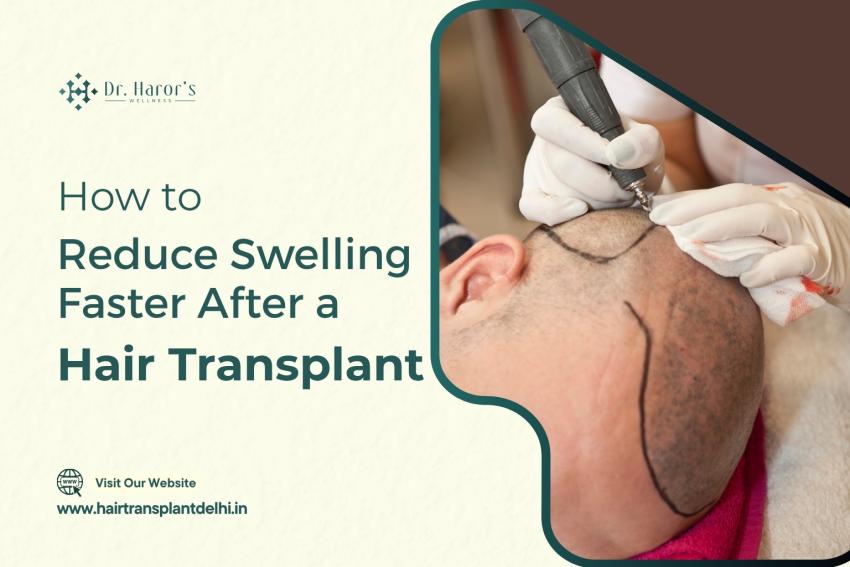
Advanced pattern baldness can knock your confidence, and for a lot of people, a hair transplant turns out to be the fix that finally works. Over the years, this procedure has come a long way — it's far less invasive than it used to be, and the results look genuinely natural. That said, even the gentlest surgical technique still comes with some downtime. A little swelling, some tenderness, maybe a few days of discomfort — none of it sticks around forever, but it helps to know what's coming.
If you've landed on this page, chances are you've just gone through your procedure and you're looking for real answers on what to do next. Getting the recovery part right — including a few tried-and-tested Hair Transplant recovery tips — makes a noticeable difference in how smooth (and how fast) your healing turns out to be.
Why Does Swelling Happen After a Hair Transplant?
Clinics offering Hair Transplant Delhi today rely on refined techniques like FUE (Follicular Unit Extraction) and DHI (Direct Hair Implantation), both of which are designed to minimize trauma to the scalp. Even so, some swelling is almost unavoidable, and it's nothing to panic about.
Here's what's actually happening: when follicles are lifted from the donor area and placed into the balding sections, the tissue around those spots reacts the way it would to any minor injury — it gets a bit puffy. This is your body doing exactly what it's supposed to do. For most patients, the swelling peaks within the first few days and fades on its own shortly after. Still, sticking to a few practical recovery habits can speed things along considerably.
Practical Ways to Bring Down Swelling Faster
1. Sleep With Your Head Propped Up
This one's simple but genuinely effective. Fluid tends to pool around the forehead and eyes when you're lying flat, so stacking two pillows (or using a recovery pillow) keeps your head slightly elevated and stops swelling from settling in your face overnight.
2. Ice — But Only With Your Surgeon's Go-Ahead
Cold compresses can calm inflammation and take the edge off any discomfort. But don't just grab an ice pack and apply it wherever — check with your surgeon first about where it's safe to use, since pressing on or near the fresh grafts can do more harm than good.
3. Stick to the Medication Plan You're Given
Your hair transplant surgeon will likely prescribe something to manage swelling, pain, or the general post-op discomfort. Take it exactly as instructed — no skipping doses, and definitely no self-prescribing anything extra on your own.
4. Skip the Heavy Workouts for Now
Bending over, jogging, lifting weights — anything that gets your heart rate up sends more blood to the scalp, and that can make swelling worse in those first critical days. Ease back into your regular routine only once your surgeon gives the okay.
5. Drink More Water Than You Think You Need
Your new grafts need hydration just as much as the rest of your body does. Water should be your default, but fresh vegetable juices or electrolyte drinks are a nice addition too, especially if you're recovering during the warmer months.
When Is It Time to Call Your Surgeon?
A bit of swelling is completely normal in the days right after your procedure — most people see it settle down within a week. That said, keep an eye on it. If it seems to be getting worse rather than better, or it's sticking around far longer than your surgeon told you to expect, don't wait it out. Reach out and get it checked.
Final Thoughts
Picking the right clinic matters just as much as the procedure itself. If you're looking into a hair transplant in Delhi, take the time to find a surgeon with real experience and a track record of guiding patients through both the procedure and the recovery that follows. And once the surgery's done, the rest is largely up to you: protect your grafts, follow the medication schedule, and give your scalp the time it genuinely needs to heal. Following these Hair Transplant recovery tips isn't complicated — it just takes a little patience, and the results are worth it.