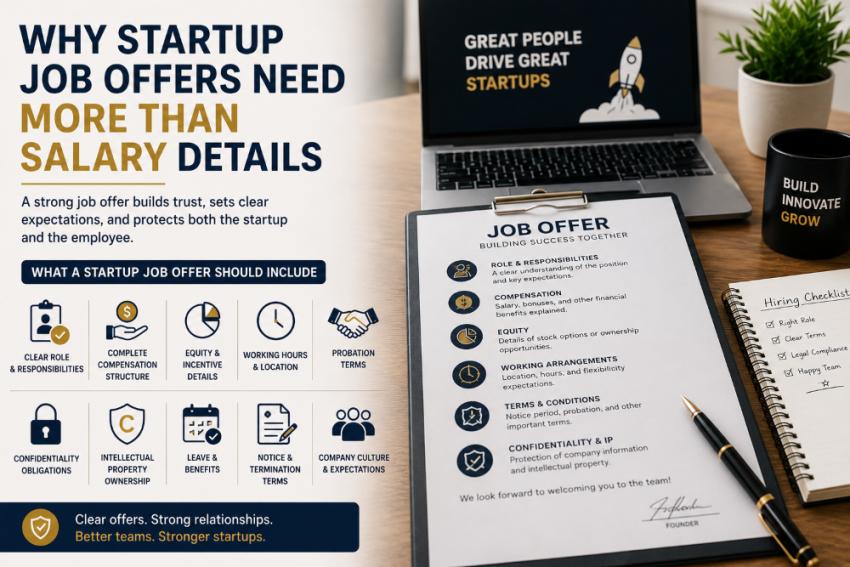
Salary is often the first thing candidates look at when they receive a job offer. For startups, however, a job offer needs to communicate much more than a monthly figure. A startup employee may take on responsibilities across several areas. Their role may evolve as the business grows. They may receive incentives, equity, flexible working arrangements or access to valuable business information. Without clear terms, these arrangements can create confusion for both the employer and employee.
A well drafted job offer provides clarity before the employment relationship begins. It can also reduce the risk of disputes over compensation, responsibilities, intellectual property, confidentiality and termination. For founders, the offer letter should therefore be viewed as an important legal and business document rather than a simple salary confirmation.
Why Salary Alone Is Not Enough
A salary figure does not explain the complete employment relationship. Two employees may receive the same salary but have very different responsibilities, working hours, benefits and contractual obligations. A startup may also offer performance incentives, commissions or equity alongside the basic salary.
If these terms are discussed informally, misunderstandings can develop later. A detailed offer should give the candidate a clear picture of the proposed employment arrangement. It should also distinguish between confirmed terms and benefits subject to separate policies or agreements. Clarity at the hiring stage can prevent difficult conversations later.
Define the Job Role Clearly
Startups often operate in fast changing environments. Employees may be expected to handle several responsibilities. Even so, the core role should be clearly explained. The offer should identify the proposed position and provide a reasonable description of the employee’s duties.
A clear role description helps both sides understand expectations. It can also support performance management if questions arise about an employee’s responsibilities. Founders should avoid making broad promises about promotions or future positions unless they are prepared to document and honour those commitments.
Explain the Complete Compensation Structure
The salary should be presented alongside other elements of compensation.
Depending on the startup, the package may include:
- Basic salary
- Performance bonuses
- Sales commissions
- Joining incentives
- Reimbursements
- Benefits
- Employee stock options or other equity arrangements
Each component should be explained clearly. For variable compensation, the startup should specify relevant eligibility conditions and payment mechanisms. An employee should understand whether a bonus is guaranteed or performance based. If an incentive depends on specific targets, those targets should be reasonably clear.
Be Careful With Equity Promises
Equity can be an attractive part of a startup job offer. It can also create legal and financial complexity. Founders sometimes mention equity casually during recruitment. A candidate may interpret a statement such as “you will receive shares” as a guaranteed ownership interest.
Equity arrangements should therefore be documented carefully. The offer should distinguish between an intention to provide equity and a legally established grant. The relevant scheme, eligibility requirements, vesting terms and other conditions should be communicated clearly. Separate documentation may also be necessary. Candidates should understand what they are receiving before relying on an equity promise.
Include Working Hours and Location
Salary does not explain how an employee is expected to work. The offer should provide relevant information about working hours, workplace location and applicable working arrangements. If remote or hybrid work is available, the terms should be reasonably clear.
Startups may change working arrangements as business needs evolve. Any flexibility should be communicated without creating unnecessary uncertainty. Clear expectations can also reduce disagreements about attendance, availability and work schedules.
Mention Probation Terms
Many startups use probationary periods for new employees. If probation applies, the offer should explain its duration and relevant conditions. The document may also explain how performance will be assessed and what happens at the end of the probation period.
Founders should ensure probation terms are consistent with applicable employment requirements and the final employment contract. A clear probation structure gives both sides an opportunity to understand expectations before the employment relationship becomes more established.
Protect Confidential Business Information
Startup employees may gain access to sensitive information soon after joining.
This can include:
- Customer information
- Financial records
- Product plans
- Pricing information
- Source code
- Business strategies
- Marketing plans
- Internal processes
The offer or accompanying employment documentation should make confidentiality expectations clear. A confidentiality clause can establish the employee’s responsibilities regarding sensitive information. It should be supported by sensible internal security practices. Employees should also know what information they can access and how company information should be handled.
Address Intellectual Property Ownership
Intellectual property is particularly important for technology and innovation driven startups. Employees may create software, designs, content, inventions, databases or other valuable work during their employment. The startup should establish appropriate arrangements concerning ownership and use of this work.
The employment documentation should address intellectual property in clear language. Where additional assignments or documents are required, these should be completed appropriately. Founders should not assume payment of salary automatically resolves every intellectual property issue. Clear provisions can protect both the startup and the employee by reducing uncertainty about ownership.
Include Notice and Termination Terms
A job offer should also explain what happens if the employment relationship ends. Notice periods, termination provisions and relevant conditions should be addressed in the employment documentation. The terms should comply with applicable employment laws.
This is important for both parties. Employees should know how much notice may be required if they resign. Employers should understand the process they need to follow if they decide to end the employment relationship. Clear terms can reduce confusion during an already difficult transition.
Explain Leave and Other Benefits
Candidates should understand benefits beyond salary. The offer can provide information about leave, holidays, insurance, reimbursements and other applicable benefits. Some benefits may be governed by company policies, so the offer can refer to those policies rather than repeating every detail.
The important point is transparency. If a benefit is discretionary or subject to eligibility requirements, the offer should communicate this appropriately.
Consider Data Protection Responsibilities
Employees often receive access to company systems and personal information. Their role may involve handling customer data, employee records or confidential business information. The hiring documentation should communicate relevant data protection responsibilities.
Startups should also explain how employee information will be collected and used where required. Appropriate access controls and internal policies should support the contractual terms. Data protection should not be treated as a concern only for large companies. Startups also need responsible information handling practices.
Avoid Ambiguous Language
A job offer should be easy to understand. Complex language can make an agreement harder to interpret. Ambiguous statements can also create different expectations between the founder and candidate. Founders should use clear wording and avoid unnecessary legal terminology. Important conditions should be stated directly.
For example, if a bonus is subject to performance, the offer should say so. If equity is subject to a separate scheme, the offer should make this clear. Good legal drafting should provide clarity rather than create confusion.
Review the Offer Before Sending It
A job offer should be reviewed before it reaches the candidate. Founders should check whether the salary, job title, responsibilities, benefits and joining date are correct. They should also confirm whether confidentiality, intellectual property and termination provisions are properly addressed.
Legal review can be particularly useful where the role involves senior management, valuable intellectual property, sensitive data or equity. Consulting the best law firms for startups in india can help founders identify important legal issues before an offer becomes part of the employment relationship. Professional review can also help ensure the offer aligns with the startup’s wider employment documentation.
Align the Offer With the Startup’s Legal Structure
Employment documents should fit within the startup’s broader legal framework. Founders should ensure the business has the appropriate structure and registrations before expanding its workforce. Corporate records, ownership arrangements and regulatory responsibilities should be managed alongside employment matters.
Founders establishing a new venture can also review the requirements to register a startup company in India before making significant hiring commitments. A properly structured business can create a stronger foundation for employment, investment and future growth.
Job Offers Should Create Mutual Clarity
A good job offer is not designed only to protect the startup. It should also help the candidate make an informed decision. Employees deserve clarity about their role, compensation, benefits and obligations. Founders benefit from having clear expectations before the person joins.
This creates a stronger basis for the employment relationship. A transparent offer can also improve the candidate experience. People are more likely to trust an employer when important terms are communicated openly.
Final Thoughts
Startup job offers need more than salary details because employment involves far more than payment. A well structured offer should address the role, compensation, equity, working arrangements, probation, confidentiality, intellectual property, benefits and termination terms. It should also align with applicable employment laws and the startup’s wider legal structure.
Founders should avoid relying on informal promises or incomplete documents. Clear terms can reduce misunderstandings and provide greater certainty for both sides. As startups grow, their employment arrangements will become more complex. Establishing good practices from the first hire can make future recruitment easier and help the business build a legally sound and transparent workplace.