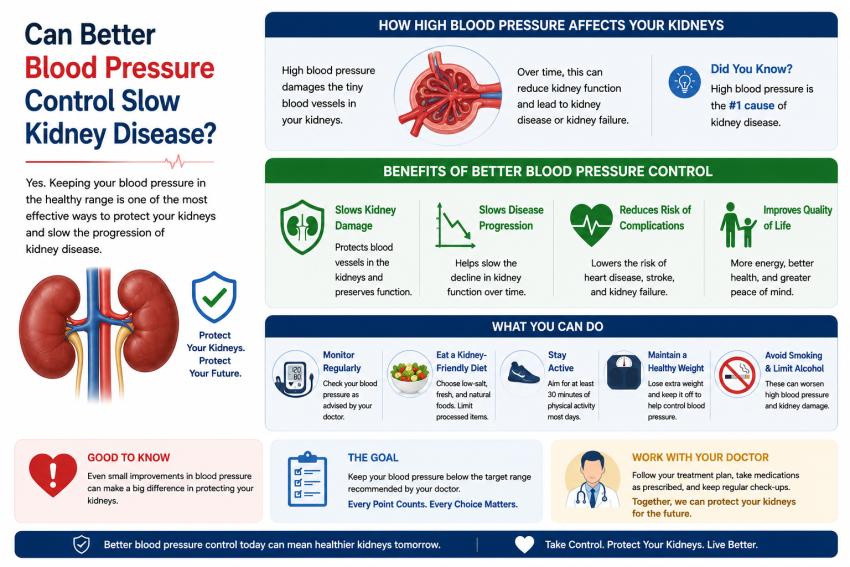
Being told you have kidney disease alongside high blood pressure can feel like facing two problems at once. Can better blood pressure control slow kidney disease, or has the damage already been set in motion? The reassuring truth is that blood pressure management remains one of the most powerful tools available for protecting the kidneys you still have, at almost any stage of disease.
Let's look at why this connection is so strong and what it means for your treatment plan.
Why Are Blood Pressure and Kidney Disease So Closely Linked?
The kidneys filter blood through millions of tiny vessels called nephrons. High blood pressure damages these delicate vessels over time, reducing the kidneys' ability to filter waste properly. At the same time, damaged kidneys struggle to regulate blood pressure effectively, creating a cycle where each condition can worsen the other.
Breaking this cycle is exactly where blood pressure control becomes so valuable.
How Does Controlling Blood Pressure Protect the Kidneys?
Lowering blood pressure does more than reduce a single number. It directly reduces the strain on the kidney's blood vessels, slowing the progression of ongoing damage.
Reducing Pressure Within the Kidney's Filtering Units
Lowering blood pressure reduces the force on the nephrons, helping preserve the remaining filtering function.
Decreasing Protein Loss in Urine
High blood pressure often increases protein leakage into the urine, a sign of kidney stress. Better blood pressure control frequently reduces this protein loss, which is closely tied to slower disease progression.
Preserving Remaining Kidney Function for Longer
While kidney disease often can't be fully reversed, consistent blood pressure control can meaningfully slow how quickly function declines, buying valuable time and stability.
What Blood Pressure Target Is Recommended for Kidney Disease Patients?
Target ranges can vary based on individual health factors, but many doctors aim for tighter control in patients with kidney disease compared to the general population, particularly when protein is present in the urine. Your nephrologist will personalize this target based on your specific kidney function and overall health.
Which Medications Are Commonly Used?
Certain blood pressure medications offer added kidney protection beyond simply lowering blood pressure.
ACE inhibitors: Help relax blood vessels and reduce pressure within the kidney's filtering units.
ARBs (angiotensin receptor blockers): Work similarly to ACE inhibitors and are often used when the former isn't well tolerated.
Diuretics: Help the body eliminate excess fluid and sodium, easing overall blood pressure load.
Other combination therapies: Sometimes needed for patients whose blood pressure remains difficult to control with a single medication.
What Else Supports Kidney Protection Alongside Medication?
Blood pressure control works best as part of a broader approach:
Reducing sodium intake to ease fluid retention
Monitoring blood sugar closely if diabetes is also present
Attending regular checkups to track kidney function through blood and urine tests
Avoiding medications that can further stress the kidneys, such as certain over-the-counter pain relievers, unless approved by your doctor
Staying consistent with prescribed medications, even when you feel well
How Often Should Kidney Function Be Monitored?
Regular monitoring through blood tests, such as creatinine and estimated GFR, along with urine tests for protein levels, helps your care team track progress and adjust treatment as needed. The frequency depends on your specific stage of kidney disease and overall stability.
Final Thoughts
So, can better blood pressure control slow kidney disease? Yes, it's one of the most effective steps you can take, often slowing progression significantly and preserving kidney function for longer. Staying consistent with treatment truly makes a difference, even when progress feels gradual.
If you're managing kidney disease alongside high blood pressure, Dr. Chandan Chaudhari, a trusted Kidney Transplant Specialist in Mumbai, can help you build a personalized plan to protect your kidney function for the years ahead.