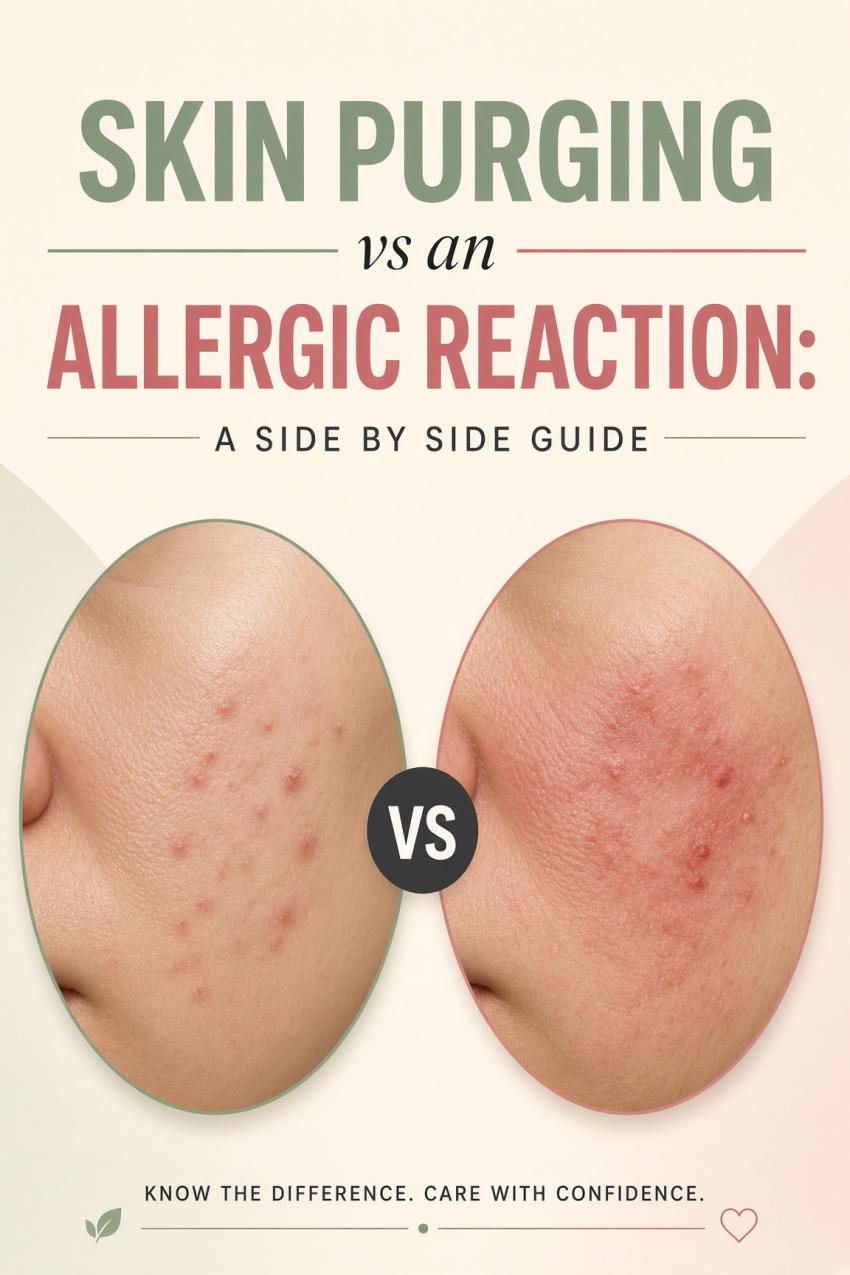
You just tried a new product, and your skin is suddenly acting up. Before you decide whether to keep using it or toss it immediately, it helps to know exactly what you are dealing with. Purging and allergic reactions can look surprisingly similar at first glance, but they come from completely different causes and need different responses.
What Purging Actually Is
Purging happens when a product speeds up your skin's natural cell turnover, usually because it contains ingredients like retinoids or exfoliating acids. This faster turnover pushes existing congestion, oil, dead skin, or buildup that was already sitting under your skin to the surface sooner than it would have appeared on its own.
In simple terms, purging is not new damage; it is old buildup coming out faster because of what the product is designed to do. It is annoying, but it usually means the product is working, even if it does not feel that way in the moment.
What an Allergic Reaction Actually Looks Like
An allergic reaction, on the other hand, happens when your skin reacts negatively to something in the product, whether it is a fragrance, a specific ingredient, or a preservative your skin simply does not tolerate well. Unlike purging, this is not your skin working through existing congestion; it is your skin responding defensively to something it perceives as irritating or harmful.
Allergic reactions can show up as widespread redness, swelling, intense itching, or hives, and they often appear in areas that have nothing to do with your usual breakout zones.
Key Differences to Look For
Location is one of the easiest ways to tell these apart. Purging typically shows up in your regular problem areas, since that is where congestion was already building up beneath the surface. An allergic reaction, however, can appear anywhere the product touched your skin, often spreading beyond just your usual trouble spots.
Timing also differs quite a bit. Purging tends to build gradually and settle down within a few weeks as your skin adjusts. Allergic reactions usually show up quickly, sometimes within minutes to a few hours of applying a product, and they do not really improve with continued use; they tend to get worse instead.
Texture and symptoms offer another clue. Purging usually looks like small, similar breakouts that resemble the acne you already deal with. An allergic reaction often brings swelling, intense itching, burning, or hives, symptoms that regular acne or purging typically does not cause.
What to Do If You Suspect Purging
If you believe your skin is purging, the best approach is patience combined with gentle care. This is not the time to add more active ingredients or panic and switch products immediately. Sticking to calm, supportive basics allows your skin to work through this adjustment period without additional stress.
A Gotu Kola cleanser for clear skin can be especially helpful here, since it cleanses gently while calming any irritation that comes along with the purging process, without stripping your skin further during an already sensitive time.
What to Do If You Suspect an Allergic Reaction
If your skin shows signs of an allergic reaction, stop using the product immediately. Continuing to use something your skin is genuinely reacting to can worsen the response and potentially lead to more serious irritation or complications.
Rinse the area gently with cool water, avoid introducing any other new products while your skin calms down, and stick to simple, fragrance-free basics until the reaction fully settles. If symptoms are severe, spreading rapidly, or accompanied by significant swelling or difficulty breathing, seek medical attention right away, since this could indicate a more serious allergic response.
How Long Each Situation Typically Lasts
Purging usually resolves within four to six weeks as your skin adjusts to increased cell turnover. If breakouts continue well beyond this window without improvement, it might not be purging anymore, and it is worth reconsidering the product.
Allergic reactions, once you stop using the trigger product, generally start improving within a day or two, though this can vary depending on the severity of the reaction and your skin's overall sensitivity.
Choosing Products That Reduce This Confusion in the First Place
Patch testing new products before applying them to your entire face is one of the best ways to avoid this confusion altogether. Choosing gentle, well-formulated products from a brand you trust, like Rose & Rabbit skincare brand, also reduces the likelihood of harsh reactions, since simpler formulations tend to be easier for your skin to tolerate and easier to troubleshoot if something does feel off.
Final Thoughts
Purging and allergic reactions can look alarmingly similar at first, but paying attention to location, timing, and specific symptoms makes it much easier to tell them apart. Purging usually means your skin is adjusting to something that is genuinely working, while an allergic reaction signals it is time to stop and reassess immediately. Knowing the difference can save you from unnecessary frustration, or worse, continuing to use something your skin is clearly telling you to avoid.