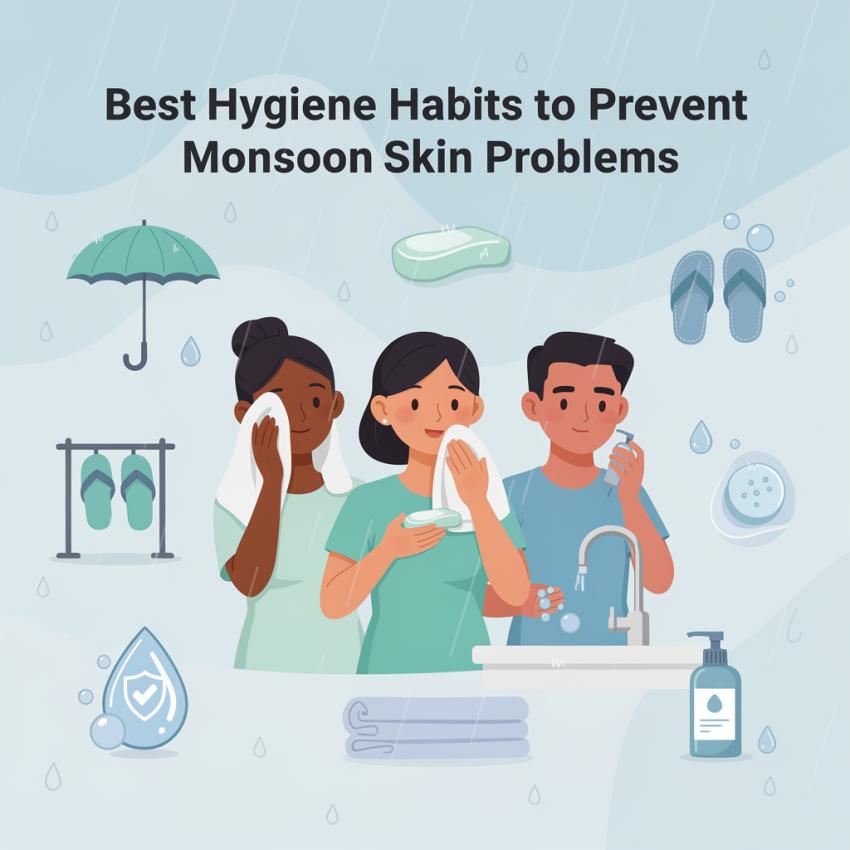
Monsoon brings relief from the heat, but it also brings a fair share of skin troubles. Rashes, breakouts, itching, and infections seem to pop up more during these months, and a lot of it comes down to simple hygiene habits that either help or hurt your skin without you even realizing it. A few small changes can make a big difference in how your skin holds up this season.
Why Hygiene Matters More During Monsoon
The combination of humidity, sweat, and constant dampness creates the perfect environment for bacteria and fungus to grow, both on your skin and on the things that touch it daily, like clothes, towels, and footwear. This is why monsoon related skin issues are so common, even for people who rarely deal with skin problems the rest of the year.
Good hygiene habits during this season are not about being overly cautious, they are about giving your skin the best chance to stay balanced despite everything the weather throws at it.
Wash Off as Soon as You Get Wet
If you get caught in the rain, try to wash off as soon as you reasonably can, rather than letting it dry naturally on your skin. Rainwater often carries pollutants and dirt, especially in cities, and letting it sit on your skin for hours increases the chance of irritation or breakouts.
A quick rinse followed by a gentle cleanser removes whatever the rain left behind before it has a chance to cause any real trouble.
Keep Your Skin Dry in Trouble Spots
Certain areas of your body are more prone to problems during monsoon simply because they stay damp longer. Feet, underarms, and other skin folds need extra attention, since trapped moisture in these areas is often what leads to fungal infections or rashes.
Make it a habit to dry these spots thoroughly after washing or getting wet, rather than just a quick towel pass and moving on. This small step alone can prevent a lot of the itching and irritation people commonly deal with this season.
Change Out of Damp Clothes Quickly
Wearing damp clothes for extended periods, whether from rain or sweat, creates a warm, moist environment that bacteria and fungus thrive in. Changing into dry clothes as soon as possible, especially socks and innerwear, helps avoid this problem before it even starts.
Keeping a spare set of clothes handy, especially if you commute during unpredictable weather, is a simple habit that goes a long way in preventing skin irritation caused by prolonged dampness.
Do Not Over Wash Your Face
It is tempting to wash your face more often during humid weather since it feels sticky or oily throughout the day. But over washing can actually strip your skin's natural barrier, making it more vulnerable to irritation rather than less.
Stick to cleansing twice a day, morning and night, with a gentle cleanser rather than washing every time your skin feels a bit oily. Blotting sheets or a light mist can help manage midday shine without disrupting your skin barrier through excessive washing.
Choose Breathable Fabrics
Synthetic fabrics that do not allow your skin to breathe properly can trap sweat and moisture against your skin for long periods, increasing the risk of rashes, especially in areas where clothing sits tightly. Cotton and other breathable materials tend to work much better during monsoon, since they allow moisture to evaporate rather than staying trapped against your skin.
Avoid Sharing Personal Items
Fungal infections spread easily through shared towels, footwear, or other personal items, especially in humid conditions where fungus thrives. Avoiding this kind of sharing during monsoon specifically can prevent a lot of common infections that tend to pass between family members or roommates during this season.
Support Your Skin With the Right Products
Alongside good hygiene habits, using gentle, supportive products helps your skin stay balanced through the season. A Gotu Kola face moisturizer to get even skin tone works well here, since it hydrates without feeling heavy in humid weather, while also helping calm any irritation or unevenness caused by monsoon related breakouts.
Keeping your routine simple and consistent, rather than switching products often, gives your skin the stability it needs to handle the unpredictable nature of this season.
When to See a Doctor
If you notice persistent itching, a rash that does not improve within a few days, or any signs of infection like swelling or pus, it is worth getting it checked by a dermatologist rather than waiting it out. Some monsoon related skin issues need proper treatment and will not clear up with hygiene habits alone.
Final Thoughts
Preventing monsoon skin problems often comes down to a few consistent hygiene habits, drying off properly, changing out of damp clothes quickly, and avoiding shared personal items. Combined with a gentle, supportive skincare routine, these small changes can make a real difference in how your skin holds up through the wettest months of the year. A little extra care now can save you a lot of discomfort and irritation later in the season.