If you have shopped for skincare lately, you have probably noticed more brands talking about refillable packaging. It sounds nice on paper, but a lot of people are not quite sure what it actually means or whether it makes a real difference. Is it just a marketing term, or does it genuinely help the environment?
Let's break down what refillable packaging really means and why it matters more than most people realize.
What Refillable Packaging Actually Is
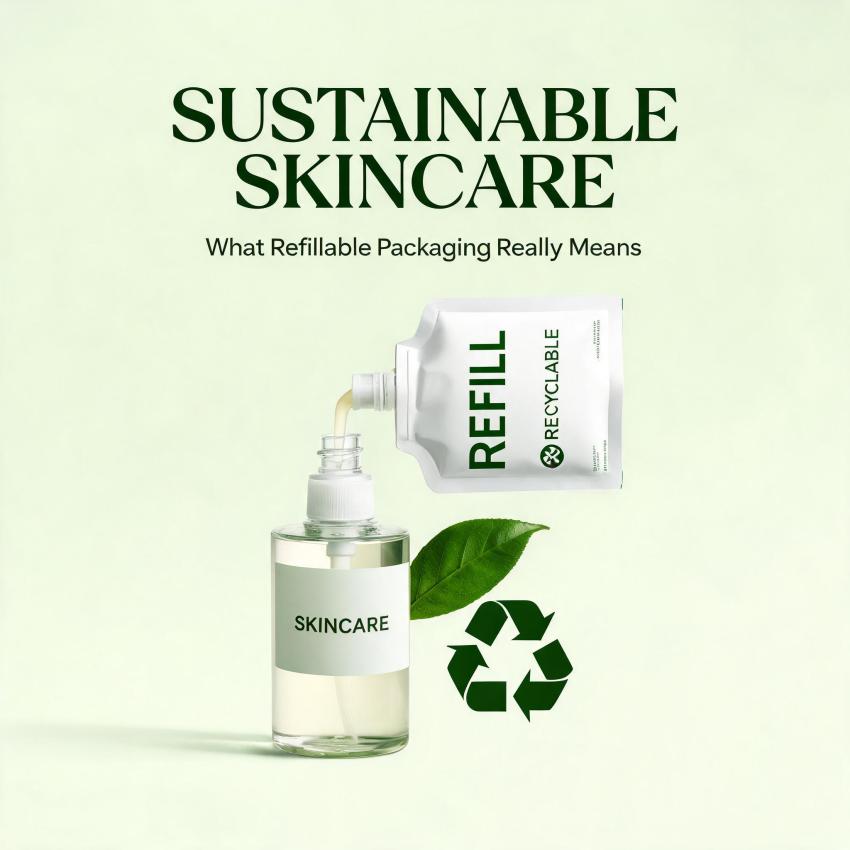
Refillable packaging is exactly what it sounds like. Instead of throwing away the entire bottle or jar once your product runs out, you buy a refill pack and simply top up the same container again. The outer packaging, the part that usually ends up as plastic waste, gets used again and again instead of being tossed after a single use.
This might sound like a small change, but when you think about how many skincare bottles get thrown out every month across households, it adds up to a lot less waste over time. A single container that gets refilled five or six times means five or six fewer plastic bottles ending up in landfills.
Why This Actually Matters
A lot of skincare packaging is designed for single use, meaning once your moisturizer or cleanser runs out, the entire bottle, pump, and cap all get thrown away together. Even if the plastic is recyclable, a huge amount of it still does not actually get recycled properly, simply due to how recycling systems work in most places.
Refillable systems cut down on this problem directly. Since the sturdy outer packaging stays the same, only the actual product inside needs to be replaced, which usually comes in lighter, simpler packaging that requires far less plastic to produce and ship.
Does It Actually Help the Environment
Yes, but it is worth understanding how. The biggest impact comes from reducing the amount of new plastic being produced every time you need to restock a product. Manufacturing plastic bottles from scratch uses resources and energy, and refill packs typically use a fraction of that since they are simpler and lighter.
There is also the shipping side of things. Refill pouches or lighter refill bottles take up less space and weigh less than a brand new bottle with a pump and cap, which means less fuel used in transporting them. It is a small shift, but across thousands of orders, it genuinely reduces the overall footprint of getting skincare into people's hands.
How This Fits Into a Sustainable Skincare Routine for Oily Skin
Oily skin often means going through cleansers and lightweight moisturizers a bit faster, simply because these products tend to be used generously to manage excess oil throughout the day. This makes refillable packaging especially useful for anyone following a sustainable skincare routine for oily skin, since you are naturally restocking more often anyway.
Instead of buying a brand new bottle every single time, switching to refill options for your go to cleanser or gel moisturizer means you are cutting down waste without changing anything about how you actually use your products. It fits naturally into a routine that already involves regular repurchasing.
Making the Switch Without Overcomplicating It
You do not need to change your entire routine overnight to make this work. Start by picking one or two products you repurchase often, like your everyday cleanser or moisturizer, and look for refill options for those specifically. There is no need to feel pressured into overhauling every single product you own at once.
This is where having a few reliable go to products helps. Rose & Rabbit skincare combos are designed with this kind of long term use in mind, so once you find a set that works for your skin, sticking with the refill option becomes an easy, low effort habit rather than a big lifestyle change.
Common Doubts People Have
Some people worry that refill packs are not as clean or hygienic as a brand new bottle, but most refill systems are designed with proper sealing and simple pour or pump mechanisms to avoid contamination. As long as you are using the product within its shelf life and storing it properly, refills work just as well as buying new packaging every time.
Others assume refills are always more expensive, but in a lot of cases, they end up being priced lower than buying the full packaging again, since you are only paying for the product itself and not the container.
Final Thoughts
Refillable packaging is not just a trend, it is a small, practical change that adds up over time. It cuts down on unnecessary plastic waste, reduces the resources needed to keep restocking your favorite products, and fits easily into routines people already follow. Sustainability does not always need a big lifestyle overhaul, sometimes it just means rethinking how the products you already love get packaged and reused.