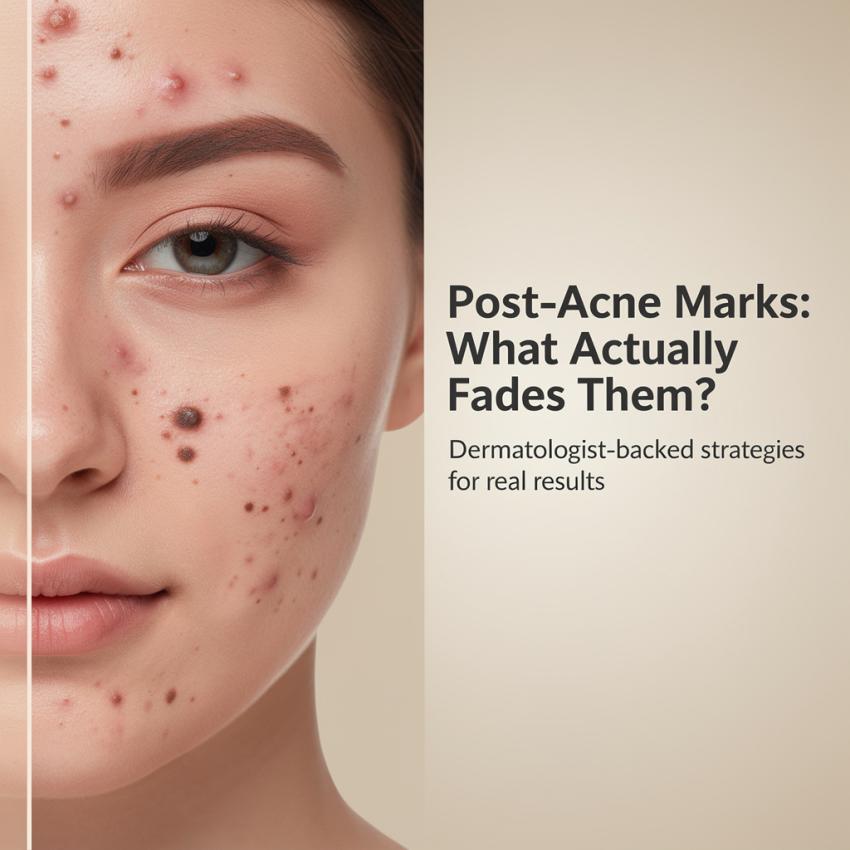
Getting rid of a pimple feels like a small victory. But then comes the part that often lasts much longer than the pimple itself. That flat, dark mark sitting on your skin for weeks, sometimes months, long after the breakout has healed.
Post acne marks are incredibly common and incredibly frustrating. And a big part of the frustration comes from trying product after product without a clear understanding of what is actually happening in your skin and what type of treatment your skin genuinely needs.
What Post Acne Marks Actually Are
Post acne marks are not the same as acne scars. A true acne scar involves a change in the texture of the skin, either a depressed indentation or a raised bump.
Post acne marks are different. They are flat, discolored patches left behind after the inflammation from a pimple resolves. The skin texture is smooth. What you are seeing is simply a concentration of excess melanin that formed as part of the skin's inflammatory response to the breakout.
The technical term for this is post inflammatory hyperpigmentation. Because it sits in the skin rather than involving structural tissue changes, it can be addressed effectively with the right topical ingredients. It just takes consistency and time.
Why Some Marks Fade Fast and Others Stick Around
People with medium to deep skin tones tend to experience more pronounced and longer lasting post acne marks because their skin contains more melanin producing cells that are more reactive to inflammation.
How the pimple was treated also matters. Picking or repeatedly touching an active breakout causes additional trauma to the skin and triggers a stronger inflammatory response, which usually means a darker and longer lasting mark afterward.
Sun exposure without protection can make marks significantly worse. UV radiation stimulates melanin production, and if your skin is already producing excess pigment in response to recent inflammation, sun exposure amplifies that response.
The Ingredients That Actually Work
Niacinamide is one of the most reliable and widely recommended ingredients for this concern. It works by blocking the transfer of melanin from the cells that produce it to the surface of the skin. With regular use, this gradually reduces the visibility of existing marks. It is also anti inflammatory, which addresses one of the root causes of mark formation.
Vitamin C is a brightener that works at a different point in the melanin process than niacinamide. It interferes with the production of melanin itself, which makes it particularly useful for more stubborn marks. It also provides antioxidant protection that helps the skin deal with ongoing UV damage.
Alpha arbutin is a gentler brightening ingredient that works well for sensitive or reactive skin that might struggle with vitamin C. It is a reliable option for daily use across most skin types.
Azelaic acid works by selectively targeting overactive melanin producing cells, making it particularly useful for post acne marks. It is also antimicrobial and anti inflammatory, which means it addresses both existing marks and helps prevent new breakouts.
Chemical exfoliants like lactic acid or glycolic acid speed up cell turnover. Dead skin cells, including those containing darker pigment, are shed more quickly, bringing fresher and lighter skin through faster.
The Role of Cleansing in Fading Marks
When your cleanser strips or irritates your skin, it triggers low level inflammation that keeps the melanin producing process active. You are essentially creating new stimulus for pigmentation at the same time as you are trying to fade existing marks.
Sunscreen Is the Step That Makes Everything Else Work
UV exposure is one of the strongest triggers for melanin production. When your skin already has excess melanin producing activity in the areas where you had breakouts, UV exposure amplifies that activity and makes marks significantly darker.
People who wonder how to get rid of dark spots on face permanently often overlook this step, and it is almost always the reason their other efforts are not delivering results as quickly as expected. Brightening serums and exfoliants make real progress on marks when used consistently. But if sunscreen is being skipped, UV exposure is reversing or slowing that progress every single day.
A lightweight, broad spectrum SPF 30 or 50 applied every morning is the single most effective thing you can do alongside your treatment ingredients to ensure marks actually fade.
How to Put the Routine Together
Morning: Gentle cleanser, vitamin C serum, lightweight moisturiser, sunscreen.
Evening: Gentle cleanser, niacinamide serum or azelaic acid, moisturiser. Chemical exfoliant two to three evenings a week in place of the niacinamide.
Keep this routine consistent for six to eight weeks before evaluating results. Surface level marks from recent breakouts often start showing visible improvement within four to six weeks. Older, more stubborn marks take longer, sometimes three to four months.
What to Avoid While Treating Post Acne Marks
Picking or touching existing marks makes them worse. Using too many actives at once can cause irritation that triggers new inflammation and potentially new marks. Simplicity is always better than overloading the skin.
The Bottom Line
Post acne marks are one of the more treatable skin concerns because they do not involve any structural tissue changes. The right combination of brightening ingredients, a gentle and supportive cleanser, consistent sunscreen use, and enough patience to let the process work will fade marks more effectively than any complicated routine or expensive single product.
Your skin wants to heal. The marks will fade. The only thing required from you is the right routine and the consistency to follow through with it long enough to see what it can do.