If you have ever stared into the mirror wondering why your "acne" refuses to go away no matter what you try, you are not alone. Many people spend months, sometimes years, treating breakouts with products meant for regular acne, only to see little or no change. The reason is often simple. What looks like acne is not always acne. It could be fungal acne, a completely different skin issue that needs a completely different approach.
What Exactly Is Fungal Acne?
Fungal acne is not caused by bacteria like regular acne. It happens when yeast, which naturally lives on our skin, grows out of control and clogs the hair follicles. This condition is actually called Malassezia folliculitis, but most people just call it fungal acne because it looks so similar to the real thing.
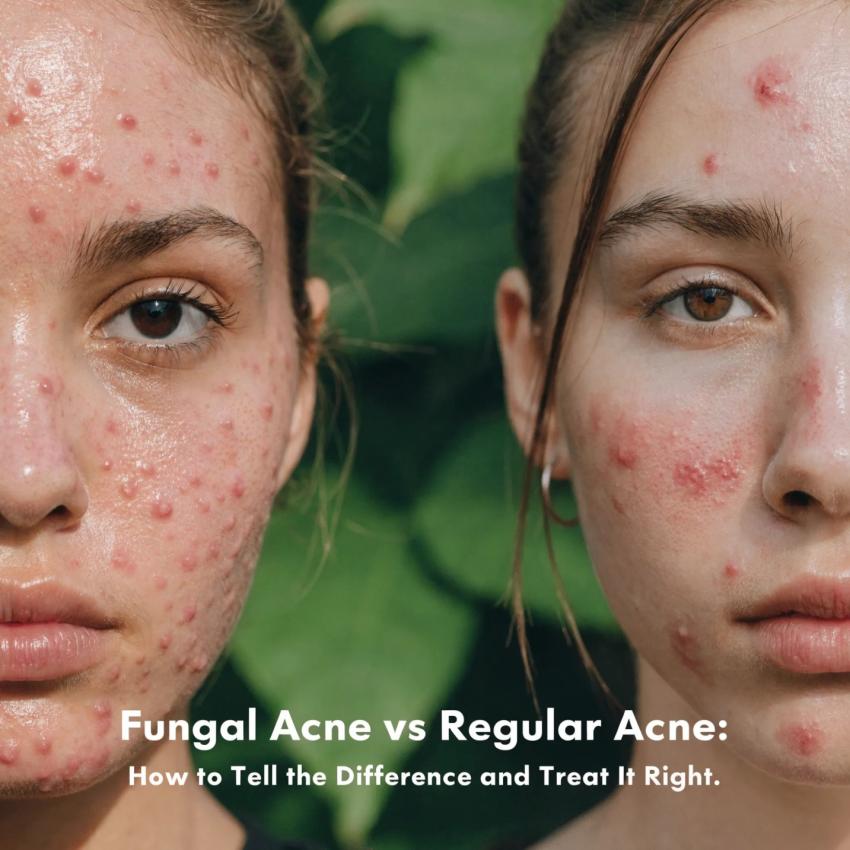
The tricky part is that fungal acne shows up as small, uniform bumps that are often itchy. Regular acne, on the other hand, usually comes in different sizes, can be painful, and shows up as blackheads, whiteheads, or deep cystic bumps. If your bumps look almost identical to each other and you feel more itching than pain, there is a good chance you are dealing with fungal acne.
Spotting the Difference
Here are a few simple signs that can help you tell the two apart.
Fungal acne tends to appear in clusters on the forehead, chest, back, and sometimes along the hairline. It rarely shows up as a single big pimple. Regular acne can appear anywhere on the face and often includes a mix of blackheads, whiteheads, and inflamed spots.
Another clue is how your skin reacts to weather changes. Many people notice their fungal acne gets worse during humid months. This is why having a proper monsoon skincare routine becomes so important. Excess moisture and sweat create the perfect environment for yeast to thrive, which is why breakouts often flare up during the rainy season.
If your acne treatments, especially ones with salicylic acid or benzoyl peroxide, are not helping at all, or if your skin seems to be getting worse, that is another strong hint you might be dealing with fungal acne rather than the regular kind.
Why Regular Acne Treatments Don't Work Here
This is where most people go wrong. Since fungal acne looks like regular acne, people reach for the same old spot treatments. But regular acne treatments are built to fight bacteria, not yeast. Using them on fungal acne can sometimes make things worse by disturbing your skin's natural balance even further.
Instead, fungal acne needs anti fungal ingredients. Ingredients like tea tree oil, sulfur, and gentle antifungal creams recommended by a dermatologist tend to work much better. It is also important to simplify your routine during a flare up. Too many products, especially heavy oils and thick creams, can feed the yeast and slow down healing.
Building a Skincare Routine That Actually Helps
Whether you are dealing with fungal acne, regular acne, or both, your cleanser matters more than people realize. A gentle, non irritating cleanser keeps your skin balanced without stripping away its natural protective layer. This is where something like a gotu kola cleanser for acne prone skin can be genuinely helpful. Gotu kola is known for calming irritated skin and supporting the skin barrier, which makes it a good pick for people whose skin reacts easily to strong products.
Along with the right cleanser, keeping your routine light during humid weather can make a real difference. This means switching to lighter moisturizers, avoiding heavy sunscreens that clog pores, and washing your face soon after sweating. These small adjustments to your monsoon skincare routine can prevent yeast from building up on the skin surface.
A Simple Guide to Follow
If you are unsure whether your acne is fungal or regular, here is a basic approach you can follow.
Start by cleansing with a gentle, sulfate free cleanser twice a day. Avoid heavy, oily products on your skin, especially moisturizers with ingredients that yeast tends to feed on. Give your skin some breathing room by skipping makeup during a flare up if possible. Watch how your skin responds over two weeks. If bumps reduce with antifungal treatment but not with regular acne products, that confirms it is fungal acne.
For anyone looking for a complete skincare guide for acne prone skin, the key lies in patience and consistency. Skin healing takes time, and switching products too often can confuse your skin rather than help it.
Final Thoughts
Acne, whether fungal or regular, can feel frustrating, especially when nothing seems to work. But once you understand what is actually happening on your skin, treating it becomes much easier. Pay attention to the pattern of your bumps, notice how your skin reacts to weather and products, and do not hesitate to consult a dermatologist if you are unsure. With the right routine and a little patience, clearer skin is absolutely possible.