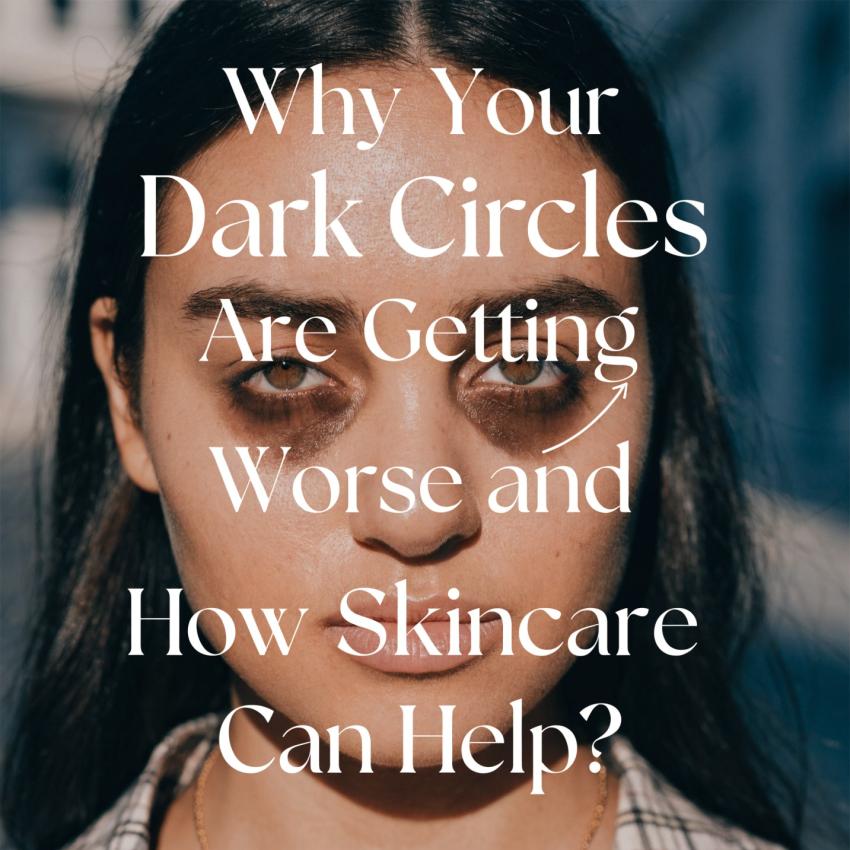
Most skincare concerns improve gradually when you start paying attention to them. You build a routine, you stay consistent, and over time things get better. Dark circles are different. For a lot of people, they seem to keep getting worse even when they are doing the right things, eating well, sleeping enough, staying hydrated, and using products specifically aimed at the under eye area.
If that is where you are right now, there is likely something more specific going on that a general eye cream is not going to fix on its own. Understanding the actual mechanism behind your dark circles is what makes the difference between treating a symptom and addressing the real cause.
The Under Eye Area Is Unlike Any Other Part of Your Face
Before getting into what makes dark circles worse, it helps to understand why this area behaves so differently from the rest of your skin.
The skin under your eyes is extremely thin, roughly four times thinner than the skin on most of your face. This means that anything happening below the surface, blood vessels, bone structure changes, fluid retention, or pigmentation, shows through far more visibly here than it would anywhere else.
This also means that the skin under the eyes responds to damage and aging much faster. UV exposure, dehydration, and repeated friction all leave marks here sooner and more visibly than on thicker facial skin. And because it is so thin and delicate, it requires a more careful and specific approach than just applying a standard face cream and hoping for the best.
Three Reasons Your Dark Circles Are Getting Darker
There is rarely just one reason why dark circles get worse over time. It is usually a combination of factors working together, and addressing only one of them while ignoring the others is why so many people feel like nothing is working.
The first reason is cumulative sun damage. The skin under the eyes gets daily UV exposure, but very few people apply sunscreen carefully to this area. Over months and years, this exposure increases melanin production in the under eye skin and breaks down the collagen that gives this area its thickness and structure. As the skin thins further and the pigmentation deepens, dark circles become progressively more visible and harder to fade with topical treatments alone.
The second reason is worsening dehydration of the under eye skin. This is not the same as drinking more water, although that helps too. As we age, the skin in this area loses its ability to retain moisture as efficiently as it once did. When the under eye skin is consistently dehydrated, it becomes more transparent, which allows the blood vessels and underlying structures to show through more clearly. The circles look darker and more pronounced simply because there is less skin in the way.
The third reason is lifestyle accumulation. Poor sleep, high stress, and increased alcohol or salt intake all have a cumulative effect on how the under eye area looks. Individually, these might not make a dramatic difference on any given day. But over months and years, they contribute to the progressive worsening that makes people feel like their dark circles are somehow getting ahead of them.
Why Most People Treat Dark Circles the Wrong Way
The most common approach to dark circles is to apply an eye cream containing caffeine or vitamin K and expect visible improvement within a few weeks. Sometimes this helps temporarily. But it rarely addresses the underlying reasons the circles are there or why they are getting worse.
Treating dark circles effectively requires thinking about all three components at the same time. You need to address pigmentation if that is a factor. You need to support the skin barrier and hydration of the under eye area. And you need to protect the skin from the ongoing UV exposure that keeps making things worse.
Most standalone eye products do one of these things reasonably well. Very few do all three. And almost none of them address the fact that everything you do before the eye product, specifically how you cleanse your face, affects how receptive the under eye skin is to any treatment at all.
How Cleansing Affects the Under Eye Area
This is something that very rarely comes up in dark circle advice, but it genuinely matters. When you cleanse with a product that is too harsh or stripping, the skin on your face, including the under eye area, enters a slightly stressed state. In this state, the skin barrier is compromised and absorption of treatment products is actually reduced rather than improved.
The skin around the eyes is particularly vulnerable to this because it is already so thin and sensitive. A gentle, barrier supporting cleanser makes the under eye skin more receptive to any product you apply afterward.
A Gotu Kola Cleanser for dark spots addresses this from the very first step. Gotu kola is one of the most well documented calming and barrier supporting plant extracts in skincare. Starting your routine with a cleanser that actively soothes inflammation and supports barrier function rather than stressing it means that your under eye treatments actually have a chance to absorb and do their job properly.
The Ingredients Worth Using Around the Eyes
Once you have a gentle cleansing base in place, a few specific ingredients make a real difference to the under eye area over consistent use.
Vitamin C is the most effective brightening ingredient for pigmented dark circles. It works by interfering with melanin production and also helps protect the skin from further UV damage when used in the morning. It is one of the few ingredients that simultaneously treats existing pigmentation and prevents new pigmentation from forming.
Caffeine reduces puffiness and temporarily constricts blood vessels, which makes the under eye area look less shadowed and tired. It works best applied in the morning and gives an immediate visible improvement even while longer term ingredients do their work over weeks.
Retinol, used in very low concentrations around the eyes, gradually thickens the thin under eye skin over time. As the skin becomes slightly more substantial, the underlying structures show through less visibly. This is a slow process but a meaningful one for dark circles that have a structural component.
Hyaluronic acid and peptides keep the under eye skin plumped and hydrated, which reduces the hollow, transparent quality that makes dark circles look worse. These work best as part of an evening routine where they have the whole night to absorb and support the skin's natural overnight repair.
Building a Routine That Covers All the Bases
The most effective approach for persistent dark circles is one that addresses pigmentation, hydration, and protection in a coordinated way rather than relying on a single product.
A good skincare trio, meaning a cleanser, a targeted treatment, and a supportive moisturiser that are chosen to work together rather than randomly combined, gives your skin a consistent, layered approach rather than a scattered one. The synergy between products that are designed to complement each other means each step reinforces the next rather than creating unnecessary competition on the skin.
Morning: Gentle barrier supporting cleanser, vitamin C serum applied to face and carefully around the eyes, a light eye cream or hydrating moisturiser, then SPF applied to the entire face including the under eye area.
Evening: Gentle cleanser, targeted under eye serum or eye cream with retinol or niacinamide, a hydrating moisturiser or eye cream with hyaluronic acid or peptides.
The Habit Changes That Actually Move the Needle
Skincare products alone will only take you so far. A few specific daily habits have a disproportionate impact on how the under eye area looks and how quickly it responds to treatment.
Applying sunscreen around the eyes every single morning is the single most impactful change most people can make. The temptation to skip this area because it feels too close to the eyes is understandable, but UV exposure is continuously worsening the pigmentation and skin quality in this area. A mineral sunscreen with zinc oxide is usually the safest and most comfortable option for the delicate under eye skin.
Sleeping with your head slightly elevated reduces overnight fluid accumulation that causes morning puffiness. This is a small habit that makes a noticeable difference to how the under eye area looks first thing in the morning.
Being very gentle when removing eye makeup or applying products around the eyes reduces the accumulated micro damage that contributes to pigmentation and thinning over time. Tapping rather than rubbing, and using your ring finger which naturally applies the least pressure, are habits worth building.
What to Expect and When
Dark circles that are primarily pigmented can start showing visible improvement within six to eight weeks of consistent treatment with vitamin C, niacinamide, and daily SPF. Older, more established pigmentation takes longer, sometimes three to four months of daily consistent care.
The structural component of dark circles, the hollowness and shadowing caused by volume changes, responds more slowly to topical skincare and may require a longer time commitment before visible results appear.
The most important thing is to keep going. The under eye area is one of the slower responding areas of the face, and the results that come from consistency over months are real and lasting in a way that short term treatment never delivers.
The Bottom Line
Dark circles get worse when multiple factors are working against you at the same time, and they get better when you address those factors in a coordinated way. A gentle, barrier supporting cleanser, the right brightening and hydrating treatment ingredients, and daily SPF worn all the way to the under eye area are the three pillars of a routine that actually moves the needle.
The under eye area is small, thin, and sensitive. It rewards gentleness, consistency, and patience more than any other area of the face. Give it both, and it will respond.