Introduction
HACCP certification is one of the most recognized food safety certifications worldwide. Organizations involved in food manufacturing, processing, packaging, storage, and distribution use the HACCP system to identify, evaluate, and control food safety hazards. As consumer expectations and regulatory requirements continue to increase, implementing a HACCP food safety management system has become essential for businesses seeking compliance, customer confidence, and market access.
This guide explains HACCP certification requirements, the certification process, and the benefits of implementing an effective HACCP program.
What Is HACCP?
HACCP stands for Hazard Analysis and Critical Control Points. It is a preventive food safety approach designed to identify potential biological, chemical, and physical hazards throughout the food production process.
Unlike traditional quality inspections that focus on finished products, the HACCP system emphasizes prevention throughout the production cycle. This proactive strategy helps organizations reduce risks, improve operational efficiency, and comply with regulatory requirements.
The framework is built around internationally accepted Hazard Analysis Critical Control Point principles, which provide a systematic approach to food safety risk management.
Key Requirements for HACCP Implementation
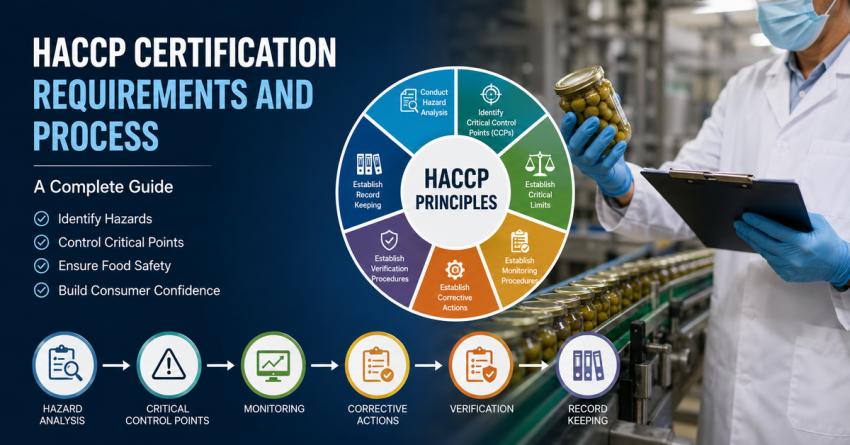
To achieve HACCP certification, organizations must establish and maintain a documented HACCP food safety management system. The certification process is based on the internationally recognized Hazard Analysis Critical Control Point principles.
Key requirements include:
- Conducting a hazard analysis for products and processes
- Identifying each critical control point (CCP)
- Establishing critical limits for CCPs
- Implementing monitoring procedures
- Defining corrective actions
- Performing verification activities
- Maintaining records and documentation
A well-developed HACCP plan is the foundation of certification. The plan should clearly identify food safety hazards, control measures, monitoring methods, and responsibilities throughout the production process.
HACCP Certification Process
The certification process generally follows a structured approach to ensure compliance with recognized food safety standards.
1. Gap Analysis
Organizations evaluate their existing food safety practices against HACCP requirements to identify areas requiring improvement.
2. HACCP System Development
A HACCP team develops the HACCP plan and establishes procedures for hazard control, monitoring, verification, and record keeping.
3. Documentation Preparation
Comprehensive documentation is essential for certification. Businesses must prepare policies, procedures, records, forms, and supporting evidence demonstrating compliance with HACCP requirements.
Organizations looking for guidance on documentation requirements can review detailed information about HACCP documents and manual requirements to ensure their system is audit-ready.
4. Employee Training
Personnel responsible for food safety activities should receive appropriate HACCP training to understand their roles and responsibilities.
5. Internal Audit
Before certification, organizations conduct internal audits to verify that the HACCP system is effectively implemented and maintained.
6. Certification Audit
An independent certification body evaluates the HACCP food safety management system through document reviews and on-site assessments. Successful organizations receive certification after demonstrating compliance.
Benefits of HACCP Certification
Implementing this internationally recognized food safety framework provides several advantages:
- Improved food safety and product quality
- Enhanced regulatory compliance
- Reduced food safety risks and recalls
- Increased customer confidence
- Better market access and business opportunities
- Stronger operational controls and continuous improvement
For many food businesses, HACCP certification is also a competitive advantage that demonstrates commitment to internationally accepted food safety practices. It can help organizations improve customer trust, meet supplier requirements, and expand opportunities in domestic and international markets. Organizations can further strengthen their food safety systems by implementing GMP that support HACCP certification and enhance operational controls throughout the production process.
Conclusion
HACCP certification helps organizations establish a systematic approach to food safety by applying Hazard Analysis and Critical Control Point principles across their operations. By developing a robust HACCP plan, implementing effective controls, and maintaining proper documentation, businesses can improve compliance, reduce risks, and strengthen customer trust.
As food safety expectations continue to evolve, adopting a HACCP food safety management system remains a valuable investment for organizations seeking long-term growth, regulatory compliance, and sustainable business success.