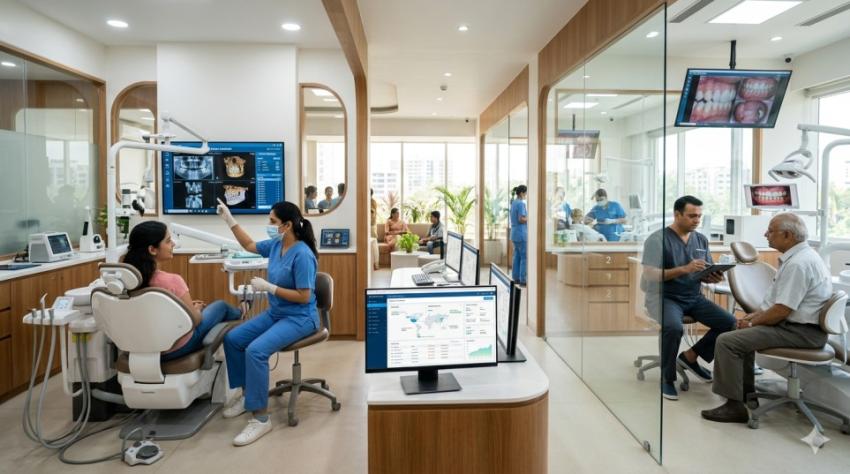
In the last few years, the dental industry has changed a lot, with an increasing number of providers now using multi-location practice models. The majority of dental organizations now operate multiple clinics throughout the country, rather than having just one practice. Therefore, multi-location practices are better able to service larger patient populations and provide a greater variety of services.
Some current news about the Soniva Dental data breach investigation has drawn attention to dental organizations with multi-location operations. While they are investigating only specific claims, they are also highlighting the significant way that large dental networks provide oral health care services to communities across the country.
For many patients, multi-location dental organizations offer increased convenience and flexibility. If someone has a family member that goes to the same multi-location dental organization as their family member, the patient can get care much closer to their home, make appointments in different locations and receive specialty services from the same provider.
The Growth of Dental Service Organizations
Dental service organizations and multi-office practices have become more frequent across healthcare. These companies help support dental offices by giving them administrative resources, technology infrastructure, and support for operations.
This model allows the dentist to concentrate on patient care and takes advantage of centralized services such as:
- Scheduling Systems
- Billing Assistance
- HR Services
- Marketing Assistance
- Technology Support
- Compliance and Administrative Support
Practices can operate more efficiently due to using centralized resources, as well as better ensuring standardization between multiple locations.
Modern Patients Are All About Convenience
Patients today expect healthcare providers to be flexible and accessible. Things like busy schedules, family commitments and transportation needs frequently drive patients' decisions about where to go for dental care.
Multi-location networks of dental practices may offer patients some advantages, including:
- Better availability of appointment times
- More locations where they can receive treatment
- Access to specialists in the network
- Consistent patient records across the network
- More extensive treatment choices
- Flexibility with scheduling appointments
These conveniences help many patients keep up with regular dental visits and get appropriate treatment in a timely manner.
The Impact of Technology on the Dental Industry
The dental industry is rapidly changing due to the influence of technology in terms of practice operation and patient interaction. Commonly used technologies now include integrated records, online booking systems, treatment planning software, and other types of patient portals.
These technologies provide several benefits for the dental organizations that use them:
1) Increased efficiency;
2) Improved continuity of care between locations;
3) Faster communication with their patients;
4) Maintenance of treatment histories;
5) Enhanced support for the administrative functions of the organization.
As dental providers grow in size, the use of technology becomes the backbone of the organization, which connects the provider's locations to ensure a uniform patient experience.
Developing Lasting Relationships with Patients
While operational efficiency is an important component to the success of a dental organization, the most successful dental organizations realize that the establishment of a long-term relationship with their patients is the foundation of delivering high-quality dental care. Many patients remain with a provider they trust for years, especially for preventive, routine cleanings, orthodontic, and restorative dental services.
Strong dental organizations place an emphasis on the following elements in forming long-term relationships:
1) Proper patient education;
2) Consistent communication;
3) Quality experiences during treatment;
4) Available support services for patients; and
5) A comfortable environment (clinical).
These elements will lead to patient satisfaction and long-term engagement with their oral health care provider.
Future Outlook
As we move forward, multi-site dental networks will continue to grow as providers look for implementing better ways to offer access to care and help meet increasing patient demand. Providers can deliver complete dental services over a greater area by providing professional resources, operational assistance, and state-of-the-art technology.
As the dental industry continues to change and grow, the value that patients place on convenience, access to care, and the quality of care will likely continue to increase. Organizations that are able to maintain a balance among these three priorities will likely be able to serve their communities and produce positive oral health results for many years to come.
The continued development of the multi-site dental network aligns with larger-scale changes in health care delivery with respect to improving patient experience and providing improved access to care, all of which are shaping the future of our industry.