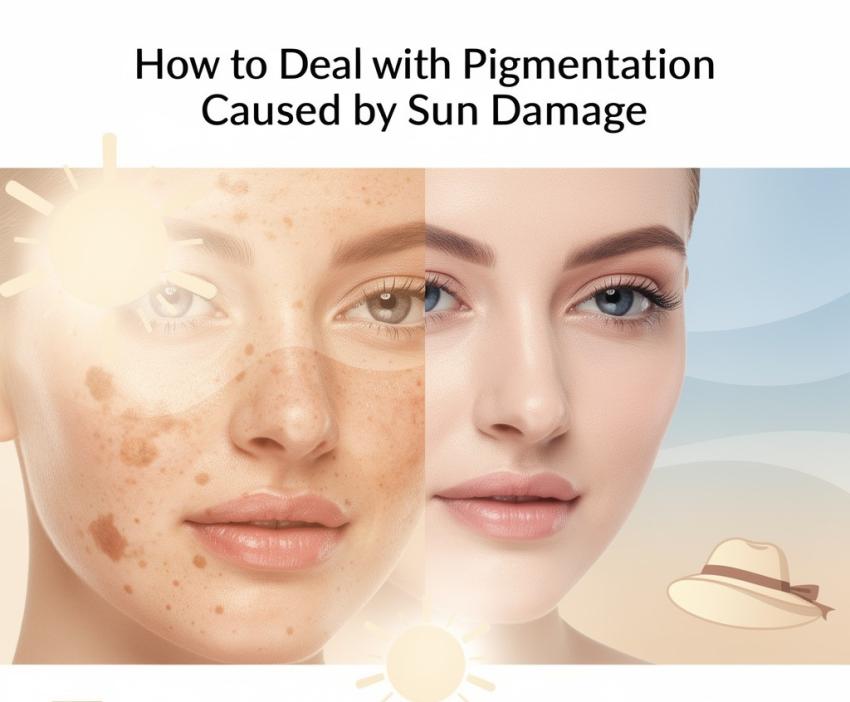
If you have ever noticed dark spots appearing on your face after a long summer, you are not imagining things. Sun damage is one of the most common reasons skin starts looking uneven over time. Those patches of darker skin, sometimes called hyperpigmentation or sun spots, are your skin's response to too much UV exposure. And once they show up, they can feel incredibly stubborn.
The good news is that pigmentation caused by sun damage is very treatable. It takes patience, yes. But with the right habits and the right products, your skin can genuinely improve. This blog will walk you through what is actually happening and what you can do about it.
Why Sun Damage Causes Dark Spots in the First Place
Your skin produces a pigment called melanin. It is what gives your skin its colour and it is also your skin's natural defence against UV rays. When your skin is exposed to too much sun, it goes into overdrive and produces extra melanin in certain areas. That extra melanin is what shows up as a dark spot or patch.
The tricky part is that this does not always happen immediately. Sometimes a sunburn heals and your skin looks fine for a while. But weeks or months later, those dark spots quietly appear. This is why people are often confused about where their pigmentation came from. It was the sun, most likely. It just took time to show up.
The First Thing You Need to Do
Before you invest in any treatment or product, the most important step is stopping further damage. And that means sunscreen, every single day, no exceptions.
This is the part most people skip or do half-heartedly. They use sunscreen at the beach but not on a regular Tuesday when they are just running errands. But UV rays do not take days off. Even on cloudy days, even in winter, UV exposure adds up. And if you are trying to fade existing pigmentation while still getting new sun damage every day, you are essentially running in circles.
SPF 30 or higher, applied every morning, is non-negotiable if you are serious about improving your skin tone. It is the foundation of everything else.
Ingredients That Actually Help Fade Pigmentation
Once you have sunscreen sorted, you can start looking at ingredients that actively work on dark spots. There are a few that are well-researched and genuinely effective.
Vitamin C is one of the most popular and for good reason. It is an antioxidant that helps brighten the skin and slow down melanin production. Used consistently in a serum form, it can visibly reduce the appearance of sun spots over a few months.
Niacinamide is another excellent option. It is gentle, works well for most skin types, and helps even out skin tone without causing irritation. It is also great for people who find stronger actives a bit harsh on their skin.
Alpha arbutin is a quieter ingredient that does not get as much attention but works really well for pigmentation. It targets melanin production directly and is especially good for stubborn spots.
For more significant sun damage, your dermatologist might suggest retinoids, azelaic acid, or even a professional treatment like a chemical peel. These are stronger options and worth considering if over-the-counter products have not made enough of a difference.
Your Cleanser Matters More Than You Think
When you are dealing with pigmentation, everything in your routine needs to work together. A cleanser that strips your skin or leaves it irritated is going to make it harder for your active ingredients to do their job.
In warmer months especially, the best face wash in summer season is one that cleans thoroughly without disturbing your skin barrier. A gentle, non-foaming or low-foam cleanser that removes sunscreen, sweat, and pollution without over-drying is exactly what you want. If your cleanser leaves your skin feeling tight after washing, it is too harsh and it is working against your pigmentation goals.
Look for cleansers with soothing ingredients like centella, aloe, or ceramides. These help maintain your skin's natural balance while keeping it clean and ready to absorb your treatments.
Patience Is Part of the Process
This is the part nobody loves to hear, but it is true. Pigmentation does not fade in a week or two. Most dermatologists say you need to give any treatment at least eight to twelve weeks before you can properly judge whether it is working.
The reason is simple. Skin renews itself gradually. As newer, less pigmented skin cells make their way to the surface, the dark spots start to fade. But that cycle takes time. Consistency matters far more than using the most expensive product.
A simple routine done every single day will always outperform an elaborate routine done occasionally.
Small Habits That Add Up Over Time
Beyond products, a few everyday habits genuinely help. Wearing a hat on sunny days gives your skin a break that no sunscreen can fully replace. Staying hydrated keeps your skin functioning well from the inside. And avoiding peak sun hours, roughly between 10am and 3pm, reduces your UV load significantly without requiring any product at all.
Pigmentation from sun damage is common and it is fixable. It just asks for a little consistency and a little time.