Introduction
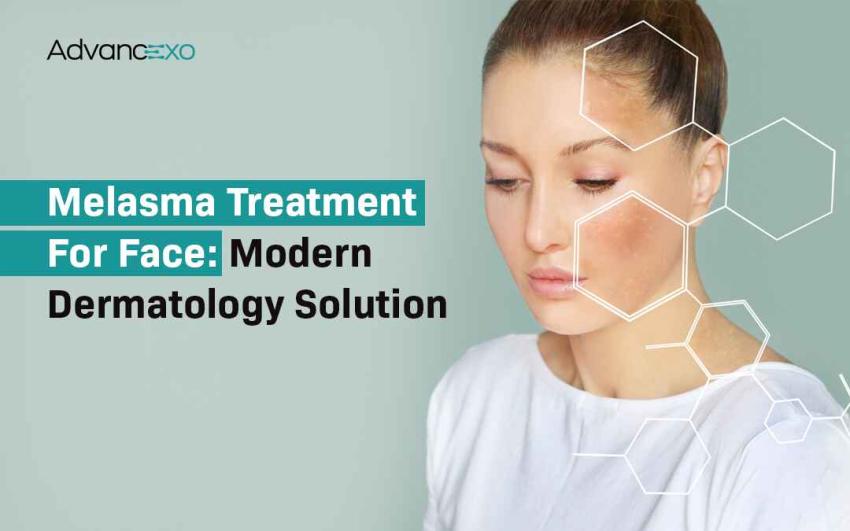
Melasma is characterised by a dark greyish-brown to blushish patchy appearance on the face or other body parts. The most common affected areas include the cheeks, forehead, chin, nose, and upper lip. It affects millions globally, especially individuals residing in tropical countries. Although melasma is not harmful, it can significantly affect the confidence or emotional well-being of individuals. The condition is stubborn and recurrent throughout life.
With advancements in dermatology, melasma treatment for the face goes beyond conventional solutions like creams, serum, chemical treatment or lasers. The emergence of exosome treatment has evolved as a minimally invasive regenerative solution.
What Causes Melasma?
Melasma develops due to altered melanocyte action, producing excessive melanin production at specific areas. The condition is triggered by multiple factors including:
Exposure to sun, heat or UV radiation
Hormonal imbalance, also called the ‘mask of pregnancy’
History of Genetic predisposition
Presence of environmental stressors
Skin inflammation or post-inflammatory disorder
Intake of certain medications, contraceptives or cosmetic products
The recurrence is triggered mainly by direct sun exposure. It worsens pigmentation, which makes it difficult to treat. The common types of melasma include:
Epidermal melasma- pigmentation occurs at the upper skin layer
Dermal melasma- pigmentation appears at the deeper skin layer
Mixed melasma- pigmentation is present at different layers of skin
*The appearance of pigmentation at different skin layers makes it difficult to treat with conventional solutions
Why is Melasma Difficult to Treat?
Melasma is a chronic, stubborn disorder. It extends to deeper skin layers, which makes it resistant to over-the-counter products.
Another challenge is recurrence; melasma appears after treatment stops or sun exposure. Dermatologists often combine professional procedures, medical skincare, and long-term maintenance strategies.
Modern aesthetic solutions focus not only on reducing visible pigmentation but also on controlling inflammation and repairing the skin barrier.
Modern Dermatology Solutions
Dermatologists recommend a melasma skin treatment solution based on severity and the individual’s problem. This includes:
Topical Treatments
Topical creams are the first step in melasma treatment in India. Dermatologists may prescribe ingredients such as:
Hydroquinone
Azelaic acid
Kojic acid
Retinoids
Tranexamic acid formulations
Vitamin C-based serums
These ingredients are useful in reducing melanin production. However, creams must be chosen under professional supervision because excessive or unsupervised use can irritate the skin.
Chemical Peels
Chemical peels aid in skin exfoliation that improves uneven pigmentation. Peels can potentially contain glycolic acid, salicylic acid, or lactic acid.
Chemical peels can enhance skin brightness and improve absorption of topical medications. However, chemical peels are suitable for upper skin-layer melasma pigmentation. In some cases, chemical peels worsen inflammation in sensitive skin.
Laser Therapy
IUses low-influence laser treatment. It targets melanin deposit for resistant pigmentation. Low-influence laser treatments break down the excessive melanin and prevent rebound pigmentation.
Regenerative Approach
Regenerative skincare has emerged as effective melasma skincare treatment. Microneedling creates controlled punctures at the target site. It stimulates collagen production and boosts skin repair mechanisms. Exosome topical application followed by the microneedling procedure enhances its deeper penetration.
Exosomes are extracellular nano-sized vesicles derived from mesenchymal stem cells. These molecules act as cargo (proteins, microRNAs, growth factors, and cytokines). The technique enables skin rejuvenation, repair mechanisms, anti-inflammation, immunomodulation, and improved cellular communication.
Exosomes and microneedling have several advantages, including:
Promotes skin regeneration/ rejuvenation
Reduces the action of pro-inflammatory cytokines, subtle inflammatory pathways associated with pigmentation
Uplifts skin tone, texture and brightness
Enhances recovery in the microneedling procedure
How to Choose the Best Melasma Treatment?
Finding the best melasma treatment in Delhi involves careful consideration of various factors. Melasma behaves differently in every patient, thus requiring adequate diagnosis and treatment planning. An individual opting for exosome therapy must consider certain factors such as:
Consult a renowned clinic
Consult an experienced dermatologist
Developing personalised treatment protocols
Focus on long-term maintenance and prevention
Detailed aftercare instructions related to sun protection and skincare
In melasma treatment for the face, combination therapy (microneedling + exosomes) potentially shows sustainable results.
Aftercare Tips
Following effective aftercare plays a crucial role in the success of the melasma skin treatment. The care instructions include:
Regular use of broad-spectrum sunscreen <30SPF+
Avoid direct sun and heat exposure
Avoid harsh scrubs and irritating cosmetics
Follow dermatologist-prescribed skincare products
Consistency is crucial in gaining optimal results in melasma treatment
Who are the Ideal Candidates?
Mild to severe instances of pigmentation
Patients with cases of recurrent or resistant melasma
Individuals with sensitive or allergy-prone skin
Individuals who experience frequent acne or inflammation
Conclusion
Melasma can be emotionally challenging as the pigmentation becomes persistent and recurrent. With advanced exosome therapy and microneedling, we can introduce personalised, safe, and effective solutions. The regenerative approach introduces the changes from within and is safe and well-tolerated among the majority of individuals. Consult an experienced dermatologist and a renowned clinic for choosing the best Melasma Treatment in Delhi.