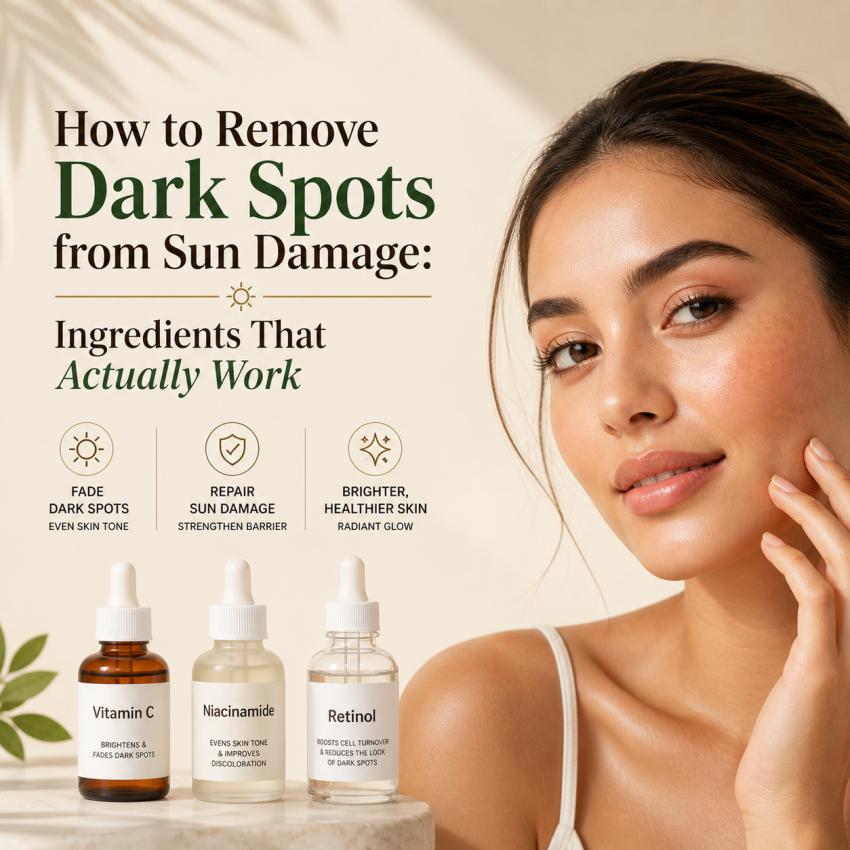
You step out in the sun every single day. Sometimes with sunscreen, sometimes without. And slowly, over time, you start noticing small dark patches on your cheeks, forehead, or around your nose. Your skin tone looks uneven. Some spots are darker than the rest of your face. And no matter how many home remedies you try, they just don't seem to go away.
This is sun damage. And it is one of the most common skin concerns people deal with, especially in a country like India where sun exposure is intense and year-round.
The good news is that sun damage is not permanent. With the right ingredients and a little patience, your skin can recover. But first, it helps to understand what is actually happening.
Why Sun Exposure Causes Dark Spots
When your skin is exposed to UV rays, it produces a pigment called melanin to protect itself. This is what causes your skin to tan. But when this process gets triggered too often or too intensely, melanin starts accumulating in certain areas more than others. This leads to dark spots, patches, and an uneven skin tone.
This kind of pigmentation is also called hyperpigmentation. It can show up as sun spots, post-tan marks, or melasma. The spots themselves are harmless but they can affect how your skin looks and how confident you feel about it.
The only real way to treat them is to slow down melanin production, gently resurface the top layer of skin, and protect your skin from further damage.
Ingredients That Actually Make a Difference
Vitamin C is one of the most well-researched ingredients for treating pigmentation and uneven skin tone. It works by blocking the enzyme responsible for producing melanin in the skin. Over time, regular use of a good Vitamin C serum helps existing dark spots fade and stops new ones from forming. It also brightens the overall complexion and gives the skin a healthier, more radiant look.
For best results, apply Vitamin C in the morning on clean skin before your moisturizer and sunscreen. It also works as an antioxidant, protecting your skin from the free radical damage caused by UV exposure throughout the day.
Niacinamide is another ingredient worth including in your routine. It works slightly differently from Vitamin C but complements it well. Niacinamide helps reduce the transfer of melanin to the surface of the skin, which is what makes dark spots visible. It also strengthens the skin barrier, reduces redness, and improves overall skin texture. It is gentle enough for daily use and suits almost every skin type including sensitive skin.
Alpha Arbutin is a quieter but very effective ingredient for stubborn dark spots. It targets melanin production at the source and works well for post-sun pigmentation. It is gentle, stable, and works well alongside Vitamin C and Niacinamide without causing irritation.
Centella Asiatica, also known as Gotu Kola or Cica, is not typically talked about as a brightening ingredient but it plays an important supporting role. It calms inflammation in the skin, which is often what drives pigmentation in the first place. When your skin is less inflamed, it produces less excess melanin. It also supports skin repair and keeps your skin barrier healthy during the treatment process.
Gentle exfoliation is also important. Ingredients like lactic acid or low concentration salicylic acid help remove the layer of dead skin cells sitting on top of your dark spots. This allows your brightening ingredients to penetrate better and makes your skin look more even and refreshed over time.
What You Should Never Skip
Sunscreen. This is non-negotiable when you are treating sun damage. If you are using brightening ingredients but skipping SPF, your skin is getting exposed to more UV damage every day which means more melanin, more dark spots, and slower results.
Use a broad spectrum sunscreen with at least SPF 30 every single morning, even on cloudy days and even if you are mostly indoors. UV rays come through windows too.
How Long Does It Take to See Results
This is the part nobody really wants to hear but it needs to be said. Fading dark spots takes time. Most people start seeing a visible difference after six to eight weeks of consistent use. Some deeper spots may take a little longer.
The key is consistency. Using your Vitamin C serum and niacinamide every day, following up with sunscreen, and being patient with the process is what actually delivers results.
A Simple Routine to Follow
In the morning, cleanse your face, apply a Vitamin C serum, follow with a light Gotukola moisturizer, and finish with sunscreen. At night, cleanse again, use a niacinamide serum or a gentle exfoliating product a few times a week, and moisturize well before bed.
This does not have to be complicated. Simple, consistent, and ingredient-focused is what works best for sun damaged skin.
Final Thoughts
Dark spots from sun damage are common and completely treatable. Your skin has a natural ability to repair itself, it just needs the right support. Focus on ingredients that are proven to work, protect your skin from further sun exposure, and give your routine enough time to show results.
Healthy, even-toned skin is absolutely possible. It just takes the right approach and a little bit of patience.