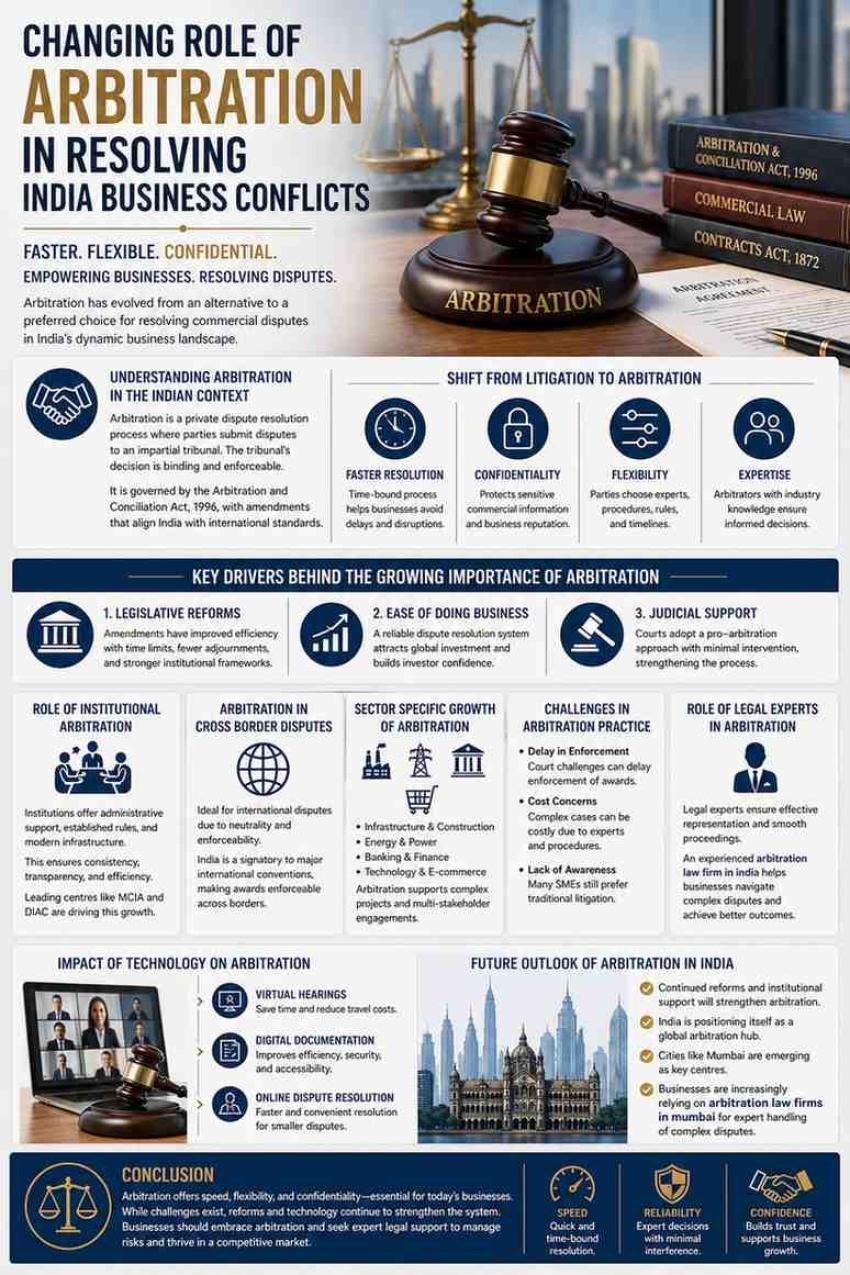
India’s business environment has evolved at a rapid pace over the past two decades. With this growth, commercial disputes have also increased in scale and complexity. Traditional litigation often struggles to meet the needs of modern businesses due to delays and procedural constraints. Arbitration has emerged as a preferred method for resolving such conflicts.
The role of arbitration in India is no longer limited to an alternative option. It is now a central mechanism for dispute resolution in commercial matters.
Understanding Arbitration in the Indian Context
Arbitration is a private dispute resolution process where parties agree to submit their disputes to an impartial tribunal. The decision of the tribunal is binding and enforceable.
In India, arbitration is governed by the Arbitration and Conciliation Act, 1996. The law has undergone several amendments to improve efficiency and align with global standards. These reforms have strengthened the credibility of arbitration in the country.
Shift from Litigation to Arbitration
Businesses in India are gradually moving away from traditional court based litigation. The reasons are clear. Court proceedings often involve long timelines. Delays can affect business operations and financial planning. Arbitration, on the other hand, offers a more structured and time bound process.
Confidentiality is another key factor. Companies prefer to keep sensitive commercial information private. Arbitration ensures this level of discretion. Flexibility also plays an important role. Parties can choose arbitrators with relevant expertise. They can also decide procedural rules and timelines.
Key Drivers Behind the Growing Importance of Arbitration
1. Legislative Reforms
Recent amendments to arbitration laws have focused on improving efficiency. Time limits for proceedings and stricter rules for adjournments have reduced delays.
The introduction of institutional arbitration has also improved transparency and consistency in decisions.
2. Ease of Doing Business
India aims to attract global investment. A reliable dispute resolution system is essential for this goal. Arbitration provides confidence to foreign investors who seek predictable outcomes.
3. Judicial Support
Indian courts have increasingly adopted a pro arbitration stance. Courts now intervene less in arbitral proceedings. This approach strengthens the autonomy of the arbitration process.
Role of Institutional Arbitration
Institutional arbitration has gained traction in India. Institutions provide administrative support and established rules. This reduces uncertainty and ensures smoother proceedings.
Centres such as the Mumbai Centre for International Arbitration and the Delhi International Arbitration Centre have contributed to this growth. They offer modern infrastructure and trained professionals. Businesses now prefer institutional arbitration over ad hoc processes due to better efficiency and credibility.
Arbitration in Cross Border Disputes
Globalisation has led to a rise in cross border transactions. Disputes arising from such transactions require neutral and efficient resolution mechanisms.
Arbitration is well suited for international disputes. It allows parties from different jurisdictions to resolve conflicts without relying on domestic courts.
India has also adopted international conventions for enforcement of arbitral awards. This makes arbitration more effective in cross border scenarios.
Sector Specific Growth of Arbitration
Arbitration is widely used across various sectors in India:
Infrastructure and construction
Energy and power
Banking and finance
Technology and e commerce
Large scale projects often involve multiple stakeholders. Arbitration provides a practical way to resolve disputes without disrupting operations.
Challenges in Arbitration Practice
Despite its growth, arbitration in India faces certain challenges.
Delay in Enforcement
While arbitral awards are binding, enforcement can still take time if challenged in courts. This affects the overall efficiency of the process.
Cost Concerns
Arbitration can sometimes be expensive, especially in complex disputes involving multiple arbitrators and legal experts.
Lack of Awareness
Many small and medium enterprises are still unaware of the benefits of arbitration. They continue to rely on traditional litigation.
Role of Legal Experts in Arbitration
Legal expertise plays a crucial role in arbitration. From drafting arbitration clauses to representing clients, skilled professionals ensure effective dispute resolution.
Engaging an experienced arbitration law firm in india can help businesses navigate complex proceedings and achieve favourable outcomes.
Proper legal guidance also ensures compliance with procedural requirements and reduces the risk of challenges to arbitral awards.
Impact of Technology on Arbitration
Technology is transforming arbitration practices in India. Virtual hearings have become more common. They save time and reduce costs associated with travel. Digital documentation has improved efficiency and accessibility. Online dispute resolution is also gaining attention. It offers a faster and more convenient option for resolving smaller disputes.
These developments are likely to shape the future of arbitration in India.
Future Outlook of Arbitration in India
The future of arbitration in India looks promising. Continued reforms and institutional support will strengthen its position. There is a growing emphasis on making India a global arbitration hub. Government initiatives and policy measures aim to achieve this goal.
Cities like Mumbai are emerging as important centres for arbitration. Businesses operating in such regions often rely on specialised arbitration law firms in mumbai for handling complex disputes. As awareness increases, more companies are expected to adopt arbitration as their primary dispute resolution method.
Conclusion
Arbitration has transformed the way business conflicts are resolved in India. It offers speed, flexibility, and confidentiality, which are essential in today’s commercial environment.
While challenges remain, ongoing reforms and technological advancements continue to improve the system. Businesses must recognise the value of arbitration and integrate it into their dispute resolution strategies. A proactive approach, combined with expert legal support, can help organisations manage risks and maintain stability in an increasingly competitive market.