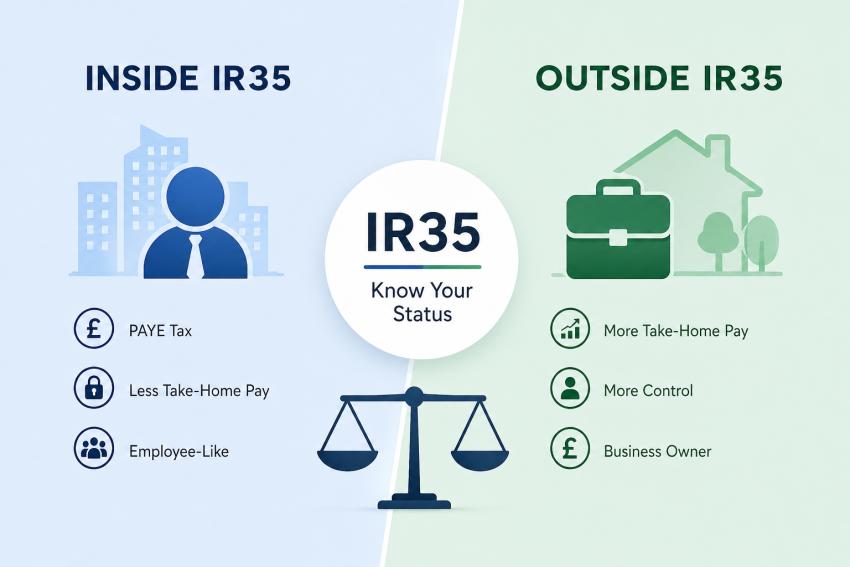
If you work as a contractor, understanding inside vs outside IR35 is one of the most important parts of managing your income and tax in 2026. Your IR35 status decides how HMRC treats your earnings and can change your take home pay by thousands each year. Many contractors focus on day rates, but the real difference comes from how your contract is classified.
What is IR35 in Simple Terms?
IR35 is a UK tax rule designed to catch “disguised employment”.
In simple words:
- If you work like an employee, HMRC may tax you like one
- If you operate like a genuine business, you can stay outside IR35
It mainly applies to contractors working through a limited company.
What does Inside IR35 Mean?
When your contract falls inside IR35, HMRC treats you like an employee for tax purposes.
Here’s what that means in practice:
- You pay Income Tax and National Insurance through PAYE
- You cannot take advantage of dividends
- Your take home pay is lower compared to outside IR35
- You still don’t get employee benefits like paid leave or pension
In short, you get the tax burden of employment without the benefits.
What does Outside IR35 Mean?
When your contract is outside IR35, you are seen as a genuine business.
That gives you more flexibility:
- You can pay yourself through a mix of salary and dividends
- You have better control over your income
- Your overall tax position is usually more efficient
- You operate as an independent contractor, not an employee
This is why many contractors aim to stay outside IR35 where possible.
Inside vs Outside IR35: Key Differences
Here’s a clear breakdown that most contractors look for:
Tax treatment
- Inside IR35: PAYE applies
- Outside IR35: You control how you pay yourself
Take home pay
- Inside IR35: Lower due to higher tax
- Outside IR35: Higher due to tax planning options
Control over work
- Inside IR35: Client has more control
- Outside IR35: You decide how work is done
Business status
- Inside IR35: Seen as employee-like
- Outside IR35: Seen as a separate business
Financial risk
- Inside IR35: Lower compliance risk
- Outside IR35: Needs proper contract setup
Why IR35 Status Matters More in 2026
IR35 has become stricter in recent years, especially in the private sector.
Here’s why it matters now more than ever:
- Medium and large companies decide your IR35 status
- Mistakes can lead to tax bills and penalties
- Contractors often accept inside IR35 roles without realising the impact
- The gap in take home pay can be significant across a year
A small misunderstanding can cost you a large part of your income.
How to Check Your IR35 Status
You should never guess your IR35 position. Instead, take a structured approach:
- Review your written contract
- Look at how you actually work day to day
- Check control, substitution, and obligation factors
- Use tools for a quick check
A simple starting point is trying IR35 assessment tool to get an approximate idea of your IR35 status
It gives you a quick view before you go deeper with a full review.
Common Mistakes Contractors Make
Many contractors fall into the same traps:
- Accepting a contract without reviewing IR35 terms
- Relying only on job titles instead of working practices
- Ignoring substitution clauses
- Assuming all roles in a company follow the same IR35 status
These mistakes often lead to unexpected tax outcomes.
Practical Tips to Stay Outside IR35
While each contract is different, these steps can help:
- Work on a project basis rather than fixed hours
- Maintain control over how you deliver work
- Include a genuine substitution clause
- Avoid being treated like an internal employee
- Keep clear business records and invoices
Small details in your contract and working style can make a big difference.
Final Thoughts
Understanding inside vs outside IR35 is not just about compliance. It directly affects your income, flexibility, and long term financial position as a contractor. Taking time to review your contracts and working practices can save you from costly surprises later.