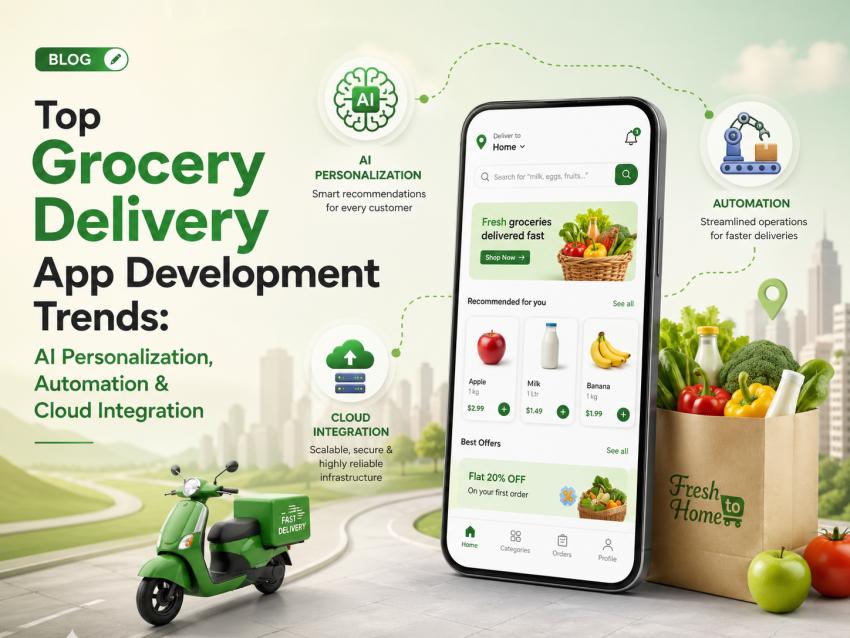
The grocery delivery industry has undergone a massive transformation in recent years because consumer expectations keep changing and technological advancements keep progressing. The service which began as a convenience now functions as a vital component of daily living. As competition intensifies, businesses are looking beyond basic delivery models and investing in smarter, more scalable solutions.
Grocery Delivery App Development services have evolved from their original purpose of building applications to now create intelligent systems which use AI, automation, and cloud technologies. The new technologies help companies to improve their operations and deliver customized experiences to users and achieve their growth objectives.
The top trends that currently shape grocery delivery app development will be established through our exploration.
AI-Powered Personalization is Redefining User Experience
Modern grocery applications depend on Artificial Intelligence as their main technological foundation. Users of today demand that applications should understand their individual preferences along with their shopping behaviors and purchasing tendencies. The AI-based recommendation systems process three types of information which include. The system uses this information to recommend products to users while providing customized discounts and making predictions about their future requirements.
The system provides personalized experiences which lead to higher customer satisfaction rates and increased sales together with better customer loyalty. The use of Artificial Intelligence by businesses results in their customers showing more active participation than they would experience on standard business platforms.
Automation is Streamlining Operations
The grocery delivery platforms have experienced operational changes through the implementation of automated systems which handle their internal processes. The system uses automation to handle all tasks from inventory management through order processing which results in decreased manual work and decreased mistakes.
The following areas demonstrate the impact of automation on their operations:
The system assigns delivery agents to their orders through automated processes.
The system provides instant updates about inventory levels.
The smart warehouse management systems operate through advanced technological systems.
The system uses artificial intelligence to determine the most efficient delivery routes for drivers.
The system uses automation to achieve faster delivery times while maintaining accurate results and reducing operational expenses which makes it essential for all grocery delivery systems that need to grow their operations.
Cloud Integration for Scalability and Performance
The grocery delivery applications of today depend on cloud computing as their essential technological foundation. The system allows companies to process their peak user load while maintaining optimal performance. The digital transformation of cloud computing through its modern cloud technology enables organizations to achieve three key benefits:
The cloud solution enables users to increase their system capacity whenever required. The system provides companies with uninterrupted service throughout all operational times. The system provides organizations with better protection against data breaches. The system enables organizations to minimize their operational interruptions. The cloud providers AWS and Azure together with Google Cloud enable organizations to manage peak user demand that occurs during holiday seasons and special sales events.
Rise of Hyperlocal Delivery Models
The delivery system which operates on a hyperlocal basis is experiencing growth because urban customers now demand their packages to arrive within minutes of placing an order. The development of contemporary grocery applications has established links to local suppliers and their micro-warehouse storage facilities and their ability to monitor stock levels in real time. The delivery system achieves faster delivery times while providing better service to customers, which creates a competitive advantage for businesses.
Integration of Voice Commerce
Voice-enabled shopping is becoming increasingly popular with the rise of smart assistants. Grocery apps are now integrating voice search and commands to simplify the user journey. Users can: Add items to cart via voice Reorder previous items Search products hands-free This feature enhances accessibility and creates a seamless shopping experience, especially for busy users.
Advanced Analytics for Better Decision Making
Data analytics helps grocery delivery platforms achieve better operational results. Businesses can now track: Customer behavior patterns Sales trends Delivery performance Inventory turnover. The insights from this analysis enable organizations to make data-based decisions which lead to better operational results and increased customer satisfaction.
Subscription-Based Models are Growing
Grocery apps have started to use subscription models as a new way to generate revenue. The service provides members with multiple benefits which include Free delivery for members Exclusive discounts and Priority order processing. The business model creates a dual advantage because it generates consistent income while it establishes customer dedication.
Focus on Contactless and Secure Payments
After the pandemic ended, people started to prefer contactless payment methods at higher levels than previous times.
The current applications now support three payment methods which include:
UPI payments
Digital wallets
One-click checkout
The system protects user information through encryption together with its fraud detection systems which guarantee secure payment processing.
Multi-Platform Accessibility
Users today expect applications to function without interruptions on all their devices.
Organizations allocate their resources toward development of
Mobile applications for both iOS and Android platforms
Web development solutions and
Progressive Web Applications.
This approach provides users with a uniform experience while enabling the application to reach more people.
Cost Considerations in Grocery App Development
Businesses that want to enter the grocery delivery market need to understand the development costs of their delivery application.
The expenses will vary based on
The complexity of the application
The specific features included in the application
The application development technologies used
The geographical location of the development team.
A basic app may cost significantly less, while a feature-rich, AI-powered platform will require a higher investment.
Role of On-Demand Development Companies
The success of your project depends on working with a skilled on demand app development company that has expertise in their field. The companies provide the following services to their clients:
Industry expertise
Faster development cycles
Scalable solutions
Post-launch support
Your application development process will benefit from proper vendor selection since this process guarantees your project will use cutting-edge technology and industry-standard practices.
Conclusion
The grocery delivery industry requires businesses to adopt modern changes because the market keeps changing. AI personalization and automation together with cloud integration now serve as fundamental requirements for building platforms that scale while prioritizing user experience.Companies that want to achieve sustainable growth should spend on advanced technologies and select the right development teams because these efforts will help them develop better products that meet customer needs.