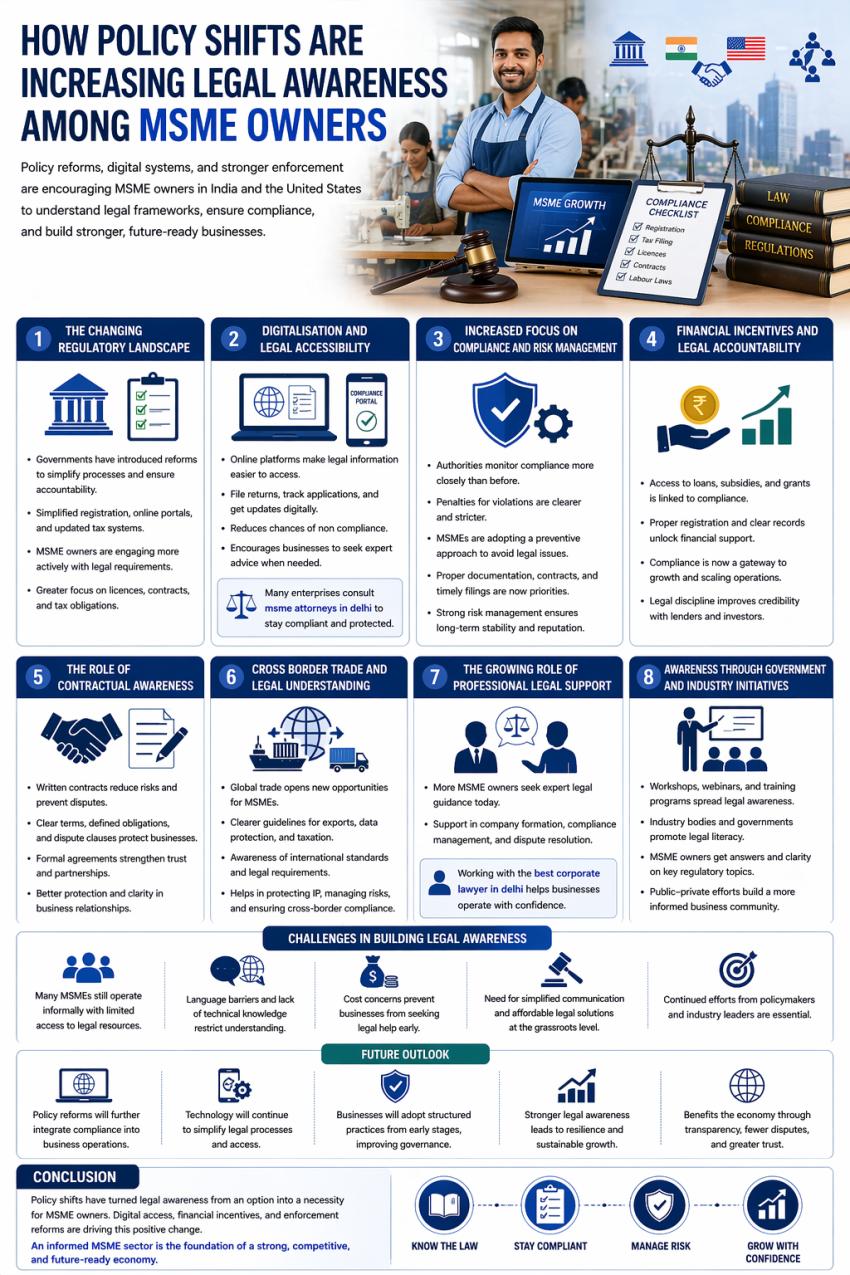
Micro, Small, and Medium Enterprises play a vital role in economic growth across India and the United States. They generate employment, support innovation, and strengthen supply chains. In recent years, policy changes have started shaping how these businesses operate. One clear outcome is a noticeable rise in legal awareness among MSME owners.
Earlier, many small business owners focused mainly on operations and revenue. Legal compliance often took a secondary place. Today, this approach is changing. Policy reforms, digital systems, and stricter enforcement have encouraged MSMEs to understand legal frameworks more closely.
The Changing Regulatory Landscape
Governments have introduced several reforms to support MSMEs while ensuring accountability. In India, initiatives such as simplified registration, online compliance portals, and updated tax systems have made legal processes more accessible. In the United States, regulatory bodies have also focused on transparency and structured reporting.
These changes have reduced complexity but increased responsibility. MSME owners now engage more actively with legal requirements. They are learning to manage licences, contracts, and tax obligations with greater care.
Digitalisation and Legal Accessibility
One of the most significant drivers of legal awareness is digitalisation. Online platforms have made legal information easier to access. Business owners can now review compliance rules, file returns, and track applications without relying entirely on intermediaries.
Digital tools also provide reminders and updates on regulatory changes. This reduces the chances of non compliance. As a result, MSME owners are becoming more informed and proactive.
Access to online legal resources has also encouraged businesses to seek professional advice when needed. Many enterprises now consult experts such as msme attorneys in delhi to ensure their operations align with current laws.
Increased Focus on Compliance and Risk Management
Policy shifts have placed greater emphasis on compliance. Authorities now monitor filings, financial disclosures, and operational standards more closely. Penalties for violations have become more structured and visible.
This environment has pushed MSMEs to adopt a preventive approach. Instead of reacting to legal issues, they focus on avoiding them. Business owners are learning to maintain proper documentation, follow contractual obligations, and meet statutory deadlines.
Risk management has become an essential part of business strategy. MSMEs are beginning to understand how legal compliance protects long term stability and reputation.
Financial Incentives and Legal Accountability
Governments have linked financial benefits with compliance. Access to loans, subsidies, and grants often depends on proper registration and regulatory adherence. This has encouraged MSMEs to formalise their operations.
In India, schemes supporting credit access require businesses to maintain clear records. In the United States, funding programmes also involve strict eligibility checks. These conditions promote better legal discipline.
MSME owners now recognise the connection between compliance and growth opportunities. Legal awareness is no longer optional. It is a requirement for accessing financial support and scaling operations.
The Role of Contractual Awareness
Contracts are central to business relationships. Earlier, many MSMEs relied on informal agreements. This often led to disputes and financial losses.
With evolving policies and increased exposure to legal frameworks, MSME owners are placing more importance on written agreements. They understand the value of clear terms, defined obligations, and dispute resolution clauses.
This shift reduces misunderstandings and strengthens business partnerships. It also ensures better protection in case of disagreements.
Cross Border Trade and Legal Understanding
Global trade opportunities have expanded for MSMEs. E commerce platforms and international supply chains allow small businesses to reach wider markets. However, cross border operations involve complex legal requirements.
Policy reforms have introduced clearer guidelines for exports, data protection, and taxation. MSME owners engaging in global trade are now more aware of international standards.
They are learning to navigate foreign regulations, protect intellectual property, and manage compliance across jurisdictions. This exposure further enhances legal awareness.
The Growing Role of Professional Legal Support
As regulations become more structured, the need for expert guidance has increased. MSME owners are no longer hesitant to seek legal advice. They view it as an investment rather than a cost.
Professionals such as the best corporate lawyer in delhi assist businesses in areas like company formation, compliance management, and dispute resolution. This collaboration helps MSMEs avoid errors and operate with confidence.
Legal experts also play a key role in educating business owners. They simplify complex laws and provide practical solutions tailored to specific industries.
Awareness Through Government and Industry Initiatives
Government bodies and industry associations have launched awareness programmes to educate MSMEs. Workshops, webinars, and training sessions focus on legal compliance, taxation, and regulatory updates.
These initiatives make legal knowledge more accessible. They also create a platform for MSME owners to ask questions and clarify doubts. Over time, such efforts contribute to a more informed business community.
In both India and the United States, public and private sectors are working together to improve legal literacy among small businesses.
Challenges in Building Legal Awareness
Despite progress, certain challenges remain. Many MSMEs still operate in informal sectors where access to legal resources is limited. Language barriers and lack of technical knowledge can also restrict understanding.
Cost concerns continue to influence decision making. Some business owners hesitate to invest in legal services unless a problem arises. Bridging this gap requires continued efforts from policymakers and industry leaders.
Improving awareness at the grassroots level is essential. Simplified communication and affordable legal solutions can help reach a wider audience.
Future Outlook
The trend towards increased legal awareness among MSME owners is likely to continue. Policy reforms will further integrate compliance into everyday business operations. Technology will play a key role in simplifying legal processes.
As businesses grow more informed, they will adopt structured practices from the early stages. This will lead to stronger governance and better resilience in changing market conditions.
In the long run, higher legal awareness will benefit not only MSMEs but also the broader economy. It will promote transparency, reduce disputes, and encourage sustainable growth.
Conclusion
Policy shifts have transformed the way MSME owners approach legal responsibilities. What was once seen as a complex and distant aspect of business is now becoming an integral part of daily operations.
Digital access, financial incentives, and stronger enforcement have all contributed to this change. MSMEs are recognising the value of compliance and professional guidance.
As awareness continues to grow, small businesses will be better equipped to navigate challenges and seize opportunities. A legally informed MSME sector is essential for building a stable and progressive economic environment.