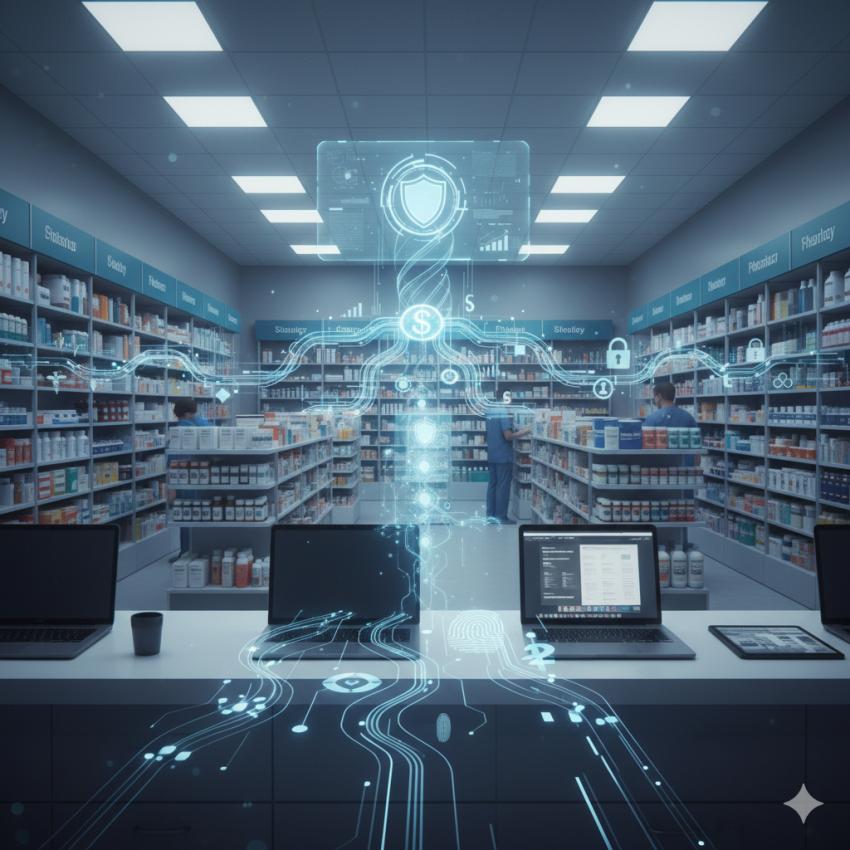
Pharmacy and prescription services are critical components of the health care system; they manage sensitive patient information and help provide timely access to medications by maintaining accurate medical records. As pharmacies and prescription service providers integrate more digital solutions into their operations (e.g., tracking inventory, patients' prescriptions, and communicating with patients), they also create more opportunities for cybercriminals to compromise their systems.
Substantial cybersecurity risks pose challenges even for established pharmaceutical distribution companies, as evidenced by the August 2025 Morton Drug Company data breach. The unauthorized access to Morton Drug Company's internal system reportedly resulted in a breach of personal information for many of Morton Drug Company's customers, including prescription details, Social Security numbers, and contact information. Although this incident impacted tens of thousands of people, it should serve as a wake-up call for the industry, as pharmacies are prime targets for cybercriminals due to the high value associated with health and prescription data.
Based on the overall reliance on third-party vendors, email, and cloud-based platforms as part of daily operations, pharmacies face a significant number of cybersecurity vulnerabilities. For example, pharmacies typically process prescriptions for customers through numerous parties, including insurance companies, health care professionals, and logistics companies, thereby opening channels for numerous potential security issues. With just one weak link in a chain, such as a compromised email account or weakly protected network, the potential risks associated with exposure of sensitive data can be far-reaching.
Cybersecurity risks stemming from a lack of appropriate security controls are also caused by human error. There are many employees in pharmacies and other prescription service provider organizations who manage large amounts of data on a daily basis and do so under time constraints, which may influence the way those employees handle sensitive patient information. Many times, phishing emails and social engineering scams represent the primary means of attacking pharmacy staff and accessing their records.
In smaller organizations and mid-size distributors, which may not have a dedicated team for information security, these vulnerabilities may be significantly greater than those in larger organizations.
In addition, regulatory requirements create another layer of difficulty in developing and implementing security controls for the delivery of pharmacy products and services. Pharmacy service providers and pharmacies must comply with HIPAA and other data privacy regulations, which require pharmacies to provide appropriate security controls for their patients' health information. Failure to comply may lead to both civil and criminal penalties as well as the potential loss of patient confidence and the ability to maintain good relationships with patients. Pharmacy service providers must employ security mechanisms such as multi-factor authentication, encrypting patient records, and providing for secure cloud storage in order to comply with applicable regulations.
Cybercriminals have placed significant value on the types of information that pharmacies typically manage. Prescription histories and social security numbers represent an area of high value and are much more difficult to change if that data is compromised than credit card numbers. Because medical data can be misused in a multitude of ways and upon a person, a pharmacy's patient information represents a high value target for organized criminal enterprises.
Pharmacies are implementing proactive strategies to improve security, and these strategies can include ongoing employee cybersecurity training, restricting access to sensitive data systems and performing regular assessments of risk.
By focusing on technology and employee behaviour, pharmacies can reduce their risk of exposure to cyber threats while continuing to operate efficiently.
As healthcare continues to increase the use of digital technologies, pharmacies and pharmacy prescription services need to understand that it is crucial for them to protect sensitive personal data (PHI) in order to comply with regulations and ensure the continued trust and confidence of patients who utilise their services on a daily basis.