Why Strengthening Matters After a Joint Injury
Strengthening your joints after an injury restores stability, improves load tolerance, and protects the healing structures that support movement. When surrounding muscles regain strength, the joint absorbs stress more efficiently and functions with better control.
What Principles Support Safe Post-Injury Exercise?
Safe post-injury strengthening relies on gradual load progression, precise movement, and symptom-guided limits. Start with controlled, low-impact activity, then increase resistance only when movements stay steady and pain levels remain predictable.
Key guidelines include:
Use slow, intentional motion to rebuild neuromuscular control.
Keep resistance light in early phases.
Stop or modify activity if sharp pain or swelling develops.
Integrate full-body patterns once stability returns.
Which Early Exercises Help You Rebuild Joint Stability?
Early strengthening focuses on small stabilizing muscles that guide joint alignment.
1. Isometric Strength Work
Isometric contractions activate muscles without moving the joint. They help reintroduce tension safely.
Examples: quad sets, glute squeezes, shoulder external-rotation holds.
2. Gentle Range-of-Motion Exercises
These movements maintain joint glide, reduce capsular tightness, and prevent stiffness.
Examples: heel slides, shoulder pendulum swings, hip abduction floor slides.
3. Light Band Activation
Resistance bands add controlled tension and teach the joint to tolerate load again.
Examples: hip abduction steps, shoulder external rotations, band-assisted knee extensions.
What Exercises Strengthen the Knee After Injury?
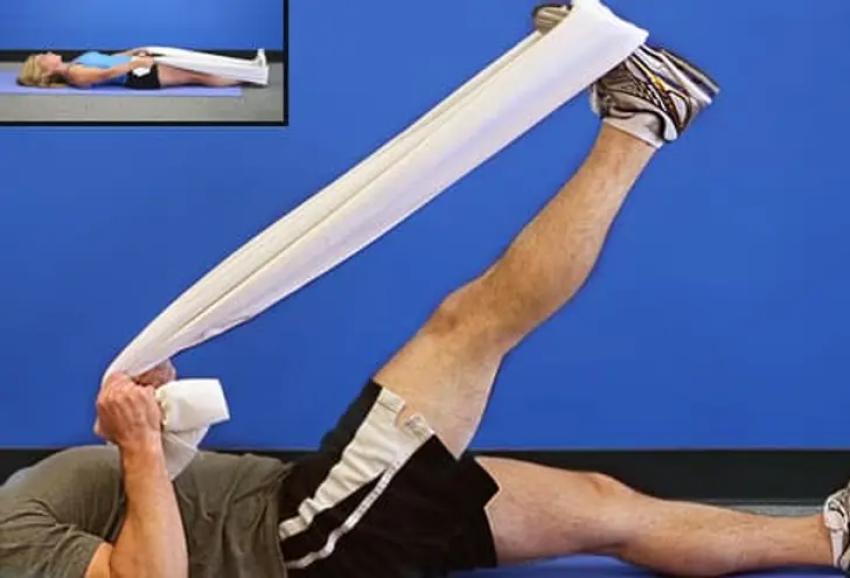
Knee strengthening centers on the quadriceps, hamstrings, calves, and hip stabilizers. These muscles distribute tibiofemoral load and support knee alignment.
Helpful exercises include:
Straight-Leg Raises: Build quad strength without knee pressure.
Mini Squats: Restore controlled weight bearing.
Hamstring Bridges: Support ligament stability and posterior-chain strength.
Step-Ups: Improve eccentric control and gait mechanics.
Sports-rehab research consistently shows that quadriceps weakness increases re-injury risk, especially after ACL tears.
What Exercises Strengthen the Hip After Injury?
The hip relies on the gluteus medius, gluteus maximus, deep rotators, and the core to maintain balance and posture. Strengthening these groups reduces compensation in the lower back and knees.
Effective movements include:
Clamshells: Reinforce lateral hip control.
Glute Bridges: Improve extension strength.
Side-Leg Raises: Support pelvic alignment during walking.
Hip Hinges: Build fundamental posterior-chain stability.
Strong hip abductors help maintain stride efficiency and reduce ground-reaction forces that strain the joint.
What Exercises Strengthen the Shoulder After Injury?
Shoulder rehabilitation focuses on rotator-cuff endurance and scapular stability. These structures keep the humeral head centered and reduce impingement.
Useful exercises include:
Scapular Retractions: Recreate healthy shoulder-blade movement.
Band External Rotations: Strengthen cuff control.
Wall Slides: Reinforce upward rotation.
Light Dumbbell Raises: Improve deltoid endurance.
Daily reaching, lifting, and overhead tasks depend on balanced cuff activity and scapular rhythm.
How Does Balance Training Protect Healing Joints?
Balance training restores proprioception—the joint’s ability to sense movement and position. After an injury, these signals weaken. Rebuilding them reduces missteps and instability.
Examples include single-leg stands, foam-pad balancing, lateral weight shifts, and step-and-hold drills.
Clinical studies link proprioceptive training with reduced reinjury rates, especially in ankle and knee recovery.
When Should You Progress to Functional Strength Work?
Progress to functional strengthening when early motion becomes stable and controlled. Functional movements prepare your joints for real-world tasks, making them more durable under daily or athletic loads.
Examples: split squats, lateral lunges, controlled step-downs, backward walking, or light agility drills.
How Does Flexibility Training Support Joint Recovery?
Flexibility reduces muscle tension that otherwise transfers stress into injured tissues. Balanced mobility allows the joint to move without compensatory strain.
Beneficial stretches include:
Hamstring and quadriceps lengthening
Hip flexor stretches
Chest doorway mobility work
Gentle cross-body shoulder stretches
Consistency matters more than duration during early healing.
Expert Insight from Dr. Gombera
Dr. Mufaddal Gombera, MD—board-certified, fellowship-trained orthopedic surgeon at Fondren Orthopedic Group and Texas Orthopedic Hospital—emphasizes that joint strengthening after injury works best when the progression matches the biological healing timeline. He notes that controlled repetition, gradual resistance increases, and steady movement patterns protect the joint while restoring long-term durability.
When Should You Modify or Pause Joint Exercises?
Modify or pause exercises if you notice sharp pain, swelling that returns within 24 hours, joint locking, or new instability. These signs indicate excessive loading or mechanical irritation.
You may also need adjustments if you develop:
Limping or altered gait
Decreased range of motion
Catching or popping that affects function
Persistent symptoms warrant evaluation from a qualified orthopedic specialist.
How Can You Build a Weekly Strength Routine After Injury?
A steady routine reinforces joint stability and prevents setbacks.
You can structure your week like this:
Day 1: Activation + Strength
Day 2: Mobility + Balance
Day 3: Strength + Functional Movement
Day 4: Light Recovery
Day 5: Strength + Low-Impact Cardio
This pattern keeps the joint stimulated while allowing recovery time between heavier sessions.
What Comes Next as Your Joint Strength Improves?
As strength improves, you transition toward higher-resistance exercises and more complex movement patterns. Your joint gradually tolerates heavier loads and more dynamic motions, preparing you to return to full daily activity or sport.