Today's consumers are using financial applications that give them the ability to manage their budgets, obtain wages sooner and more effectively track spending. Some applications, like EarnIn, allow consumers access to a portion of their earned wages prior to their payday, which is one of the many attractive features that are making these applications increasingly popular.
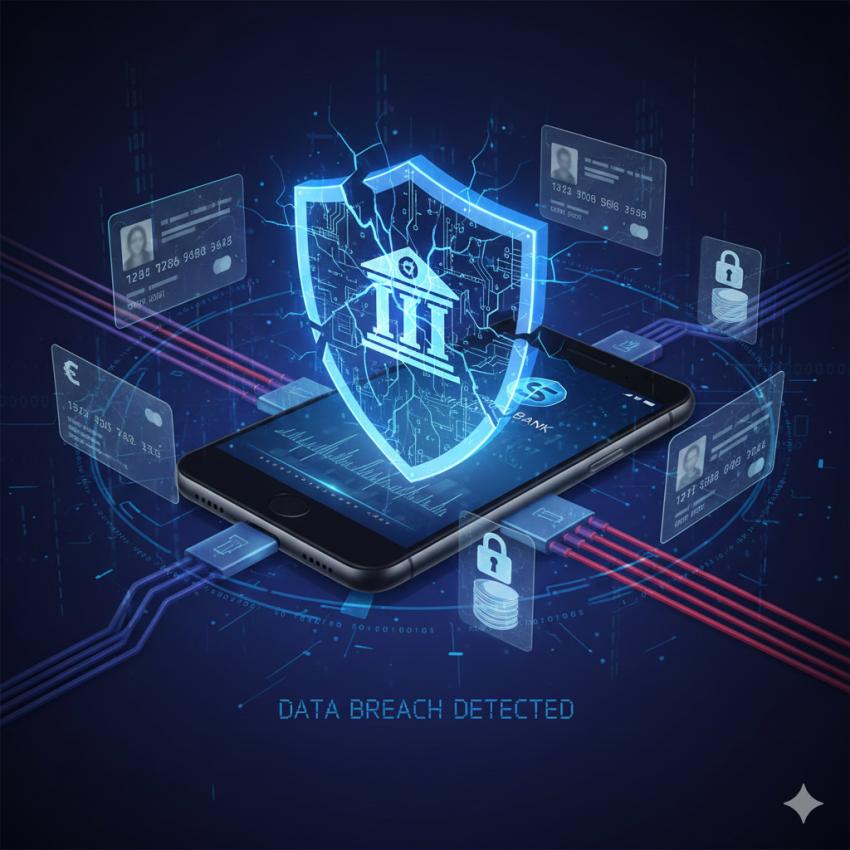
However, recent events, particularly the EarnIn Data Breach - which resulted in the exposure of sensitive personal information - has raised concerns about a growing trend: Whenever a financial technology company is in possession of consumers' identity and banking data - a security incident can place consumers at significant risk.
Why Do These Apps Require So Much Sensitive Information
While traditional subscription or shopping apps require things like:
- Full legal name
- Address and contact information
- Bank account information
- Identity verification information, such as social security numbers or date of birth
These apps are asking you to grant them permission to verify your employment and make transfers. Moreover, this also creates a large target for criminals. If they are able to steal verified identities and payment tokens in the same transaction, they no longer need your passwords.
Financial Apps Are Connected to Many Systems
These applications frequently connect to:
- Pay systems
- Employers' databases
- External banks' APIs
- Identity-verification applications
The connectivity allows individuals access to their wages in real time, consequently the potential for breach entry points increases. If there is a weak link in the chain, consumers will end up being affected regardless.
Consequences of Breach Extend Beyond the Application
When identity and financial information is compromised, criminals may:
- Open new credit accounts using the victim’s SSN
- Attempt unauthorized withdrawals
- File fraudulent tax returns
- Change account credentials blocking user access
Those risks can follow someone for years after an and email breaching or hacking notification.
Delayed Detection Compounds the Issue
Delayed detection is an ongoing issue in the fintech sector.
- Suspicion almost never arises until:
- Those JSON logs show suspicious login patterns
- The systems crash and behave abnormally
- Law enforcement alerts the company due to a breach
By the time a condor communicates with the user, that compromised data may have already begun its journey into criminal networks.
Actions Consumers Can Take Today
If you are the user of an application that is linked directly to your bank, then you should be doing the following:
- Turn on fraud alerts through your financial institution.
- Check your statements regularly for anything that looks off.
- Use the identity-monitoring tool that is provided when available.
- Be careful of the number of platforms you have that can access your bank.
Consumers should also read privacy policies to understand exactly what is being collected and the duration of the retention.
A Complicated Future
Fintech apps are existing to solve real world problems, as illustrated, especially for those who live paycheck to paycheck. However, every convenience comes with a cybersecurity trade-off.
The EarnIn incident shows that regardless of how quickly and how much financial innovations are taking place, protecting the security of financial data has to evolve. Financial institutions that operate or manage sensitive personal and banking data must build protection around it that is strong enough to match the risk.
Until that happens, connecting bank information to third-party apps will be of value, but should also be understood as one of the most high-risk-decisions a modern-day consumer makes.