You're probably reading this because you've experienced pain, discomfort, or limitations due to a bunion. Even though you've tried orthotics, cushioning pads, and better shoes, the pain still persists. So, the question is: Should I have bunion surgery? If you live in Perth what can you expect from bunion surgery?
This article will walk you through the pros, cons, risks, recovery and important questions to ask before selecting a clinic or surgeon in Perth. I want to guide you to make an informed decision, not push you in a certain direction.
What is a Bunion Exactly?
Let's first define what a bunions is.
A bunions is a deformity that affects the joint of the big toe. The big toe will eventually lean inward towards the second toe while the 1st Metatarsophalangeal Joint (at the base) will bulge outward and form a painful bump.
Symptoms include:
The bunion bump may cause pain, swelling or redness.
The bunion may cause difficulty wearing shoes that are too narrow or pointed.
Calluses or rubbing between the toes
The big toe is restricted in its mobility
Gradual worsening of symptoms over time
Bunions can develop slowly. They may be caused by a foot structure that is inherited, or by wearing shoes that are too tight.
If bunions are not treated, they can worsen and cause joint pain.
Non-surgical (Conservative) Options: Why Surgery is not always the first option
It's important to note that, in many cases before undergoing surgery, nonsurgical treatments will be recommended. They don't fix the deformity (the bunion itself remains), but can reduce pain and slow its progression.
Non-surgical alternatives to surgery:
Avoiding tight, narrow, or high-heeled footwear. Using pads, cushion or toe spacers as a way to reduce friction.
Custom orthotic inserts that relieve pressure or correct mechanics
Toe stretching and strengthening / Physical therapy
Anti-inflammatory drugs
Temporarily splinting or taping the toe
Perth clinics emphasize that surgical treatment should only be considered if conservative treatments fail to provide relief.
Non-surgical treatment may be a better option if your pain is mild or occasional or you don't want to risk or have downtime. For many patients the pain, deformity, or functional limitations are the tipping points.
When is Bunion Surgery a Good Idea for You?
If:
Significant pain & discomfort
A bunion can cause ongoing pain when you walk, stand, or wear shoes. This affects your everyday life.Conservative treatment has failed
Pain persists despite non-surgical treatments (shoes or orthotics, padding and therapy).Deformity
As the misalignment worsens, the big toe begins to lean more or secondary problems (like hammertoes and joint stress) start to appear.Functional limitations
You can't do sports, or long walks.You are a healthy candidate
Uncontrolled diabetes or poor circulation may increase your surgical risk.
When these criteria are met then surgery is a better option because the advantages may start to outweigh risks.
The types & techniques of Bunion Surgery in Perth
There is no "best" technique for bunion surgery. The right one for you depends on the deformity of your bones, soft tissues, age and surgeon's preferences.
Here are some approaches (including those used in Perth):
Traditional / Open Surgery (Osteotomies, Scarf, Chevron, Akin, etc.)
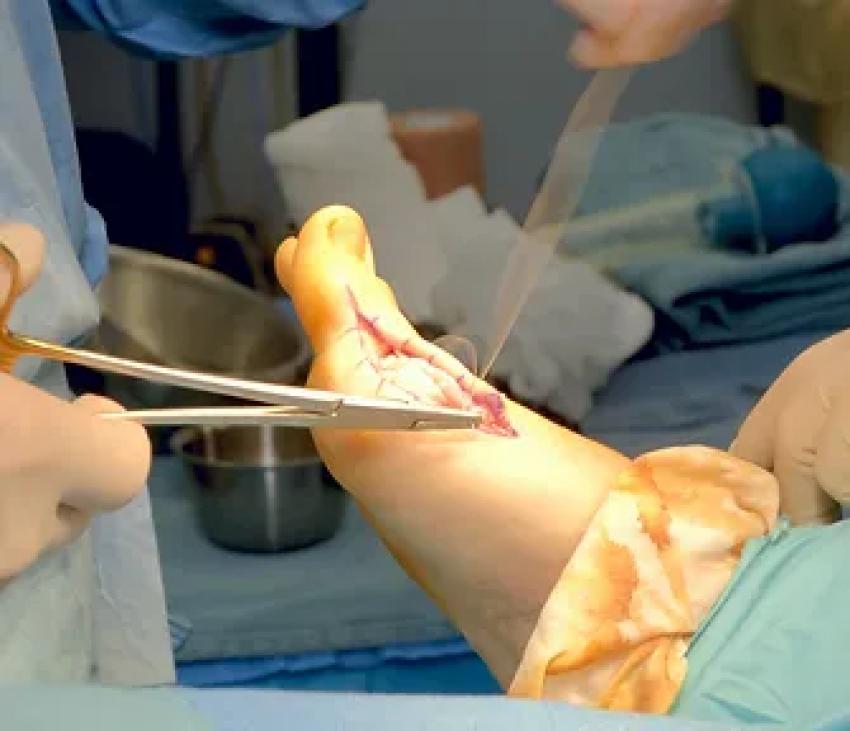
Open surgery is performed by the surgeon who makes incisions, visualizes the bone and joint directly, performs osteotomies, realigns the joints, and fixes them with screws and plates.
The most common osteotomy types are:
Chevron Osteotomy -- Often used for mild to moderate bunions
Scarf Osteotomy -- for moderate-severe deformities and more stable correction
Akin Osteotomy -- used to fine-tune alignment.
Benefits: Ability to visualize and handle complex deformities
Drawbacks: greater soft tissue disruption, more swelling, sometimes longer recovery
Keyhole or Minimally Invasive Techniques
In Perth and elsewhere, more surgeons are performing minimally-invasive (keyhole/percutaneous) bunions surgery.
The techniques used are very small incisions, often 2-3 mm. They also use fluoroscopic (X ray) guidance and smaller soft tissues dissection.
In Perth, specialist practices use the MICA procedure (Minimally Invasive Chervon Akin).
Benefits: Less postoperative pain and scarring, faster recovery.
Cons: More technically demanding; not suitable for all deformities; surgeon experience is crucial
Fusion/Arthrodesis for Severe or Recurrent Cases
Joint fusions are used in severe bunions and when arthritis is present (e.g. Fusing the first metatarsophalangeal joints. This can reduce pain, but also eliminate joint movement.
What you stand to gain from Bunion Surgery?
The benefits of bunion surgery are numerous when done properly and with the right surgical planning.
Significant Pain Reduction Primary goal is to reduce pain or eliminate it associated with the bunions.
Alignment and Function
Correcting bone alignment can help restore biomechanics by reducing stress to adjacent joints.Wearing more comfortable / regular shoes You may be able wear shoes that you previously avoided (wider and nicer looking shoes) after healing.
Improved Quality of Life and Increased Activity
Sports, walking, or everyday tasks become easier.The Longevity Of Correction
A well-performed operation can last for many years, especially in stable corrections.Aesthetic/Psychological Benefit
Many people value the improvement in the shape of their toes and the improved confidence they feel.
What could go wrong?
There are risks associated with all surgeries, including bunion surgery. Realistic expectations and an understanding of trade-offs are essential.
Risks and complications that are common include:
Infection
Slow wound healing or poor wound healing
Recurrence (the return) of the bunion
Residual pain
Stiffness in the big toe joint
Nerve irritation and numbness
Problems involving screws or hardware (pain and prominence, removal required)
Undercorrection and overcorrection
Blood clot, anesthesia risks
Perth practices that offer minimally invasive surgeries may have a low rate of complications, but there is always a risk.
Smokers, diabetics, and people with uncontrolled medical conditions or poor circulation are all at risk.
What to expect in Perth for recovery, rehabilitation & what to expect
Your recovery depends on your foot condition and the technique you used. Here's an approximate timeline of what Perth patients typically go through.
TimeframeWhat you can do / what to expect
Day of SurgeryMost surgeries are performed as a day surgery. Weight-bearing may be permitted immediately in keyhole techniques.
First 1-2 WeeksRest, elevation, weight-bearing restrictions or walking with a special post-op boot. Expect swelling and pain. Sutures and dressings are monitored.
Weeks 2-4Start gentle range of motion exercises for the big toe. If your surgeon recommends it, slowly transition to a more normal shoe.
Weeks 4-8Walking more, partial return to normal activities. Swelling diminishes gradually. Physical therapy and stronger shoes are started.
3-6 MonthsGradually return to more strenuous activities (light sports, long walks). The majority of healing occurs. Some swelling may remain.
6+ months up to 1 yearThe best results are achieved when patients recover fully. The majority of patients return to normal or near-normal function.
Many practices in Perth that offer bunion surgery, including minimally invasive techniques, highlight a quicker recovery and less downtime as compared to older methods.
But patience is still required. In some cases, swelling can last for several months and complete bone healing may take up to 12 weeks.
What to ask / what to look for in a Perth surgeon / clinic
Here are some key questions to ask or criteria to evaluate, since technique and surgeon skills are so important:
Experience and Specialization The number of bunion surgeries performed by the surgeon? Does the surgeon regularly use minimally-invasive techniques?
Before and after photos / patient outcomes
Request to see cases similar to yours.Customized Planning
An experienced surgeon will customize the technique for your specific deformity and not use a single method to treat everyone.Transparent discussion of risks & recovery
It is important to have a realistic understanding of the timeline for recovery, possible risks and what you can do.Rehabilitation/Follow-up Support
Does this clinic offer physical therapy, postoperative care, and monitoring of healing?Sedation / Anaesthesia & Facilities
Are they operating in clinics / hospital that are properly equipped? Are there options for local anaesthesia, sedation or general anaesthesia?Insurance, Cost & Out of Pocket Estimates
Know what your health insurance covers (if applicable) as well as what you will be responsible for.Testimonials / Patient Reviews
The feedback from previous patients can indicate how communicative and supportive the practice is.
Perth Podiatric Surgery, for example, offers keyhole bunion surgeries. Perth Podiatric Surgery emphasizes the reduced downtime.
Is Bunion Surgery worth it (especially in Perth)
It depends on the individual, their pain level, deformity and health.
When non-surgical treatment options fail and the deformity of your foot is progressing and you are in significant pain, bunion surgery may offer relief, better function and a higher quality of life. Modern techniques, including minimally invasive procedures, make surgery in Perth more appealing, especially when performed by experienced surgeons.
Surgery is not a trivial procedure. It involves risk, commitment, rehab, and realistic expectations. It is not a quick fix. The more you research your surgeon, his technique and your post-op plans, the better your chances of achieving a positive outcome.
If you live in Perth and are considering bunion surgery in Perth the first thing to do is to have a thorough consultation by a foot specialist. This will allow them assess your foot structure and deformity as well as your health and goals.