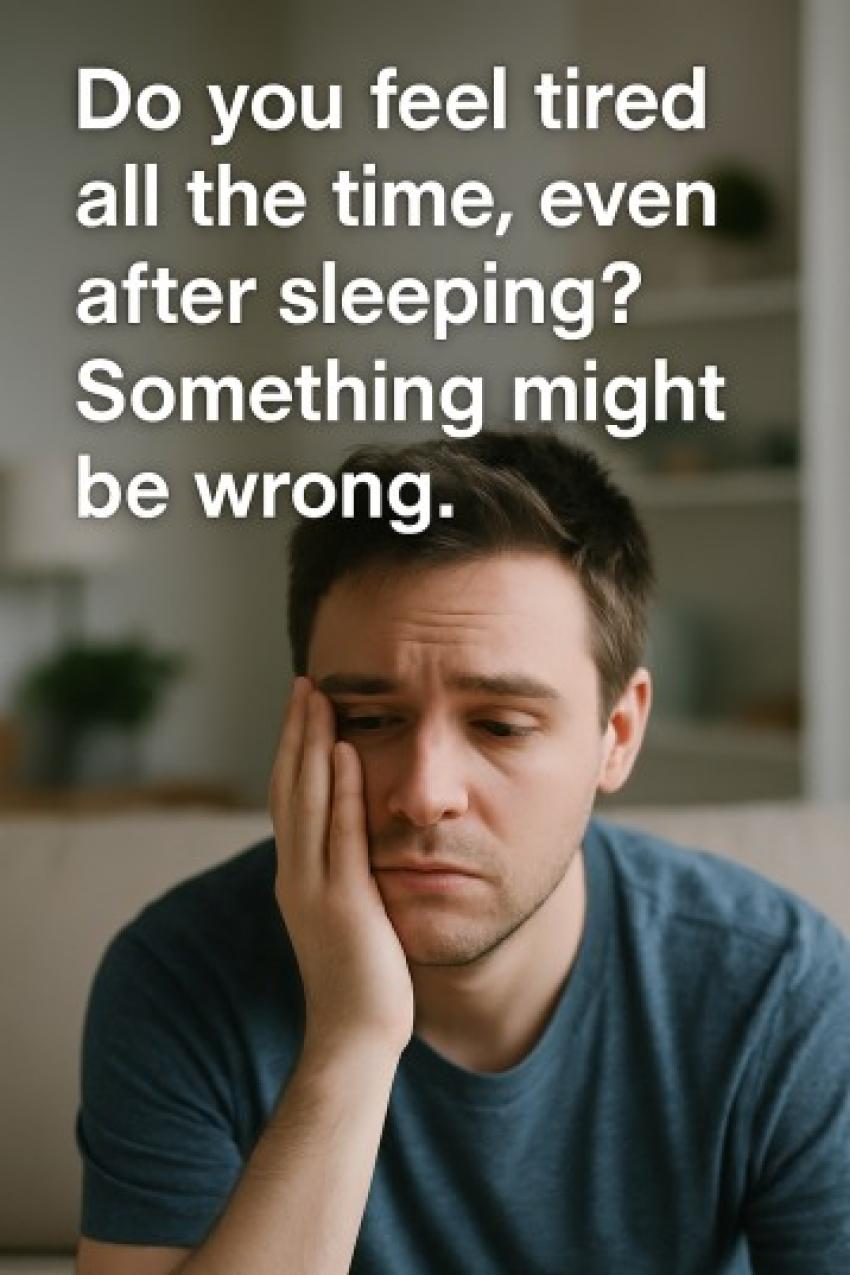
Do you feel tired all the time, even after sleeping? Something might be wrong.
Most people think sleep problems are just about feeling sleepy. However, actual sleep problems are more complex than that. They affect how your brain, heart, mood, and body work every day. Sleep is not just rest. It's repair. And when it breaks down, your whole system suffers.
Many sleep disorders start small. At first, you may just wake up feeling "off." But slowly, your energy, focus, and even your mental health start to slide. If caught early, most sleep issues can be treated. That’s why spotting the first signs matters.
Here are 7 early signs of sleep disorders you shouldn't ignore:
1. You Wake Up Tired, Every Single Day
Even after 7–8 hours of sleep, you feel like you haven’t slept at all.
This could mean your sleep isn’t deep or restful.
Why it matters:
You might have sleep apnea, insomnia, or restless legs syndrome. These conditions disturb your sleep cycles, even if you don’t fully wake up.
2. Loud Snoring or Gasping in Sleep
Snoring isn’t always harmless. Especially if it's loud, daily, or ends with choking sounds.
Why it matters:
One of the most important indicators of obstructive sleep apnoea is this. Your airway may be getting blocked during sleep, lowering oxygen levels in your body and brain.
3. Trouble Falling or Staying Asleep
Lying in bed for hours, tossing and turning, or waking up at 3 a.m. and not falling back asleep.
Why it matters:
This is common in insomnia. It may be caused by stress, anxiety, or hormonal issues. If it happens 3 times a week for over a month, it’s time to speak to a sleep specialist.
4. Daytime Fatigue and Brain Fog
If you feel sleepy all day, struggle to focus, or forget things, your sleep isn’t working.
Why it matters:
It’s a red flag for poor sleep quality. Could be from sleep apnea, narcolepsy, or even delayed sleep phase syndrome (common in teens and young adults).
5. Unusual Movements During Sleep
Kicking your legs, talking, grinding teeth, or acting out dreams.
Why it matters:
These signs could point to REM sleep behavior disorder, periodic limb movement disorder, or bruxism (teeth grinding). A polysomnography test (sleep study) can help diagnose this.
6. Mood Changes, Irritability, or Depression
Feeling easily annoyed, anxious, or down for no clear reason?
Why it matters:
Lack of deep sleep affects emotional balance. Chronic sleep deprivation changes how your brain handles stress. People with sleep disorders often develop depression, anxiety, or both.
7. Falling Asleep at the Wrong Times
Do you nod off during meetings, while reading, or even while driving?
Why it matters:
This is dangerous. It may be a sign of narcolepsy or excessive daytime sleepiness caused by an undiagnosed sleep condition.
What You Can Do Next
Don’t wait. These symptoms usually don’t go away on their own.
Talk to a neurologist sleep specialist if you notice any of these signs regularly.
Consider a sleep study (polysomnography). It records your breathing, brain waves, and muscle activity during sleep.
Treatment options may include CPAP therapy (for apnea), CBT-I (for insomnia), or medication and lifestyle changes.
Why Early Diagnosis Matters
Sleep disorders raise your risk for:
High blood pressure
Diabetes
Heart disease
Stroke
Depression
Memory loss
Sleep is not a luxury. It’s a basic health need. Ignoring small signs today can lead to bigger problems tomorrow.
Final Thought
If your sleep doesn’t leave you feeling refreshed, listen to your body.
Your tiredness is not laziness. It can indicate a curable condition.See a sleep disorder specialist in Delhi. Early care means faster recovery and better long-term health.