If you have sleep apnea, you’ve probably heard of CPAP and BiPAP machines. They look similar. They both help you breathe at night. But they’re not the same. And choosing the wrong one might leave you tired, frustrated, and still struggling to sleep.
Here’s what actually works—and why.
What Is CPAP?
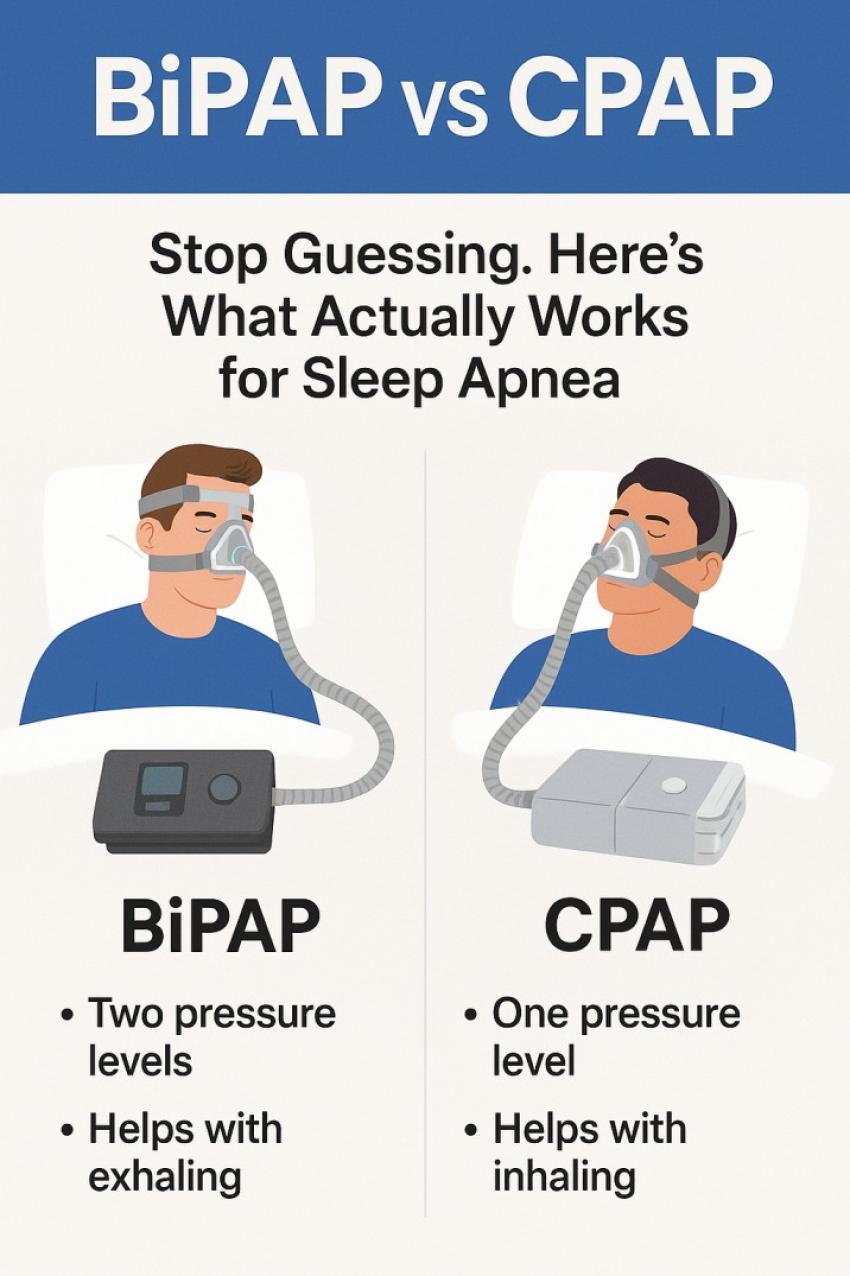
CPAP stands for Continuous Positive Airway Pressure.
It gives you one fixed level of air pressure through a mask when you sleep. This pressure keeps your airway open, so you don’t stop breathing.
It’s usually the first treatment doctors recommend for obstructive sleep apnea.
Good for: most people with mild to moderate OSA
Pressure: stays the same all night
Problem: some people find it hard to exhale against fixed pressure
What Is BiPAP?
BiPAP means Bilevel Positive Airway Pressure.
Unlike CPAP, it gives you two different pressure levels:
Higher pressure when you inhale
Lower pressure when you exhale
This makes it easier to breathe out, especially if you need higher pressure or have other breathing issues.
Good for: severe sleep apnea, central sleep apnea, or people with lung conditions
Pressure: changes when you breathe
Feels more natural for some users
Which One Works Better?
That depends on your condition.
For many people, CPAP is enough. It’s simple and works well for most sleep apnea cases.
But if:
You need high pressure
You feel breathless using CPAP
You have central sleep apnea or complex sleep apnea
You have COPD or other lung disease
...then BiPAP is usually better.
Doctors often switch people to BiPAP when CPAP fails.
Cost Difference
In India:
CPAP machines start around ₹30,000
BiPAP machines usually start from ₹50,000 and go much higher depending on the brand (like ResMed or Philips)
BiPAP costs more because the machine is more advanced.
But it may save you from years of poor sleep if you actually need it.
ResMed CPAP vs BiPAP
ResMed is a trusted brand. Their AirSense 10 AutoSet (CPAP) is very popular. So is the AirCurve 10 (BiPAP).
If you’re choosing between them:
Go with AirSense if your sleep apnea is not severe
Go with AirCurve if your doctor recommends BiPAP due to pressure needs or breathing patterns
What Should You Do?
Don’t guess.
If CPAP didn’t work for you, or you feel like you’re fighting your machine to breathe—ask your doctor about BiPAP.
Get a sleep study or pressure titration test.
That will show what pressure levels you need and whether BiPAP makes more sense.
LSI Keywords Used:
difference between cpap and bipap
bipap vs cpap for sleep apnea
which is better cpap or bipap
bipap machine for sleep apnea
cpap not working
cpap vs bipap cost in india
resmed bipap machine
cpap alternative
bipap for breathing problems
FAQs
Q: Is BiPAP better than CPAP for sleep apnea?
A: Not always. CPAP is best for most people with obstructive sleep apnea. But if CPAP doesn't work or your condition is complex, BiPAP may be more effective.
Q: Why is BiPAP more expensive than CPAP?
A: BiPAP machines are more advanced. They use two pressure levels and need more sensors and technology, which increases the price.
Q: Can I use BiPAP without a doctor’s prescription?
A: It’s not recommended. Using the wrong settings can harm your breathing. Always consult a sleep specialist before switching.
Q: Does BiPAP feel more comfortable than CPAP?
A: Many people say yes, especially when they need high pressure. The lower exhalation pressure in BiPAP makes it easier to breathe out.
Q: Can I use BiPAP for snoring?
A: If your snoring is due to sleep apnea and CPAP doesn't help, BiPAP might be an option. But snoring alone doesn’t always require BiPAP.