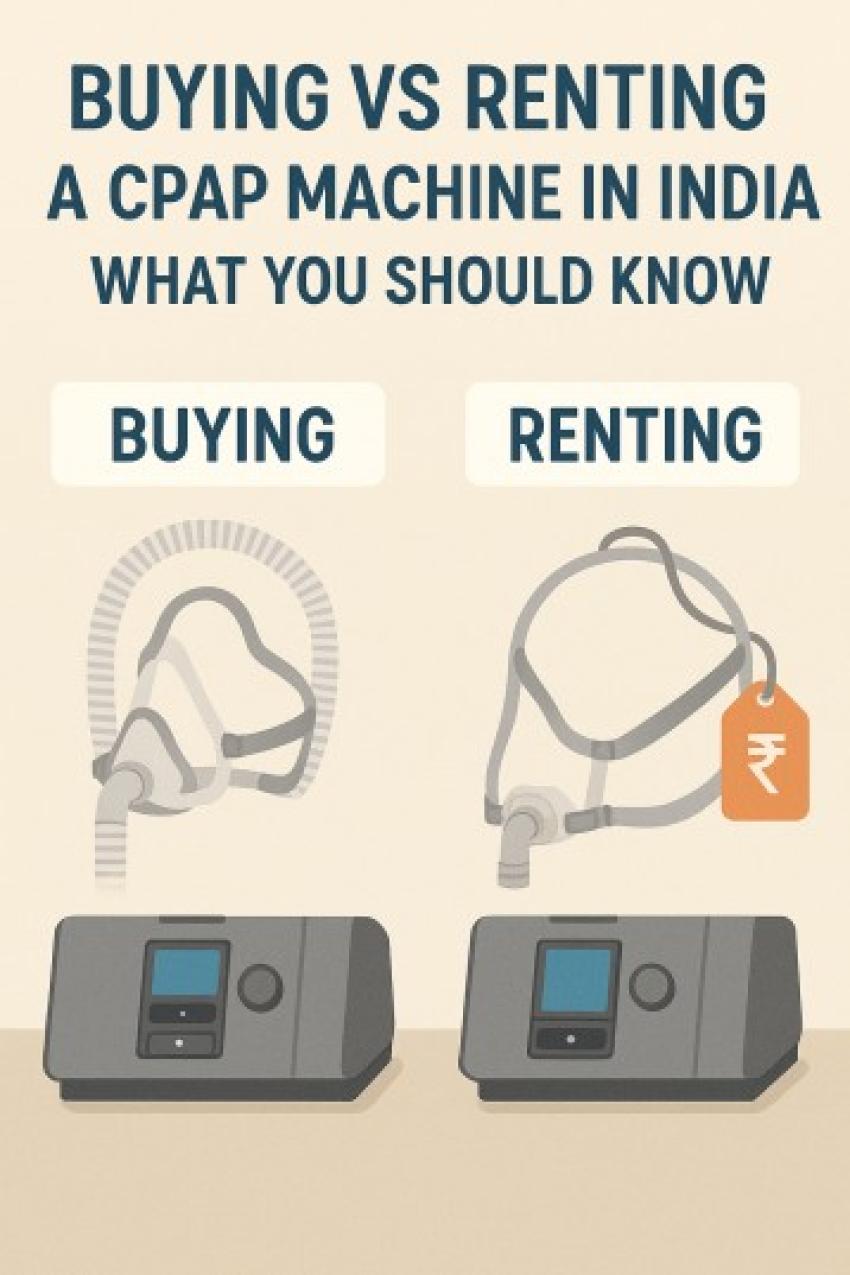
If you’ve been diagnosed with sleep apnea, your doctor may suggest using a CPAP machine. But now comes a real question—should you buy it or rent it?
Both options have pros and cons. Here's a breakdown in simple terms to help you decide.
1. Cost: Renting Is Cheaper Short-Term
If you're not ready to spend ₹40,000–₹90,000 on a new CPAP machine, renting makes sense. You can get one on rent for ₹2,500–₹5,000 per month, depending on the model.
Renting is good if:
You’re trying CPAP therapy for the first time.
You want to test a specific brand like ResMed or Philips.
You’re not sure how long you'll need it.
Buying is better if:
You need long-term therapy.
You’ve already used CPAP and know what works for you.
You want your own machine without sharing or returning it.
2. Hygiene and Usage
When you buy a CPAP machine, it’s yours. You don’t have to worry about who used it before. You can keep your settings the way you like.
Rental machines are cleaned and checked before use, but still—used equipment can wear out faster. Also, rental companies may charge for damage or lost parts.
If hygiene matters to you, buying is the safer choice.
3. Flexibility and Upgrades
Renting gives you room to experiment. You can switch from a basic model to a ResMed AirSense 11 AutoSet or even a BiPAP if needed. No need to invest in a machine that may not suit you.
But if you already know which features you need—like auto-adjusting pressure, a heated humidifier, or a DreamWear mask—buying saves money over time.
4. Repairs and Maintenance
Rental companies often take care of servicing, repairs, and machine replacement. You just call them if something stops working.
When you own the machine, you're responsible. That means you need to pay for service or part replacements after the warranty ends.
So, ask yourself: Do you want freedom or convenience?
5. Availability and Access
In major cities like Delhi, Mumbai, Bangalore, and Chennai, you’ll find many companies offering CPAP machines on rent. Some even provide doorstep delivery and setup.
Buying is easier now too. You can order online, choose models like the ResMed Auto CPAP, and get it delivered in a day or two.
But if you’re in a smaller city or town, renting options might be limited.
6. Insurance and Tax
Most health insurance plans in India don’t cover CPAP machines, whether rented or bought. So you’ll be paying from your pocket either way.
But if you buy the machine and it’s medically prescribed, you may be able to claim it under Section 80D (for some insurance plans). Check with your provider.
7. When Renting Makes More Sense
You’re traveling and need a machine for a short period.
You’re not sure if CPAP therapy will work for you.
You’re waiting for a permanent setup and need a temporary solution.
8. When Buying Is Better
You’ve been advised long-term CPAP therapy.
You want your own clean, personalized setup.
You don’t want the hassle of returns or monthly payments.
Final Thoughts
There’s no one-size-fits-all answer. Renting a CPAP machine in India is great for trying it out. Buying one gives you peace of mind in the long run.
If you're unsure, rent first. If it works for you, invest in a machine that suits your needs.
Sleep apnea is serious. Whether you rent or buy, the important part is to start treatment.