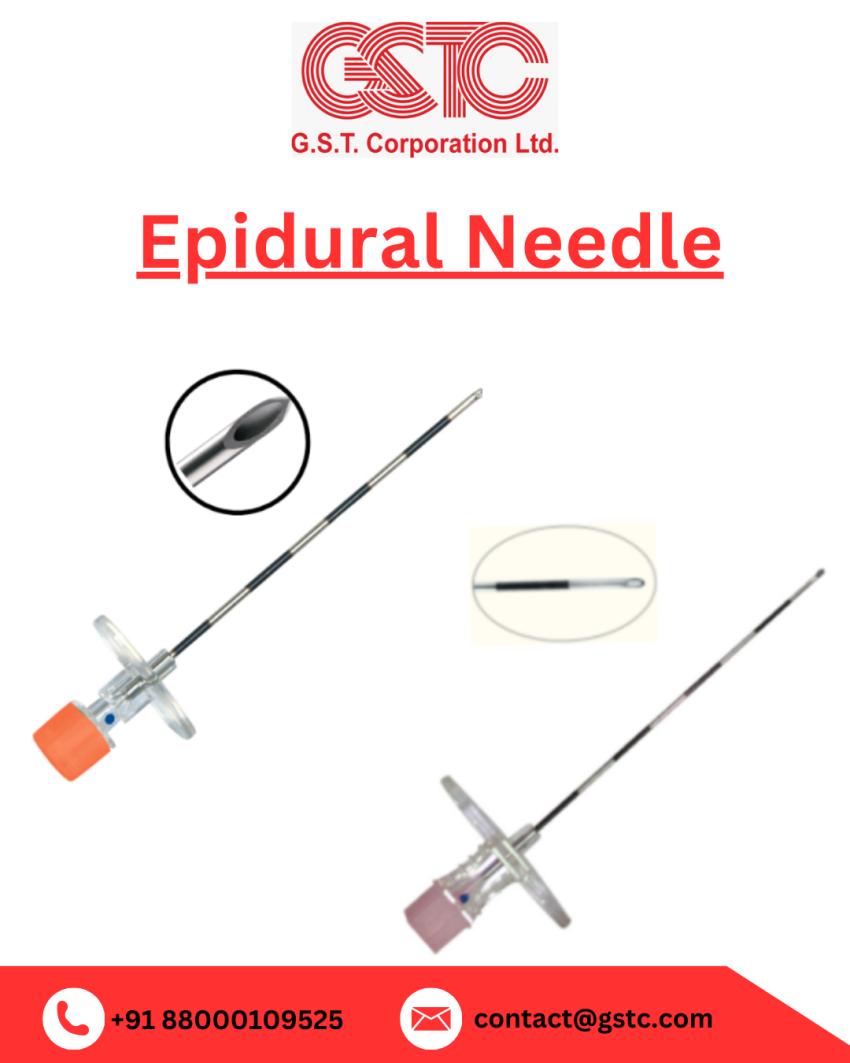
Epidural Needles are specialised medical instruments designed to administer medication into the epidural space, which surrounds the spinal cord. This procedure, known as an epidural, is commonly used to provide anaesthesia or pain relief during various medical procedures, including childbirth, surgeries, and chronic pain management. There are different epidural needle types, such as the spinal epidural needle and epidural spinal needle, each designed to offer precision and safety in delivering effective pain relief while minimising discomfort for the patient. These needles are essential for ensuring successful, controlled medication delivery.
Key Features of Epidural Needles
- Precision Tip Design – The needle tip is crafted for smooth insertion with minimal tissue trauma, ensuring safe and effective epidural administration.
- Depth Markings for Accuracy – Marked graduation lines help healthcare professionals accurately position the needle in the epidural space.
- Curved or Straight Tip Options – Available in Tuohy, Hustead, Crawford, and Weiss designs to cater to different procedural requirements.
- Biocompatible Material – Made from high-quality medical-grade stainless steel, ensuring durability and patient safety.
- Ergonomic Hub – The hub is designed for a secure grip and enhanced control, making insertion more precise and reliable.
How Epidural Needles Work: Step-by-Step Procedure
The epidural anaesthesia needle is used in a precise medical procedure to deliver pain relief safely and effectively. Below is a step-by-step breakdown of how the epidural needle is used during the procedure:
1. Patient Preparation
- The patient is positioned either sitting upright or lying on their side with their back curved to allow easier needle insertion.
- The injection site is thoroughly cleaned and sterilized to prevent infection.
2. Needle Insertion
- A spinal epidural needle is carefully inserted between the vertebrae into the epidural space of the spinal column.
- The depth markings on the epidural spinal needle help the anaesthesiologist accurately position the needle.
3. Catheter Placement
- A thin catheter is threaded through the epidural needle, allowing for continuous administration of anaesthesia or pain relief medication.
- Once the catheter is correctly positioned, the epidural needle is removed, leaving only the catheter in place.
4. Anesthesia Administration
- Medication is delivered using an epidural syringe through the catheter for controlled pain relief.
- The effects typically begin within 10 to 20 minutes and can be adjusted based on the patient's needs.
The procedure using different epidural needle types ensures accurate placement, maximum patient comfort, and effective pain management for childbirth, surgeries, and chronic pain treatments.
Uses of Epidural Needles
Epidural needles play a crucial role in various medical procedures, primarily in pain management and anesthesia. Their precise design allows for safe and effective medication delivery into the epidural space, providing relief for a range of conditions. Below are the primary uses of epidural needles:
1. Labor and Delivery (Obstetric Anesthesia)
- Epidural anesthesia is widely used during childbirth to provide pain relief while allowing the mother to remain awake and alert.
- Helps reduce discomfort during vaginal deliveries and C-sections (Cesarean sections).
- Allows for continuous pain control throughout labor via an epidural catheter.
2. Surgical Anesthesia (Regional Anesthesia)
- Used in lower body surgeries, such as hip replacements, knee surgeries, and gynecological procedures.
- Reduces the need for general anesthesia, which can have more side effects.
- Patients remain conscious but do not feel pain in the targeted area.
3. Chronic Pain Management
- Provides long-term relief for patients suffering from chronic back pain, sciatica, herniated discs, and spinal stenosis.
- Epidural steroid injections (ESIs) help reduce inflammation and nerve pain.
- Common in pain management clinics and neurology centers.
4. Postoperative Pain Control
- Used after major surgeries to reduce pain and discomfort, minimizing the need for opioid painkillers.
- Helps patients recover faster and with fewer side effects.
- Often used in abdominal, thoracic, and orthopedic surgeries.
5. Cancer Pain Management
- Helps control severe pain in cancer patients, especially those with tumors affecting the spine or nervous system.
- Reduces the reliance on strong oral painkillers.
6. Combined Spinal-Epidural (CSE) Anesthesia
- A technique that combines both spinal and epidural anesthesia for enhanced pain relief.
- Commonly used in childbirth and complex surgeries requiring prolonged pain control
Advantages of Epidural Needles
Using an Epidural Needle for pain management and anaesthesia offers several benefits, ensuring precision and patient comfort. Below are the key advantages:
1. Effective Pain Relief – The epidural anesthesia needle delivers targeted pain relief, making it ideal for labor, surgeries, and chronic pain management.
2. Precision & Safety – Various epidural needle types, such as the spinal epidural needle, allow accurate medication delivery with minimal complications.
3. Controlled Anesthesia Administration – The use of an epidural syringe ensures the correct dosage is administered, enhancing procedural efficiency.
4. Minimized Patient Discomfort – A well-designed epidural spinal needle reduces tissue trauma, improving patient comfort during procedures.
5. Versatile Applications – Spinal epidural needles are used in multiple medical fields, including obstetrics, orthopedics, and pain clinics.
These advantages make epidural needles an essential tool in modern healthcare, providing safe and effective anesthesia solutions.
What are the different types of Epidural Needles?
There are several epidural needle types, each designed to suit specific medical needs:
- Tuohy Needle: A curved epidural spinal needle designed to help guide catheter placement with precision.
- Hustead Needle: Known for its less pronounced curve, providing better control during insertion.
- Crawford Needle: A spinal epidural needle with a straight tip for direct catheter placement.
- Weiss Needle: Features a rounded, curved tip for controlled and smooth medication delivery.
Conclusion
Epidural needles play a crucial role in providing targeted pain relief during childbirth, surgeries, and chronic pain management. With various epidural needle types, including the spinal epidural needle, healthcare professionals can ensure precision and safety in administering epidural anaesthesia. The use of an epidural syringe further enhances the effectiveness of the procedure, offering patients optimal comfort and relief.