Introduction
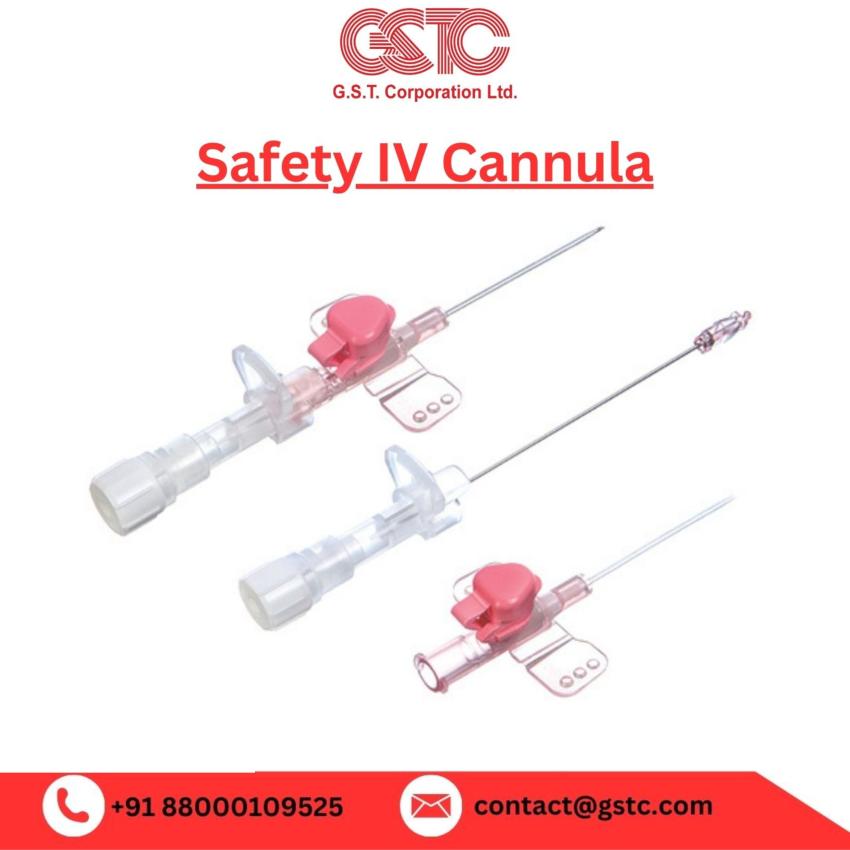
An IV cannula is a small, flexible tube introduced into a vein to allow direct access to the bloodstream. In hospitals and clinics, IV cannulas are generally used for fluid administration, medications, nutrients, and many other uses. An IV cannula catheter is an indispensable element of the modern medical field, especially during emergencies or for long-term treatment. Insertion of the cannula into a vein is termed IV cannulation and should be carried out by trained health personnel to ensure patient safety. One of the most favored types in healthcare facilities is the IV cannula with wings and a port. The wings are used to fix the device onto the skin, while the port is used to administer extra medicines without piercing the patient again. At GST Corporation, we keep manufacturing IV cannulas designed for comfortable, safe, and easy-to-use purposes, thus suitable for hospitals, clinics, and B2B medical distributors.
Advantages of IV Cannula
1. Swift and Dependable Access to the Veins
The most important advantage of applying an IV cannula is that it provides prompt access to a patient's vein. This feature becomes most important in the emergency and critical care area, when medications or fluids need to be administered immediately.
An excellent IV cannula catheter will thus enable practitioners to save valuable time, while at the same time, reducing patient pain by reducing the number of needle insertions.
2. Facilitates Safe IV Cannulation
IV cannulation is the insertion of a cannula into a vein. An IV cannula designed well, with, for example, a flashback chamber confirming correct placement with the backflow of blood, assists nurses and physicians in performing the procedure safely and with ease.
This lessens the chances of:
Failed placements
Vein damage
Hematoma (leakage of blood into the skin surface)
3. Lesser Need for an Extended Stay of the Hekro For Needle Insertion
From a few hours up to two days, an IV cannula catheter remains inserted into the vein, permitting a continuous infusion of:
IV fluids
Antibiotics
Chemotherapy drugs
Painkillers
Hence, inserting another needle for every injection becomes unnecessary, which poses less discomfort to patients and is an efficient act for medical personnel.
4. Enhanced Infusion Control and Drug Delivery
With an IV cannula with a wing and with port, medical professionals have a secondary injection port via which they can give medications without interrupting the primary IV line. This is extremely useful in hospital settings where several drugs are given during the day.
Injection Port Explained Simply:
A miniature inbuilt valve on the cannula through which a syringe can be attached to administer medicine without having to take out the cannula.
5. Stable Fixation with Winged Design
The winged IV cannula with port features flexible wings on both sides of the catheter hub. The wings provide ease of handling for the cannula during insertion as well as securing it firmly in place with adhesive tape.
Advantages of the winged type:
Reduces accidental displacement
Improves control during insertion
Increases patient safety and comfort
Usages of IV Cannula
1. Intravenous Fluid Administration
The most popular application of an IV cannula is the intravenous delivery of fluids into the bloodstream of a patient. It is particularly useful in situations of:
Dehydration
Blood loss
Electrolyte imbalance
Surgery or trauma
Fluids such as saline or glucose are pumped in through the catheter of the IV cannula without hesitation, stabilizing the patient.
Why it's important: Speed and dependability are crucial during emergencies. Our winged IV cannula with port enables safe fixation and continuous flow of the fluid, hence its suitability for hospital applications.
2. Drug Delivery
Delivery of the drug via IV cannulation guarantees:
Quick absorption
Precise dosage
Avoidance of the digestive tract
This is particularly beneficial for:
Antibiotics
Painkillers
Chemotherapy medications
Sedatives or anesthetics
The IV cannula catheter remains within the vein, and multiple doses can be administered without having to repeat needle punctures. That is why most healthcare professionals like the IV cannula with wing with port since it permits infusion and injection via the port.
3. Blood Transfusions
IV cannulas are commonly utilized to administer blood transfusions, particularly in instances of:
Severe blood loss
Surgery
Treatment of anemia
Cancer treatment
The wide-lumen IV cannula catheters, 16G or 18G, are used for quick and safe blood transfusion. The wings give good grip during insertion, and the port has the option for additional medication if necessary during transfusion.
4. Parenteral Nutrition
Intravenous nutrition is administered by an IV cannula to patients who are unable to eat or digest food in a normal way. This is referred to as parenteral nutrition.
The IV cannula catheter enables the infusion of:
Amino acids
Lipids (fats)
Vitamins and minerals
Glucose
This is critical in ICU patients, chemotherapy patients, or those with severe gastrointestinal disorders.
5. Emergency Medication Access
In trauma or critical care units, IV cannulation provides immediate access for life-saving medications such as:
Epinephrine
Atropine
Anticonvulsants
Vasopressors
In such high-stress settings, the IV cannula with a wing with port is preferred because:
Wings facilitate rapid, stable insertion
Port allows multiple drugs to be given without having to remove the cannula
Flashback chamber assures venous entry, minimizing risk
6. Chemotherapy Infusion
Chemotherapy by IV cannulation is frequently done in cancer patients. The employment of IV cannula catheters provides:
Repetition of drug infusion with the least discomfort
Utilization of the port for future drugs
Compatibility with the infusion pump
The winged IV cannula with port provides comfort along with safety by lessening the damage to the veins during repetitive sessions.
7. Anesthesia during Surgical Operations
Anesthesia medications are commonly administered before surgery via an IV cannula. Some of these are:
General anesthetics
Muscle relaxants
Analgesics
The IV cannula catheter offers a stable pathway for rapid onset of drugs. The wings provide stable fixation during surgery, reducing unintentional dislodgment.
8. Pediatric and Neonatal Use
In pediatric and neonatal practice, thin-gauge IV cannulas are employed with utmost caution. The IV cannula with the wing with port benefits healthcare professionals:
Ensure stable access for ambulant children
Deliver several medicines without the need for reinsertion
Monitor for complications such as infiltration
Its lightweight and rigid wings give great control during sensitive procedures.
Key Features of IV Cannula
The IV cannula, or IV cannula catheter, is an essential medical device for IV cannulation – the procedure of inserting a cannula into a vein for administering fluids, medications, or nutrients directly into the blood. Our IV cannula with a wing with port at GST Corporation is created for safety, convenience, and high performance in clinical settings.
1. Valve Injection Port
The wing-tipped IV cannula with port features an internal injection port wherein medical staff can dispense medication without having to replace a new needle every time. This not only minimizes the discomfort of the patient but streamlines workflow during high-volume clinical environments.
2. Medical-Grade, Flexible Catheter
The IV cannula catheter consists of a biocompatible, non-toxic PTFE or polyurethane material. Once IV cannulation has been successfully carried out, the steel needle is withdrawn, but the soft catheter stays within the vein, reducing trauma or irritation.
3. Wings for Easy Fixation
The IV cannula with a wing with port has two side wings that enable medical personnel to safely tape the device onto the patient's skin. The wings enhance handling on insertion and avoid accidental displacement following fixation.
4. Color-Coded Hub
Every IV cannula catheter is color-coded according to its gauge size (for example, pink for 20G, green for 18G). This facilitates rapid choice in busy settings such as ICUs, operating theatres, or emergency wards.
5. Flashback Chamber
An open flashback chamber enables medical professionals to visualize blood return upon entry of the needle into the vein. This verifies successful cannulation of the IV before advancing the catheter.
6. Luer Lock Connector
The IV cannula hub features a universal luer lock fitting that securely fits with IV sets, syringes, and infusion lines. This avoids disconnection or leakage during fluid delivery.
7. Sterile, Single-Use Packaging
Every IV cannula catheter is separately packed in a sterile blister to prevent contamination. They are pre-assembled and single-use only to provide maximum patient safety.
Compliance: Compliant with ISO 10555, CE marking, and international sterilization standards.
8. Available in Various Sizes
GST Corporation provides IV cannulas in a range of gauges, from large bore (14G) to fine (24G), to meet different medical requirements – from fast fluid replenishment to slow drug delivery.
Use:
14G/16G: Emergency fluid resuscitation
18G/20G: General medical application
22G/24G: Pediatric and elderly patients
Conclusion
It is safe to say that an IV cannula is an indispensable piece of equipment that modern medical practice cannot do without to ensure safe IV cannulation for all drug and fluid delivery procedures. Comfort is appropriately taken into consideration, even though patient and clinical considerations can introduce other concerns. It offers the plain IV cannula catheter with an easy insertion process or the winged and ported IV cannula for added convenience and stability. GST Corporation produces high-standard IV cannulas based on the global medical standards. Healthcare environments and healthcare professionals rely on GST Corporation because of its dedication to accuracy, safety, and dependability in all its product lines to provide better outcomes and quicker treatment within healthcare environments.