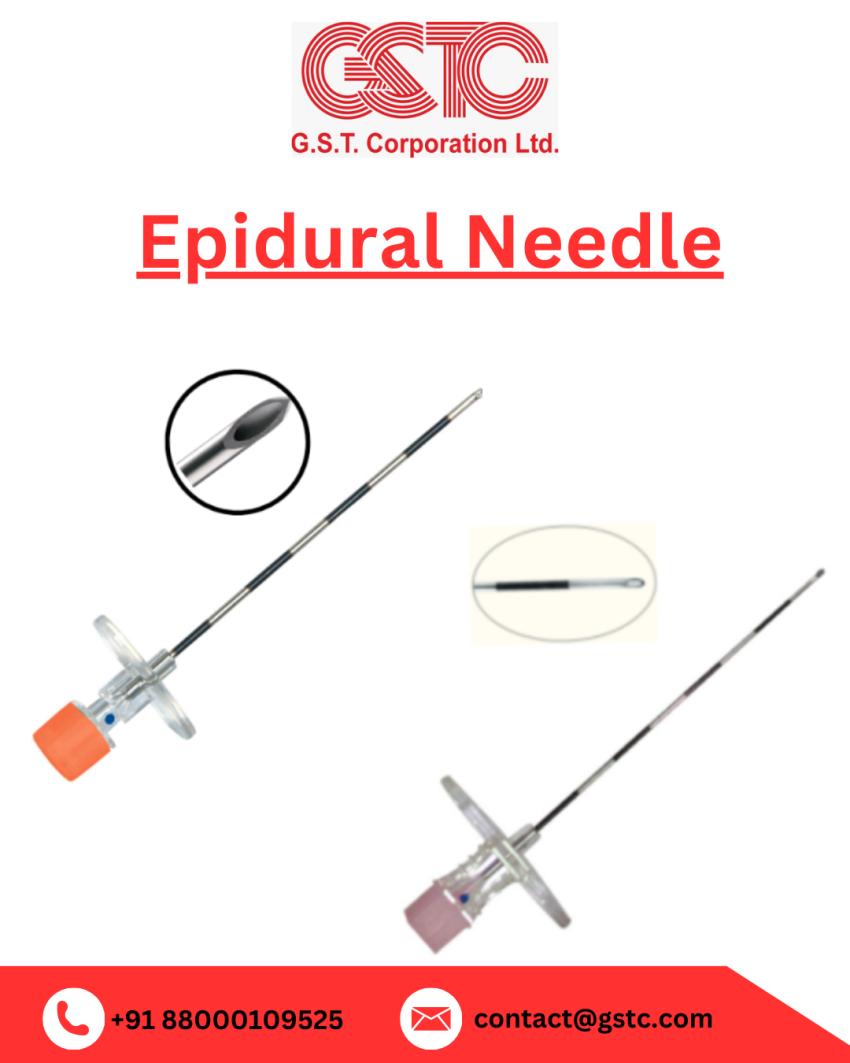
What is an Epidural Needle?
The Epidural needle is a special medical tool for injecting anesthetic or pain-reducing medications into the epidural space around the spinal cord. This procedure is often used for labor pain management, surgery, and chronic pain relief. The needle design ensures accuracy, minimizing any possible risks and maximizing the efficiency of pain relief.
Applications of Epidural Needle
Epidural Anesthesia
Applied in surgical procedures such as even hysterectomy or orthopedic surgeries, numbness of the lower part of the body occurs.
It used an epidural anesthesia needle to keep them awake and alert while feeling no pain.
Pain Relief During Labor and Delivery
The most popular method among all available techniques for labor pain control.
This gives an effective pain relief effect while allowing mothers to remain awake and fully participate during delivery.
Chronic Pain Management
Takes care of ailments like sciatica, ruptured discs, spinal stenosis, and lower back pain.
Long days offer relief by blocking pain signals in the brain through needle epidural delivery.
Post-Surgical Recovery
Reduces postoperative pain after major surgery with much less demand for opioids.
Faster and easier recovery is due to the facilitation of pain control with epidural needles.
Orthopedic and Neurological Treatments
Spinal injections are intended to directly manage pain to target nuclei or tissues.
The use of an epidural syringe allows for the precise delivery of medication in rehabilitation therapies and the management of pain programs.
How Is the Epidural Needle Used?
Administering an epidural anesthetic or pain relief via the epidural syringe is a process that comprises the following steps:
1. Patient Positioning
The patient is asked to either sit up or lie on the side while arching his back in such a way as to expose the spinal area.
2. Skin Preparation
Thorough cleaning and sterilization of the area is done to avoid the possibility of infection.
3.Local Anesthetic Injection
A small amount is injected as a local anesthetic to numb the area where the epidural needle will be inserted.
4. Insertion of the Epidural Needle
The needle is slowly directed into the epidural space either through image-guided methods or manually, which assures somatic precision for the medication delivery.
5. Catheter Placement
In cases where ongoing administration of the medication is indicated, a thin catheter is inserted through the epidural anesthesia needle. This will keep the pain relief for some time.
6. Medication Administration
The anesthetic or pain-relieving medication is injected through an epidural syringe.
7. Monitoring and Adjustment
The patient is closely watched to see if it works and if any complications arise.
Risks and Safety Considerations
Although epidural needles have a remarkable success rate, the practice of the best technique minimizes the risk of complications. Some common considerations are:
Correct Placement: Failure to place the needle correctly may either enable the pain to continue or produce unwanted effects.
Monitoring for Side Effects: Having the more temporary side effects of numbness, low blood pressure, or mild headache.
Sterile Technique: Aim to maintain a sterile environment, including the skin over the insertion site, to prevent the occurrence of an infection.
The skillful administration of anesthesia by properly trained personnel guarantees the safety of the patient.
Criteria for Selection of Epidural Needle
Selecting the epidural needles requires several considerations.
1. Anatomy of Patients
The choice of epidural needle size and design would match the spinal anatomy and medical condition of the patient.
2 . Type of Procedure
The selection of needle is thus different from the use of single dose administration to that of continuous pain management.
3. Needle Gauge
A different range of needles is available, such as 16G, 18G, and 20G, which tend to reduce discomfort as the needle gets finer.
4. Preference of Medical Professional
Different hospitals and different practitioners may have such preferences because of experience and expertise.
Conclusion
Epidural needles are a primary medical instrument that guarantees patient comfort, patient-centered pain management, as well as better patient outcomes. Such needs are inherent to GST Corporation, and this compels concern over their significant role in modern medical practice. These needles make a large part of the obstetric anesthesia procedures, which are also widely used in managing chronic pain. As such, they have very well become part and parcel of modern health care. Knowledge of the utilization, advantages, and safety protocols of these needles enables a health care provider to offer the utmost effective, safe pain management, which GST Corporation continues to be devoted to facilitating excellence.