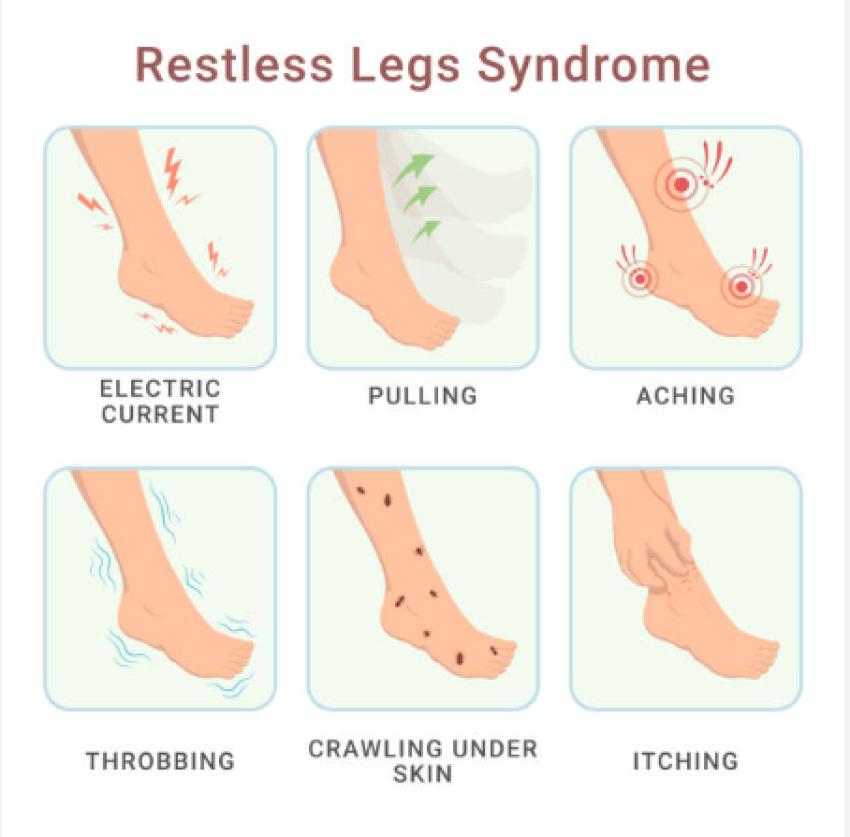
Sometime You lie down, ready to sleep, but your legs won’t stay still. They tingle, ache, or feel like something is crawling inside them. Moving helps, but only for a moment. This could be more than just fatigue—it might be Restless Legs Syndrome (RLS).
What is RLS?
RLS, also called Restless Legs Disorder or RLS Disease, is a neurological condition that causes an uncontrollable craving to move the legs. It usually happens at night when you're resting.Sleeping and staying asleep may be difficult as a result of that.
RLS Symptoms
Uncomfortable sensations in the legs—tingling, itching, pulling, or throbbing.
Strong urge to move the legs to get relief.
Symptoms worsen at night or when resting.
Temporary relief after movement, but discomfort returns.
Some people also have ragular Limb Movements in Sleep (PLMS)—cure or twitching of the legs during sleep.
What Causes Restless Legs at Night?
The exact cause isn’t always clear, but several factors can trigger RLS:
Iron deficiency – Low iron levels in the brain can lead to RLS symptoms.
Neurological disorders – Conditions like Parkinson’s or multiple sclerosis can increase the risk.
Chronic diseases – Diabetes, kidney disease, and peripheral neuropathy can contribute to RLS disease.
Pregnancy – Many women experience Restless Legs during the third trimester.
Medications – Some antidepressants, antihistamines, and anti-nausea drugs can worsen symptoms.
Lifestyle factors – Caffeine, alcohol, and nicotine can make symptoms worse.
Restless Legs Treatment
There’s no single cure for restless legs, but treatments can help manage symptoms.
RLS Remedy: Lifestyle Changes
Increase iron levels – If iron shortness is the cause, supplements may help.
Exercise regularly – Light exercise can improve symptoms, but avoid intense workouts close to bedtime.
Improve sleep habits – Keep a consistent sleep schedule and create a relaxing bedtime routine.
Avoid triggers – Cut back on caffeine, alcohol, and nicotine.
Leg massage or warm baths – These can relax the muscles and reduce discomfort.
Medicine for RLS
For moderate to severe cases, RLS medication may be needed:
Dopamine agonists – Medications like pramipexole or ropinirole help regulate dopamine levels.
Alpha-2-delta ligands – Drugs like gabapentin and pregabalin can reduce nerve-related pain.
Benzodiazepines – Sometimes used to improve sleep, but not a first choice.
Low-dose opioids – In serious cases, opioids may be considered when other treatments fail.
When to See a Doctor
If RLS symptoms are affecting your sleep or daily life, talk to a doctor. They can check for underlying conditions and suggest the right RLS treatment. If needed, a sleep study may help diagnose related issues like Periodic Limb Movements in Sleep (PLMS).
Final Thoughts
RLS is more than just being tired. It can disrupt your sleep and make daily life harder. Identifying the cause and finding the right treatment can help you rest better. If you think you have Restless Legs Syndrome, don’t ignore it—help is available.