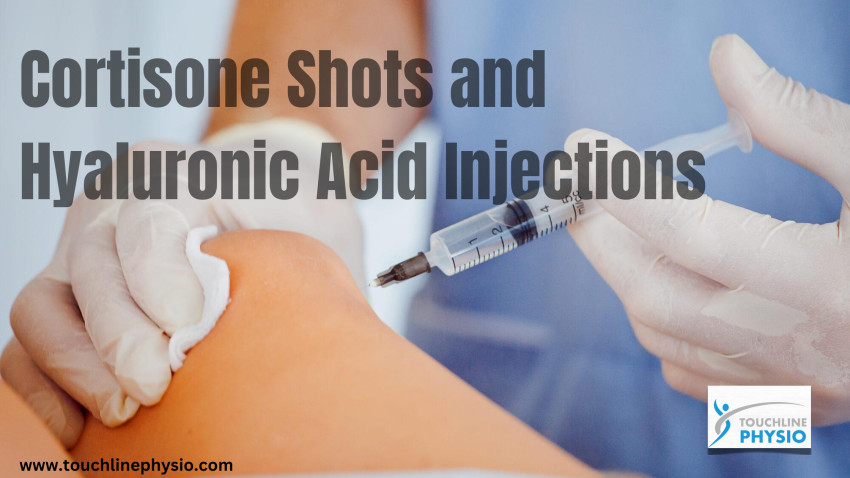
According to osteoarthritis experts, there are several kinds of injections, and they play a significant role in the treatment of knee osteoarthritis for many patients. For those who have not found relief from NSAIDs like ibuprofen or who are unable to use those medications owing to adverse effects, injections can be quite beneficial. Let us take a closer look at OA and its non-surgical treatments.
One of the most common types of arthritis that frequently affects the knees is called osteoarthritis, or OA. It appears when the smooth covering that protects the joint's bones, called cartilage, breaks down, thereby damaging the surface of the bones resulting in discomfort, stiffness, and disability to move or walk.
Here's how knee injections work
Following is a step-by-step description of the non-surgical treatment of osteoarthritic knee pain. This may differ if the diagnosis or treatment prescribed by your doctor is different.
To numb your knee, your doctor will first inject you with an anaesthetic.
After this, your physician could extract any excess fluid from your knee using a needle.
The injection to relieve the discomfort will then be administered, usually right below the kneecap. Corticosteroids and hyaluronic acid are the two types of knee injections used most frequently for osteoarthritis.
The medication will act throughout the joint. There is no need to worry, as the injection shouldn't cause any pain.
It is advisable to address any potential side effects with your doctor prior to beginning any treatment.
Cortisone shots: To reduce inflammation
Corticosteroid injections or cortisone shots can be used to treat OA flare-ups that cause oedema and fluid buildup in the knee. However, they're not always the best option. Here are a few things to remember in case you consider this treatment:
They work swiftly and provide "very rapid" relief typically in a time span of 24 to 48 hours.
The advantage is, however, short-term. The pain alleviation lasts six to twelve weeks on average. The injection usually gets you through any osteoarthritis flare-up until the symptoms are done away with.
They shouldn't be used often. A corticosteroid shot works best the first time. From the second shot onward, they usually offer less help.
People suffering from nagging OA knee pain are usually advised to take these shots two or three times a year. Overuse of these injections can harm the cartilage-producing cells in the knee.
Hyaluronic acid injections: for steady and long-term relief
A major part of the fluid that you find in a healthy knee is hyaluronic acid. However, the hyaluronic acid in your knee thins when you have osteoarthritis. Your doctor may inject additional hyaluronic acid into your knee in order to increase the supply. Research has also shown some people suffering from osteoarthritic knee pain may find more help from hyaluronic acid injections than from painkillers. They might alleviate symptoms just as much as cortisone shots do. You might want to consider the following if you're thinking of getting hyaluronic acid injections:
It's not always the initial strategy. Hyaluronic acid may be recommended by your doctor if:
Painkillers and complementary therapies like cold or heat don't relieve your problems.
You cannot opt for Advil, Motrin (ibuprofen), Aleve (naproxen sodium), Tylenol (acetaminophen), or other pain medicines.
You or your doctor are worried about the adverse consequences of a steroid shot.
It might function in several ways. Hyaluronic acid helps lubricate and cushion the moving components in your knee after an injection. This effect wears off quickly. However, by reducing pain and inflammation, the treatment also appears to have more long-term benefits.
Get rid of OA pain today with Touchline Physio.
There is no denying that cortisone shots and hyaluronic acid injections can help you do away with some of the osteoarthritic pain in the knees. However, it is important to note that you might need more than one injection. Hyaluronic acid injections come in five different varieties. Some people need up to five injections usually in five weeks while others need just one. After six months, you can get another shot if necessary. Book an appointment with Touchline Physio today for your cortisone shot in Orpington.