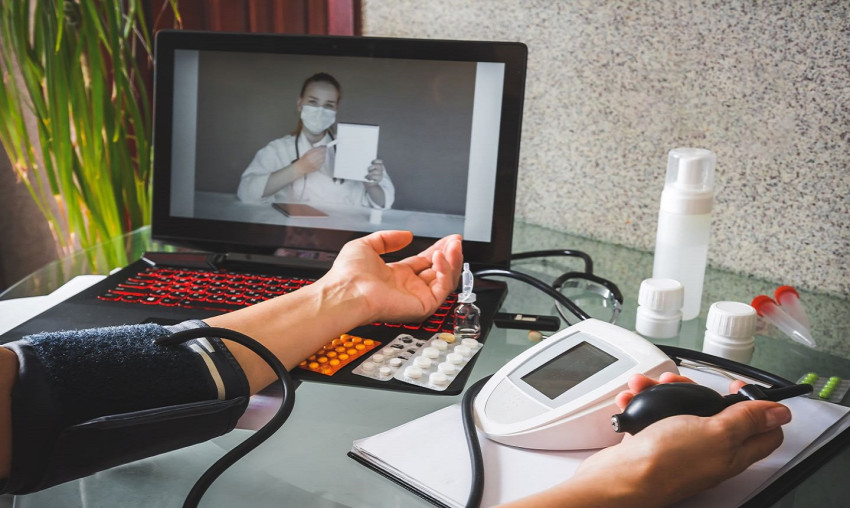
By enabling real-time patient monitoring outside of conventional healthcare facilities, Remote Patient Monitoring (RPM) systems have recently transformed healthcare in a never before way. These systems enable remote monitoring and management of patients and their chronic illnesses by using cutting-edge technologies that gather and report their health data and vitals directly to the physicians.
However, selecting the best remote patient monitoring system can be difficult given the wide range of technologically advanced solutions available in the market. This blog lists the five crucial aspects to consider when choosing a remote patient monitoring system for your healthcare organization.
1. Determine Your Monitoring Needs: Understanding your unique monitoring needs before choosing a remote patient monitoring device can help make a better choice. The patients you will be monitoring and the health markers or vital signs you are planning to record, such as blood pressure, heart rate, oxygen saturation, glucose levels, and other parameters must be taken into consideration. Opt for the systems that provide the monitoring and recording convenience for all the crucial health markers.
2. Ease of Use/ System User-friendliness: When it comes to remote patient monitoring solutions, keeping track of the usability is essential. Seek for a system that is easy to use and intuitive for patients as well as healthcare providers. An easy-to-use interface with clear instructions is favored by patients due to its ease of use. Take into account whether the system provides web-based platforms or cellular compatibility that may be accessed from a variety of devices.
3. Level of Data Security & Privacy: Patient privacy and data security are critical in the healthcare industry. When selecting a remote patient monitoring system, make sure the provider abides by the local laws and strict data protection guidelines. Ask for what encryption techniques are employed to protect data while it is being transmitted and stored. To avoid unauthorized access to patient information, also confirm that the system has user authentication and access controls. Data security is of utmost importance to safeguard patients and healthcare providers from possible security breaches.
4. System Integration With Healthcare Infrastructure: Check and integrate a remote patient monitoring system's with your current healthcare infrastructure to get the most out of it. Examine the system's compatibility with telehealth platforms, electronic health record (EHR) systems, and other software programs you use on a regular basis. A seamless transition will simplify operations, save redundant data entry, and enable information sharing amongst various healthcare platforms. Also, physicians can make well-informed decisions with a well-integrated system that guarantees continuity of service.
Embrace HealthArc’s RPM Systems To Your Advantage
HealthArc’s Remote Patient Monitoring Systems can continually monitor a number of patients' metrics and record the vitals. Our digital health platform is an all-in-one package for remote patient monitoring and aims to provide technologically advanced solutions. HealthArc enables complete virtual healthcare by bringing together a professional staff that focuses on chronic diseases, advanced clinical software for patient care, and device procurement and management. Our systems improve patient outcomes and revenue by assisting practices in managing their patients efficiently outside of the office with its state-of-the-art digital health technologies.
To find out more about our RPM systems and how they work, set up a free demo with one of our experts right now.