Gaya, the start of Gautam Buddha and Lord Vishnu, is home to a piece of India's most huge social and serious accomplishments. It is one of the country's most settled metropolitan districts, coordinated on the banks of the revered Phalgu River. Gaya is surrounded on three sides by undesirable inclinations named Mangla-Gauri, Shringa-Sthan, Ram-Shila, and Brahmayoni, each with monstrous genuine importance. For a surprisingly long time, voyagers have visited these stunning Gaya vacation spots. Smash, Sita, and Lakshman went to Gaya to surrender pind-daan for their dad, Dasharath.
Gaya is named after the malignant soul (asura) ruler Gayasur, a Lord Vishnu fan. Dependably, an enormous number of individuals visit the city for pind-daan, going on with the preparation. Gaya is similarly the area of Bodh Gaya, where Gautam Buddha accomplished light. The Mahabodhi Temple Complex is an UNESCO World Heritage Site and the most honored district for Buddhists.
Gaya is reachable.
Through air: Gaya Airport (IATA: GAY, ICAO: VEGY), by and large called Bodhgaya Airport, serves Gaya, Bihar, India.
Through train: Gaya Junction rail course station serves the city of Gaya, the Gaya region central command, and the Magadh Division.
By street: You can go to Gaya Airport and thusly take the street beginning there.
10 need Gaya vacation spots, including Vishnupad Temple
The Vishnupad Temple is possibly of the most momentous Hindu place of refuge in Bihar and India. This place of refuge draws admirers from any place the country, particularly during the pind-daan capacity. Vishnupad Mandir, a place of refuge committed to Lord Vishnu, is a striking holiday destination and one of the essential spots to visit in Gaya. Since Lord Ram, Mata Sita, and Lakshaman all visited this refuge, its game plan of experiences is said to follow beyond what many would consider possible back to the Treta Yug. The persistent development, regardless, was worked in 1878 by Devi Ahilya Bai Holkar, the Maratha head of Indore. This mandir, organized on the Falgu River's bank, is the uncommon heart of the city.
Dynamic times: 6 a.m. to 9 p.m.
Segment Fees: None.
Refuge of Mahabodhi
The most worshipped spot of love in Buddhism is Mahabodhi Temple, an UNESCO World Heritage Site. Individuals come from any place the world to see the shelter and experience its otherworldly wonder. Gaya Airport, one of Bihar's just two overall air terminals, is around ten kilometers from the sanctum. The most notable explorer region in the Gaya District is the Mahabodhi Temple, which draws in guests from varying establishments. Buddhist pastors and Yogis looking for friendliness and calm can find it behind the place of refuge under the Bodhi Tree (by and large called the "tree of empowering"). Visiting the Mahabodhi Mahavihara, where one can see all around care, is a splendid encounter.
Timings: 5 a.m. to 9 p.m.
Region Fees: None.
Mangla Gauri Temple
Gaya has a rich serious legacy, as it is home to Mangla Gauri Temple, one of the 18 Maha Shakti Peethas. Immense number of enthusiasts visit the mandir during Navratri, and hundreds more visit dependably. The place of refuge is alluded to in various prominent Hindu game plans, including the Vayu Puran, Padma Puran, Markandeya Puran, and others. Due to its apparent importance, Mangla Gauri Temple is one of Gaya's most famous spots to move away. The Gaya place of refuge is centered around the Mahishasura Mardini appearance of Goddess Durga, who is cherished as an image of food appearing to be her chests. Places of refuge made plans to Lord Ganesha, Maa Kali, Lord Hanuman, and Lord Shiva can be tracked down on the grounds of the Mangla Gauri Mandir.
Timings: 6:00 AM to 8:00 PM
Region Fees: Free
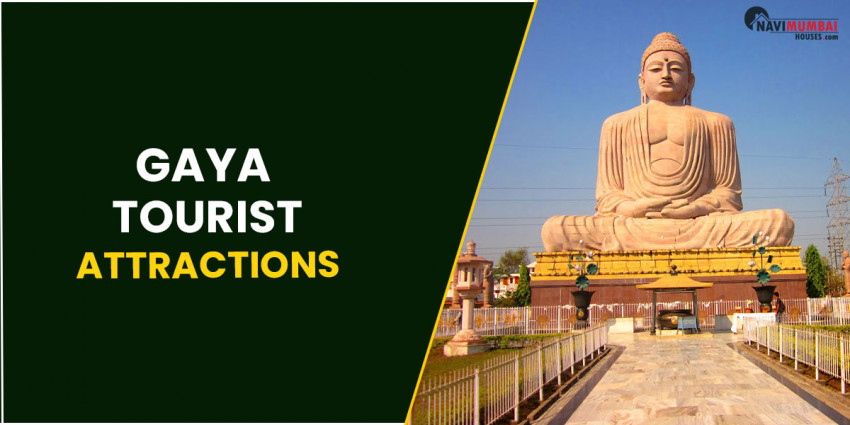
The Big Buddha Statue
The Great Buddha Statue is a prominent spot to move away in Bodhgaya and Gaya. Travelers from any place the world come to see the 64-foot-tall model of the Buddha taking everything into account. Possibly of Gaya's most prestigious interest, the achievement is an outstanding spot for selfies and gathering photographs. On November 18, 1989, the fourteenth Dalai Lama leaned toward the Great Buddha Statue. Vaidyanatha Ganapati Sthapati, an unmistakable Tamil Nadu stone trained professional, made it. Consolidating the more prominent figure are more subtle models of Bhagwan Gautam Buddha's ten most gigantic understudies. The integrating vegetation surprisingly updates your visit.
7 a.m. to 12 p.m.
Area Fees: None.
Sujata Stupa
The Sujata Stupa is key for India's strong legacy. It is named after Sujata, the milkmaid who served milk and grains to Gautama Buddha while he was remaining there. This event, as per legend, demonstrated the fruition of his seven-year quick and dismalness. Additionally, in 1956, an Ashoka point of help before the stupa was moved there. In spite of being a genuinely dull locale, Sujata Stupa is one of the most famous Buddhist wayfarer fights in the Gaya District.
Dynamic times: 7 a.m. to 6 p.m.
Section Fees: None.
The Monasteries and Temples of Bodh Gaya
Bodh Gaya, the mark of assembly of Buddha's models, is home to various severe organizations and places of refuge worked by occupants of different nations, including Sri Lanka, Bhutan, Mongolia, Taiwan, Cambodia, Tibet, and Nepal, and showing region compositional styles. The Thai place of refuge, for instance, is incline molded, but the Japanese Nippon place of refuge is a pagoda-molded structure. These construction considers, which were worked more than a long time, are among the most impeccable wayfarer fights in Gaya. Guests and admirers from any place the world come to India to contemplate its stunning brilliance and plan. These Buddhist places of refuge and gatherings in Gaya District are staggering events of Bihar's rich history.
Timings: 5 a.m. to 9 p.m.
Section Fees: None.
Dukh Harni Mandir
The city's Dukh Harni Mandir, organized on the NH-83 among Gaya and Patna, is the spot of mix of Hindu responsibility. Gaya's Jama Masjid and the Dukh Harni Dwar (entrance) are both related with similar wall, filling in as an image of friendliness for the city's Hindu and Muslim occupants. Dukh Harni Mandir, focused on Goddess Durga, is maybe of Gaya's most striking place of refuge. Dependably, an enormous number of admirers visit the place of refuge to look for the goddess' inclining in the direction of. During Durga Puja, the wonder of this place of refuge is amazing.
Dynamic times: 4 a.m. to 6 p.m.
Segment Fees: None.
Place of refuge of Dungeshwari Cave
Bihar's game plan of experiences and voyager heritage are among the most enrapturing in all of India. The tale of Dungeshwari Cave typifies this. The cavern is said to have safeguarded Gautam Buddha for close to six years before he moved to Bodh Gaya to accomplish edification. For guests excited about getting more to know Buddha's critical excursion, the Dungeshwari Cave Temple and another close by mandirs are enormous Gaya spots to move away. Visits to Dungeshwari Cave will adjust you with two or three Lord Buddha stories. A little rainstorm flood is comparatively near the cavern.
Dynamic times: 8 a.m. to 6 p.m.
Passage Fees: None.
Refuge of Pretshila
The Pretshila Mandir, a staggering and basic place of refuge, is organized in the Pretshila Hills, for the most part called the Ghost Hills, not exactly distant from the Niyazipur home. The pind-daan and Pitru-paksha Mela, which happen at the place of refuge during the Hindu month of Ashwin, are noticeable. Pret Shila, a respected Gaya place of refuge, holds a wonderful spot in Bihar's serious history. A place of refuge provided for Lord Yama, the God of Death, stays on the grade. It was at first worked by Rani Ahilyabai Holkar of Indore, a Maratha sovereign. Ramkund, a favored lake, is organized on the tendencies, where pieces of noise have spread all over suggesting that Lord Ram once washed.
Dynamic times: 7 a.m. to 6 p.m.
Region Fees: Free
Refuge on Brahmayoni Hill
Brahmayoni Hill Temple is an eminent place of refuge in Gaya that you ought to visit due to its standard setting and the shocking legend encompassing it. The typical stone opening or break in the edge place of refuge will in general Lord Brahma's female power. Brahma (the maker god) and Yoni are joined to shape the term Brahmayoni (the female regenerative part). This mandir, one of Gaya's most well known voyager regions, likewise shows a staggering portrayal of sexuality in Hinduism, featuring why Hinduism is eminent and the best religion on the planet. The basic reasons darlings visit the mandir are to be liberated from familial sins and parental decisions.
5 a.m. to 6:30 p.m.
Region Fees: None.
Source From:- navimumbaihouses